The short version
- Buy lunch on rue Cler and eat it on the Champ de Mars. The brasseries facing the tower charge for the view.
- Book the tower lift weeks ahead in season, on toureiffel.paris. Looking at the tower costs nothing.
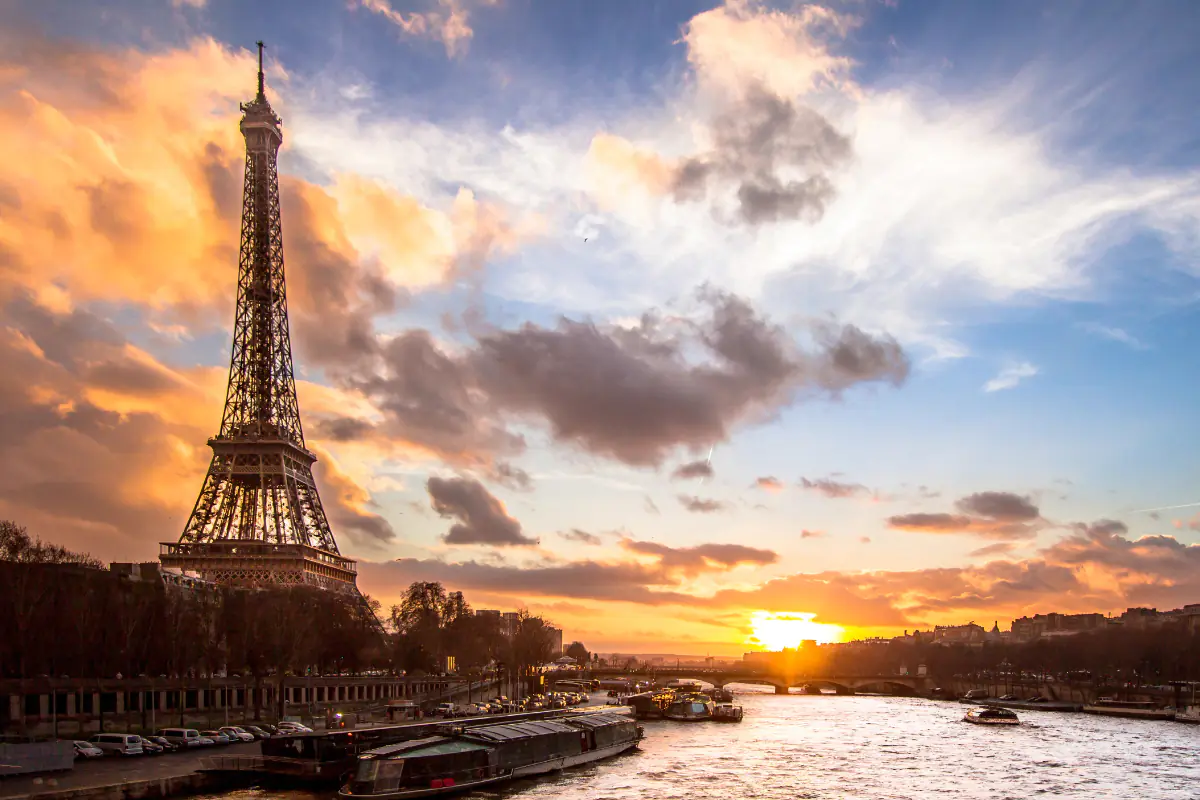
- Be across the river for sunset, and stay for the lights at the top of the hour.
- Let a driver-guide show you the rest of Paris!

The walk
Rue Cler
Start from École Militaire metro and walk the market street. It is a pedestrian street of permanent shops, one after another: cheese, bread, charcuterie, fruit, wine. Buy a little from each. Tell the cheese seller it is for today, and you will get one that is ripe.
The Champ de Mars
The long lawn was the parade ground of the École Militaire, the military school at its far end. A teenage cadet from Corsica named Napoleon Bonaparte trained there in the 1780s. In 1783 the physicist Jacques Charles launched the first hydrogen balloon from this field, and Benjamin Franklin was in the crowd. The balloon came down in a village north of Paris, where terrified farmers went after it with pitchforks.
The Eiffel Tower
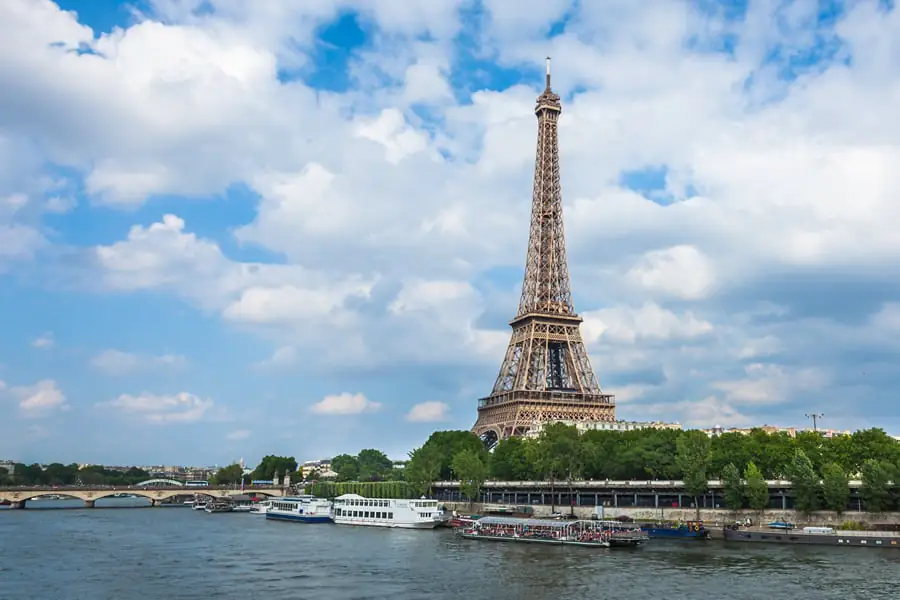
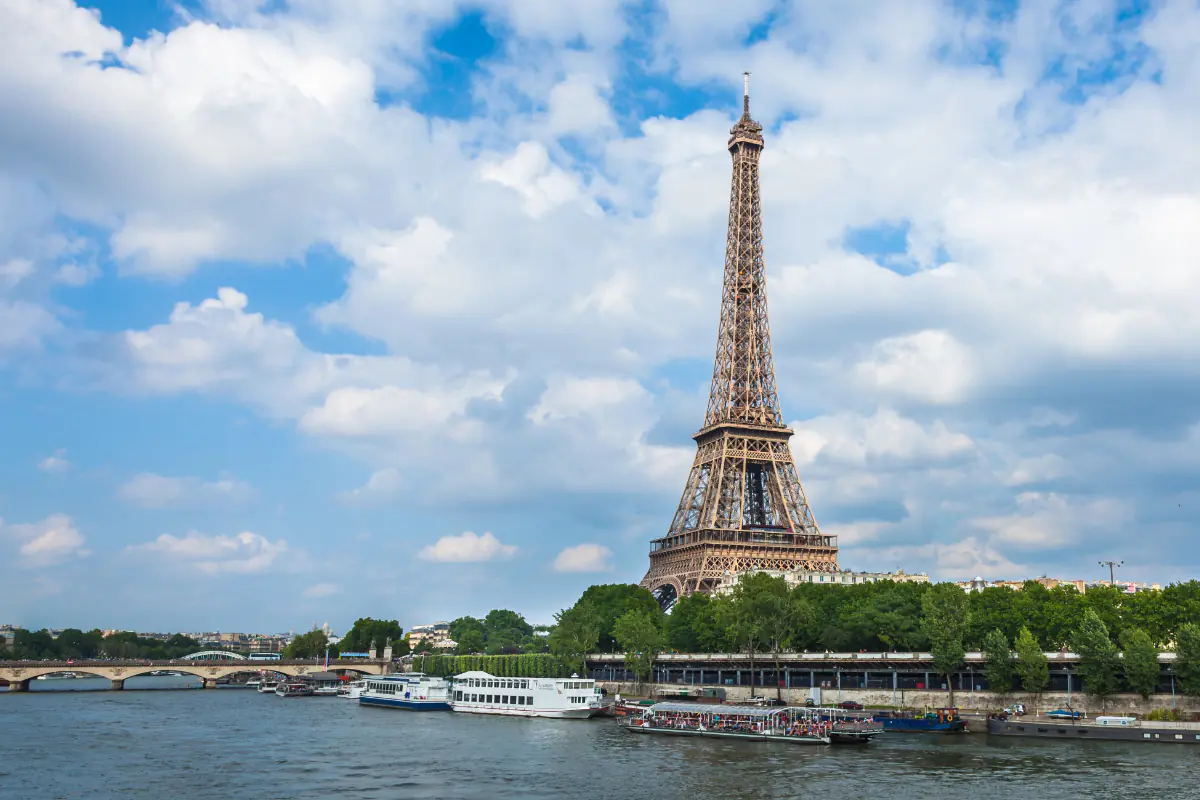
Gustave Eiffel’s company built the tower for the World’s Fair of 1889, in a little over two years. The permit said it would come down after 20. A group of famous artists signed a letter calling it a giant black smokestack. The writer Guy de Maupassant, the story goes, ate lunch in its restaurant because that was the one place in Paris where he couldn’t see it.
Eiffel saved his tower by making it useful. He put a radio antenna on top, and the army decided it could not do without one. The Eiffel Tower has more on going up.
The Musée du Quai Branly
Walk east along the river. The museum holds the national collections from Africa, Asia, Oceania and the Americas, in a building by Jean Nouvel. One wall along the street is a garden growing straight up.
Les Invalides
Keep going to the Pont Alexandre III, then turn south across the Esplanade. Louis XIV built the Invalides in the 1670s as a home for his wounded soldiers. On the morning of July 14, 1789, the crowd came here first and carried off thousands of muskets. Then they went to the Bastille for the gunpowder.
Under the gold dome, Napoleon lies in six coffins, one inside the next, in a red stone tomb set below floor level. To see it you lean over the railing and lower your head. People say that was the idea. Les Invalides covers the Army Museum too.
The Musée Rodin
Two minutes away, on rue de Varenne, is the mansion where Rodin rented rooms late in his life. The poet Rilke, who had been his secretary, told him about it. The place was run-down and cheap, and Matisse and Jean Cocteau were tenants too. When the state wanted the building back, Rodin proposed a trade. France could have all his work if the house became his museum.
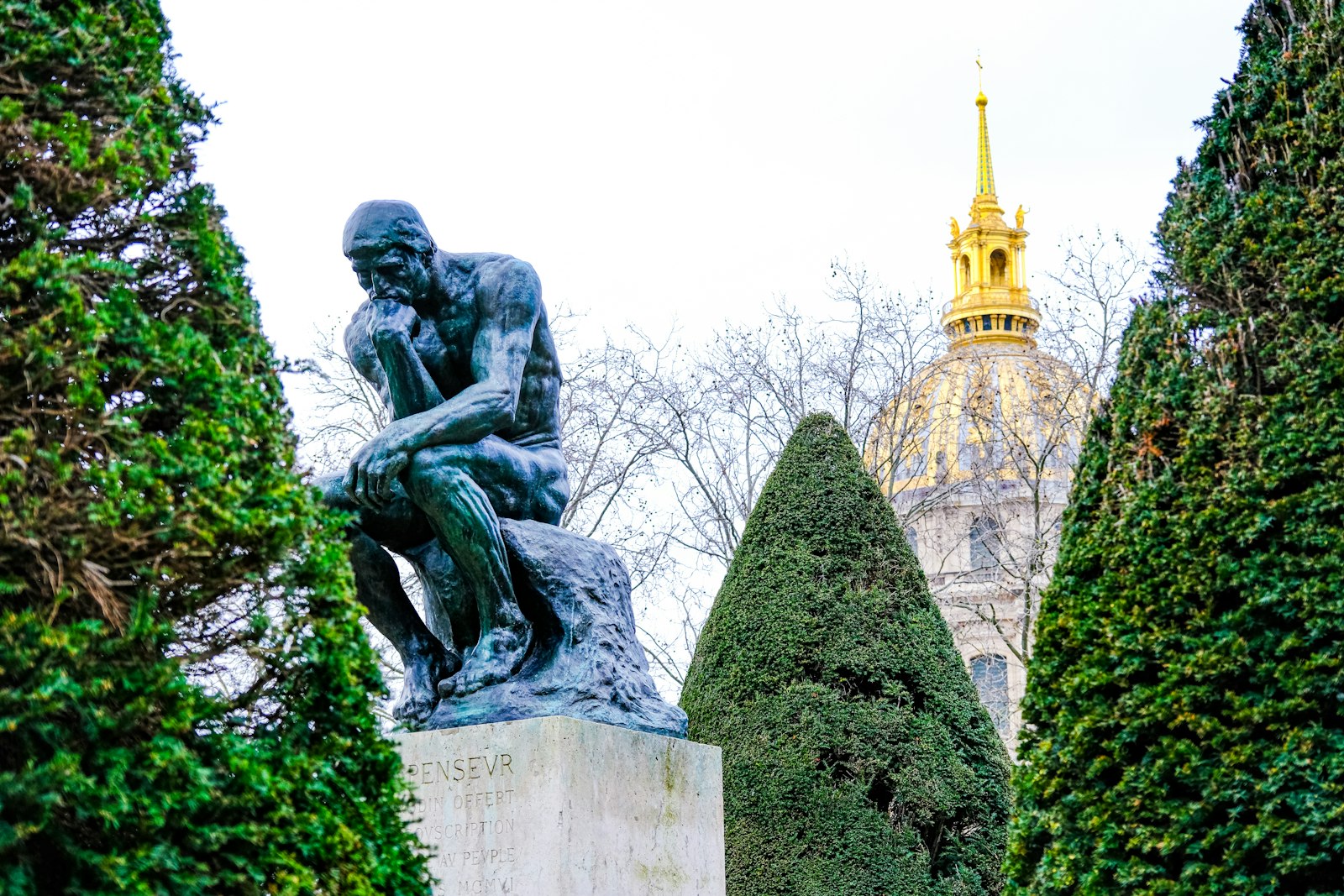
The Thinker and The Gates of Hell stand in the garden, which is the best part. The Musée Rodin has the rest.
The Trocadéro
End the day back at the river. Cross the Pont d’Iéna and climb to the terrace for the whole tower, with the fountains in front. After dark it sparkles on the hour.
Getting around
Everything here is on foot, and with the visits it fills a day. For dinner, rue Saint-Dominique and rue de Grenelle are where the neighborhood eats.
On market mornings, the stalls of Saxe-Breteuil line the avenue with the tower standing at the end. It is the prettiest food market in Paris.
When to go
Go up the tower in the morning, before the lines. Then take rue Cler and the picnic at midday, and the museums in the afternoon.
Rue Cler is quietest on Sunday afternoon and Monday, when some shops close.
On July 14 the fireworks go up from the tower, and the Champ de Mars fills from the afternoon on. Claim your spot early, or watch from the Trocadéro side.
Frequently Asked Questions
Where is the best view of the Eiffel Tower?
The Trocadéro, across the river, for the full tower. The Champ de Mars has the view from below. From the Pont de Bir-Hakeim you get the tower with the river and the metro crossing over it.
Is rue Cler a market?
It is a market street of permanent shops, open most days. The street market nearby is Saxe-Breteuil.
Can I picnic on the Champ de Mars?
Yes, on the lawns that are open. Take your trash with you, because the bins fill fast on summer evenings.
How much of the 7th fits in a day?
The tower, Les Invalides and the Rodin garden, with a picnic in between and the Trocadéro at sunset. That is a full day, all on foot.
Is there a tour that covers the Eiffel Tower?
Yes. Our Private Tour of Paris by Car is four hours with a driver-guide who picks you up where you are staying, morning, afternoon or night. It passes the Eiffel Tower and the other big sights, with photo stops whenever you want one. It costs $725 for up to 4 people.
Our Most Popular Day Trips From Paris
Louvre, Montmartre and Notre Dame in eight hours with a private driver-guide.