The short version
- Book the tower climb before you come. Only 18 people go up at a time.
- Pick a market morning, and have lunch at the counters inside the Halles.
- Stay the night if you can. The old town is at its best once the day visitors have gone home.
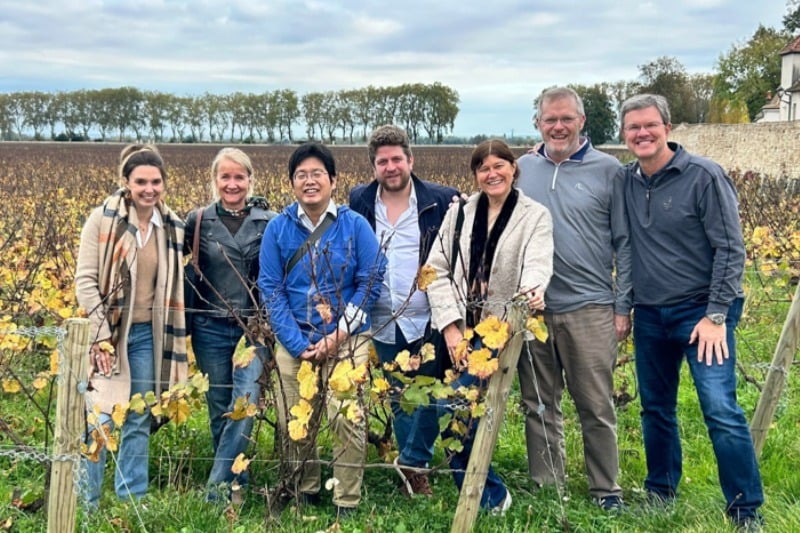
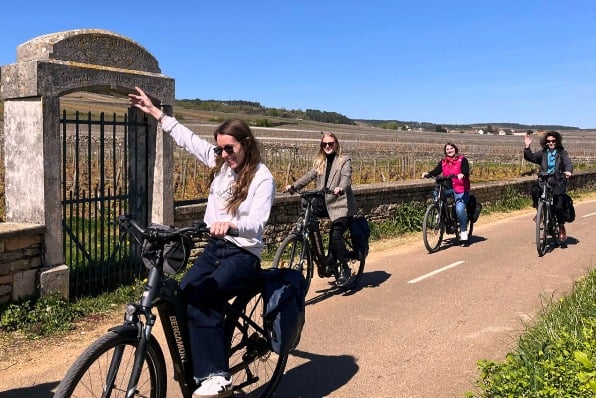
- Spend a day in the vineyards with us.
What to see
The dukes’ palace
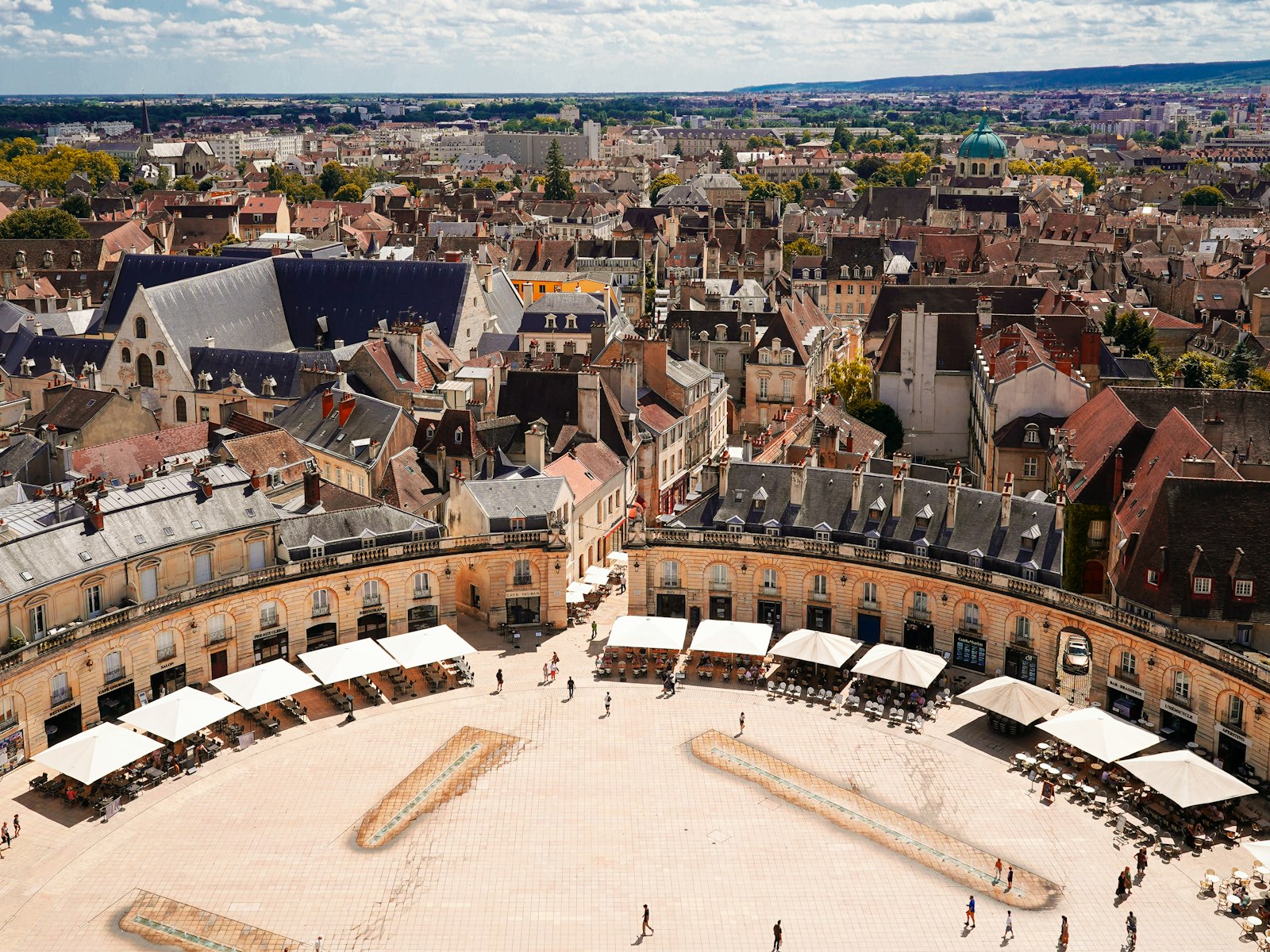
For about a century, four dukes ran Burgundy like a kingdom. Their lands reached north to Holland, and their court outshone the one in Paris. The last of them, Charles the Bold, died in battle in 1477, and the king of France took Burgundy for himself. The palace is still the center of town, and today it holds the fine arts museum.
The tombs and the mourners
The best room in the museum is the dukes’ old banqueting hall. Philip the Bold lies there in painted stone, with a lion at his feet. Under him walks a funeral procession of small alabaster monks, each about 16 inches tall. No two are alike. One wipes his eyes, one reads his book and several have vanished into their hoods.
The ducal kitchens next door have six enormous fireplaces. Kids love that room.
The tower
Philip the Good built the palace tower to show the neighbors who was in charge. The climb is 316 steps, and the view takes in every tiled roof in town.
The owl
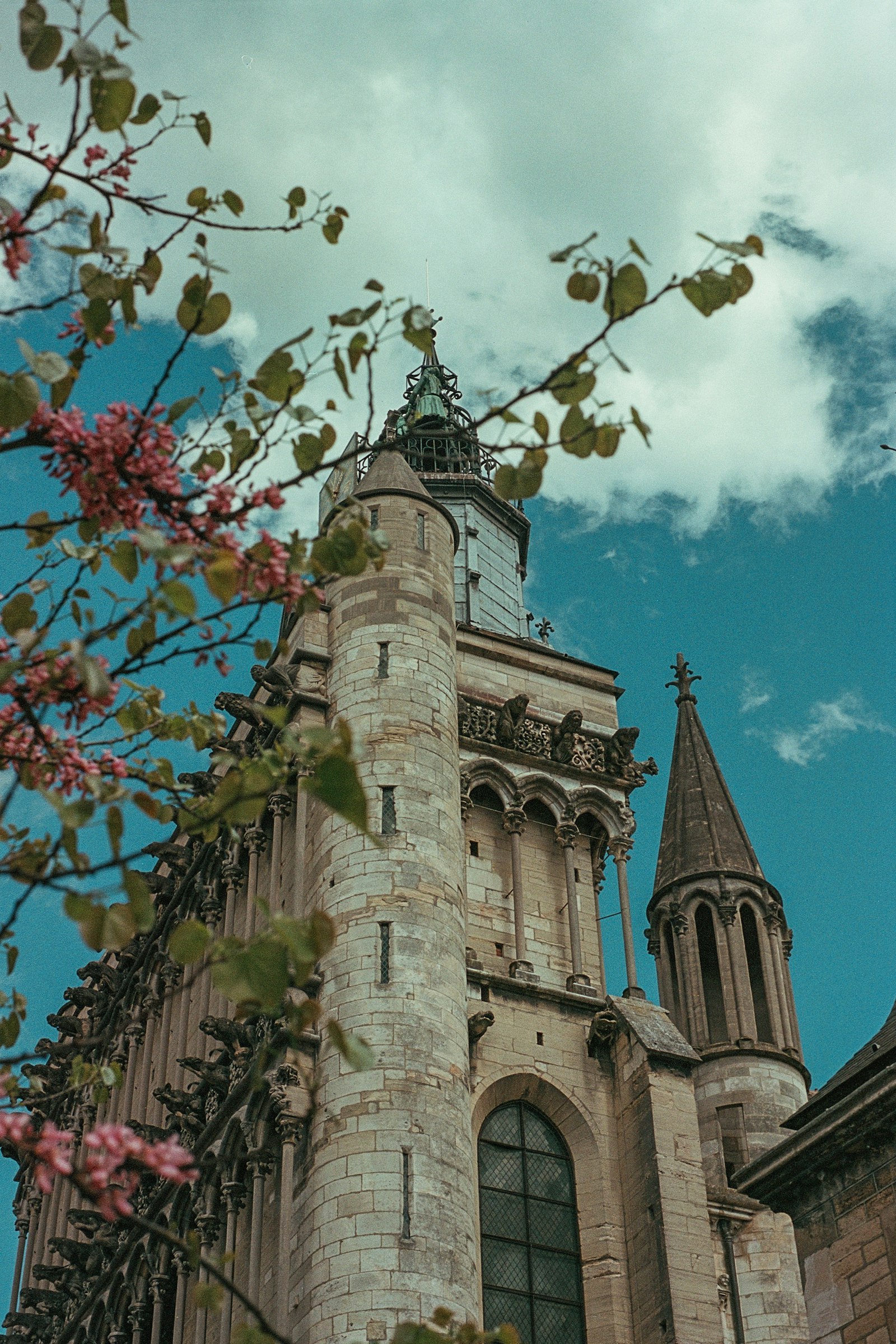
On a side wall of the church of Notre-Dame sits a small stone owl, worn almost smooth. Nobody knows who carved it. Rub it with your left hand and make a wish. In 2001 somebody attacked it with a hammer, and the town was so upset that the repaired owl now has its own security camera. Bronze owls set in the pavement mark a walking trail through the old town.
The clock family
On top of the same church, a metal man with a pipe strikes the hours. Philip the Bold took him from a Flemish town in 1382 as a prize of war. The people of Dijon named him Jacquemart and decided he looked lonely. Over the next few centuries they gave him a wife, then a son, then a daughter. The children ring the quarter hours.
The Well of Moses
The sculptor Claus Sluter carved six life-size prophets for the dukes’ monastery around 1400, and they are among the great works of the Middle Ages. They stand today in the grounds of a psychiatric hospital west of the center. The tourist office sells the guided visit.
Mustard
The Maille shop on rue de la Liberté has been pumping fresh mustard into stoneware pots since 1845. Fallot, around the corner from the owl, is the last family mill in town and has a tasting bar. Try a few. You will not go back to the yellow squeeze bottle.
Kir and the table
Canon Félix Kir was a priest, a Resistance hero and the mayor of Dijon for more than twenty years. He served the local drink, white wine with a splash of blackcurrant liqueur, to every visitor at city hall. It has carried his name ever since.
Then eat. This is the home of beef bourguignon, eggs poached in red wine, parsleyed ham and warm cheese puffs called gougères. Mulot & Petitjean has baked the local spiced honey bread since 1796.
Getting around
You walk. The palace is 15 minutes from the station along rue de la Liberté. The Cité de la Gastronomie, a free exhibition on French food and Burgundy wine, is ten minutes the other way.
Local trains reach Beaune in 18 to 28 minutes.
When to go
May, June, September and October are the best months, with the café terraces open and the vines green or gold.
The free museums close on Tuesdays. The Halles never open on Sunday or Monday.
Frequently Asked Questions
Is Dijon a day trip from Paris?
Yes. The TGV from the Gare de Lyon takes about an hour and a half, and the old town is small enough to see on foot in a day.
Which museums in Dijon are free?
The city’s four museums are free, including the fine arts museum in the palace with the dukes’ tombs. So are the permanent rooms of the Cité de la Gastronomie. You pay for the tower, which costs €6.
Where is the owl of Dijon?
On the north side of the church of Notre-Dame, on rue de la Chouette, within easy reach. Use your left hand.
What should I eat in Dijon?
Start with gougères and a kir. Then order beef bourguignon or eggs in red wine sauce, and finish with Époisses, the strong local cheese.
Is there a Burgundy wine tour from Dijon?
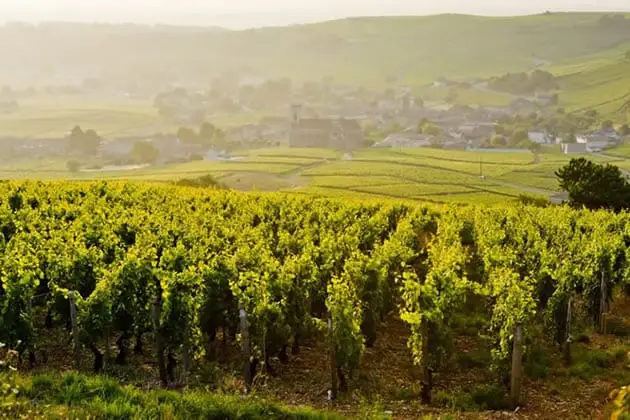
Yes. Our Burgundy Day Tour meets in front of Saint-Bénigne Church, a block and a half from Dijon station, at 9:45 a.m. It costs $300 per person, or $471 with second-class rail. The day has at least seven tastings and lunch in a winery, and it runs Monday to Saturday from April through October.
Our Most Popular Day Trips From Paris
Visit France’s other premier wine region! Sample world-class wines and explore charming villages.