The short version
- Book a timed slot on the museum’s site and show up within 30 minutes of it. That is how long your priority entry lasts.
- Bring a small bag only. Backpacks and suitcases are turned away at the door, and the cloakroom will not take them.
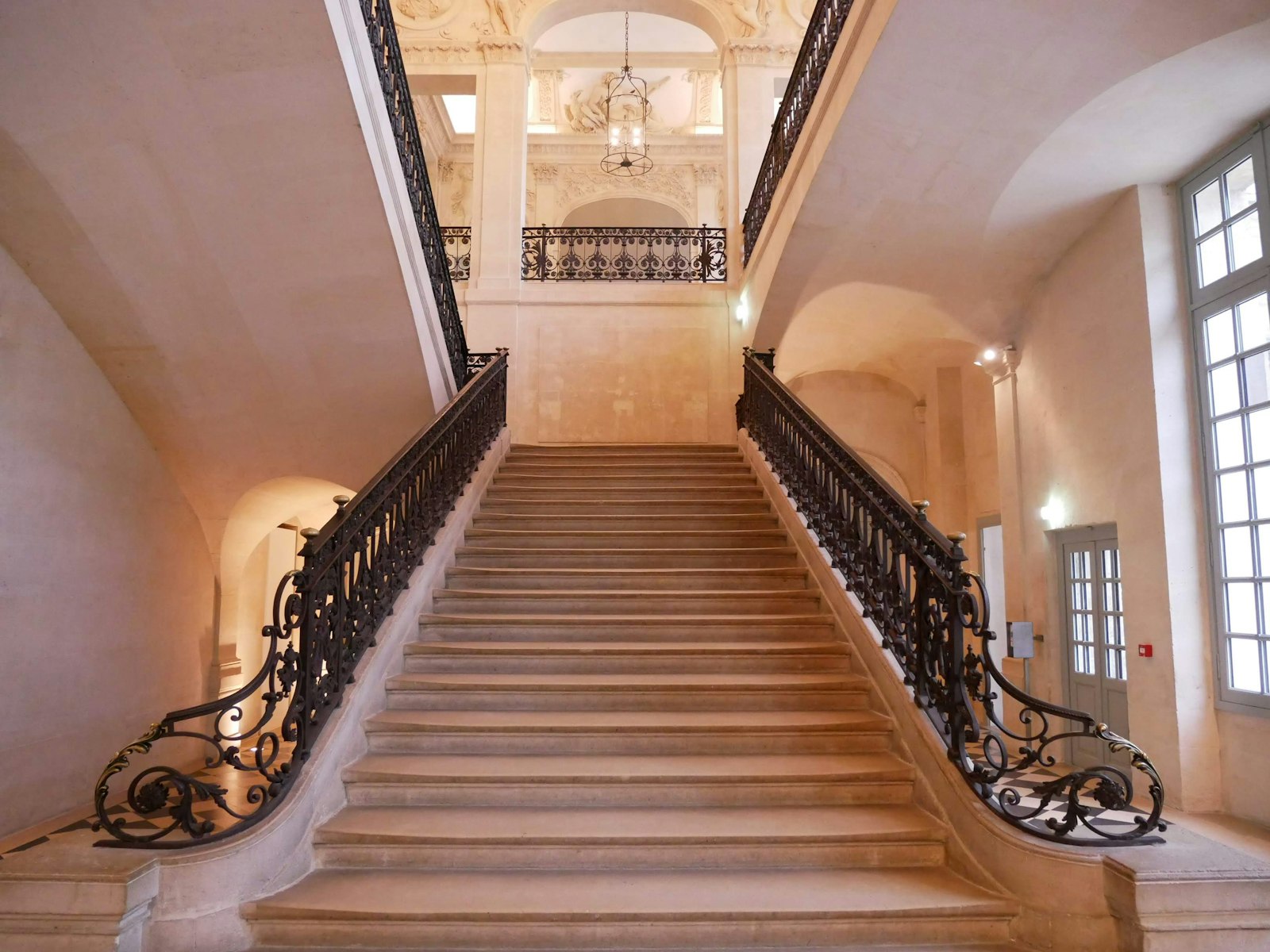
- Stop on the grand staircase before you look at a single painting. The house is half the show.
- Come hungry, then eat your way through the Marais!

What to see
The salty mansion
The house was built in the 1650s for Pierre Aubert, who collected the king’s tax on salt and did very well out of it. His neighbors named the place the Hôtel Salé, the salty mansion, and the joke stuck. The grand staircase, all carved stone and ironwork, is the first thing you see.
Picasso’s Picassos
Picasso died in 1973 at 91, rich, famous and without a will. He had also kept thousands of his own works. French law let his heirs pay the inheritance tax in art instead of cash, and the state got first pick. That choice became this museum, which opened in 1985.
The blue self-portrait
In 1901 Picasso was twenty, broke and living in Paris. His close friend Carles Casagemas had just shot himself in a Montmartre café. The young man in this portrait, wrapped in a dark coat against a blue wall, looks twice his age. It is the start of what we now call the Blue Period.
Dora and Marie-Thérèse
In 1937 Picasso painted portraits of two women he was involved with in the same year. Marie-Thérèse Walter is all soft curves and pale color. Dora Maar, the photographer, is sharp angles and red fingernails. The museum owns both, and when they hang near each other you can read his private life right off the wall.
The bull and the goat
During the war, in occupied Paris, Picasso picked a bicycle seat and a set of handlebars out of a junk pile. He put one on top of the other and had a bull’s head. Later he built a goat with a wicker basket for a belly and a palm leaf for a spine. He never stopped playing.
The painters he collected
Picasso bought and traded for other painters’ work all his life, and his own collection came here too. It includes Cézanne, Matisse, Degas and the Douanier Rousseau. Matisse was his great rival, and the two of them swapped paintings for decades.
Picasso and the Mona Lisa
When the Mona Lisa vanished from the Louvre in 1911, the police hauled Picasso in for questioning. He was innocent of that one. He did have two small ancient statues at home that a friend of a friend had lifted from the same museum. He gave them back fast.
The rooms are rehung from time to time, so treat these as pieces to hunt for.
Getting in
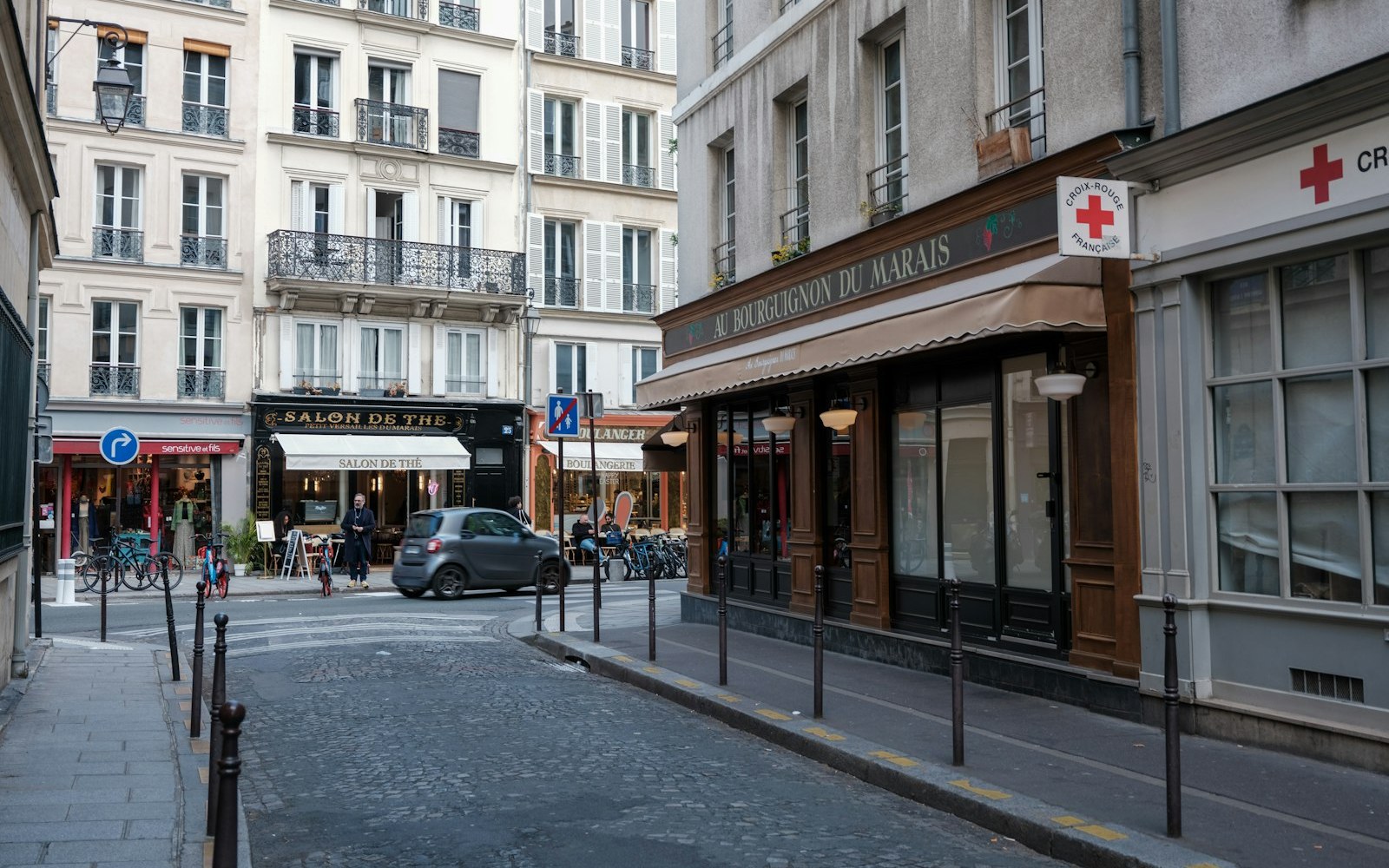
The entrance is at 5 rue de Thorigny, in the Marais. The collection covers three floors.
Free tickets can’t be booked online. Show your ID at the desk. Last entry is 5:15 p.m., and there is a café on the roof for afterward.
When to go
Go Tuesday to Friday at opening time, or after 4:00 p.m. any day. Weekends fill up by late morning. The first Sunday of the month is free for everyone and very crowded.
The museum is also closed on January 1, May 1 and December 25. It closes early, at 5:00 p.m., on December 24 and 31.
Frequently Asked Questions
Do I need a timed ticket for the Musée Picasso?
Yes, if you want to skip the line. Online tickets carry a time slot, and priority entry lasts for 30 minutes after it. The desk also sells tickets on the day.
How long does the Musée Picasso take?
Plan two hours for the three floors and the temporary exhibition. You can’t come back in once you leave.
Can I bring a backpack?
No. Suitcases, travel bags and backpacks are refused at the door. A handbag or small bag is fine, and the cloakroom is free for coats.
Is the Musée Picasso free?
It is free for everyone under 18 and for EU residents under 26, with ID. It is also free for everyone on the first Sunday of the month. Otherwise the ticket is €16.
Is there a tour that goes with the museum?
Yes, and it comes with lunch. Our Private Marais Food Tour is $745 for two people, plus $95 for each additional person up to six. It lasts two and a half hours, with ten tastings and a full bistro lunch, and it runs daily. The meeting point is the Saint-Paul-Saint-Louis church, a short walk from the museum.
Our Most Popular Day Trips From Paris

Explore the Marais through its flavors! Sample French delicacies while strolling historic Jewish quarters and chic boutiques.

Half a day on foot with a private guide, routed around what you want to see.