The short version
- Skip Monday, when the Carnavalet and the Picasso museum are both closed.
- Sunday is the big day here. Every shop is open and half of Paris shows up, so come in the morning if crowds wear you out.
- Have lunch on rue des Rosiers, any day but Saturday.
- Come hungry and take our food tour!

The walk
The Village Saint-Paul and the old wall
From metro Saint-Paul, cut through the courtyards of the Village Saint-Paul to rue des Jardins-Saint-Paul. The long stone wall with the round tower is the city wall King Philippe Auguste put up around 1200. It is the biggest piece still standing. Today it runs along a school sports ground, and every ball that bounces off it is hitting 800 years of stone.
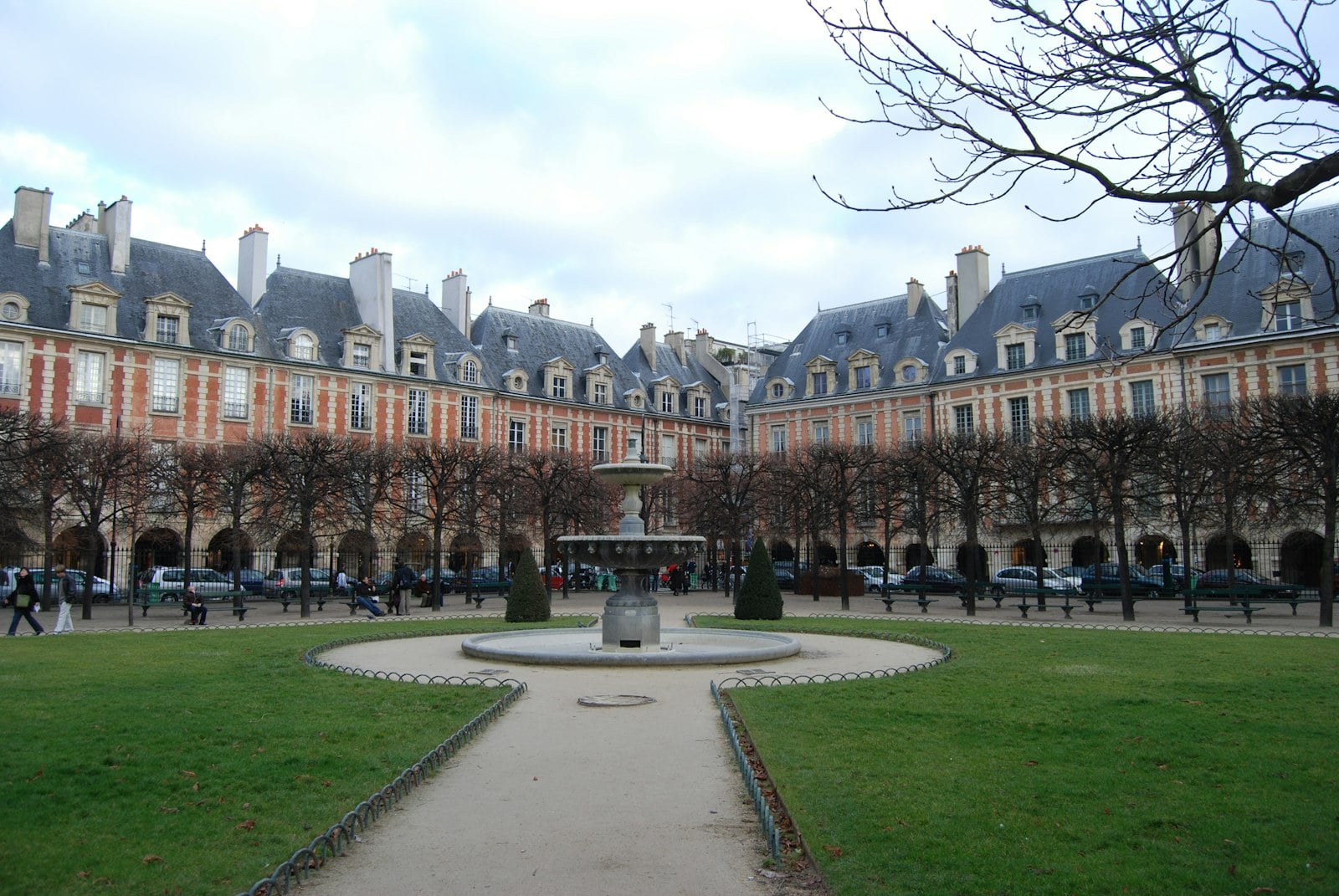
The Place des Vosges
Walk up rue de Birague and in through the King’s Pavilion. A king died for this square, more or less. In 1559 Henri II took a lance through the eye in a joust here, and his widow, Catherine de Medici, had the royal palace on the site torn down. Henri IV ordered the square built in its place and was murdered two years before it opened in 1612. Victor Hugo later lived at number 6. The grass in the middle is for sitting on, which is rare in Paris.
Rue des Francs-Bourgeois and the Carnavalet
Leave the square by the northwest corner. The mansions along this street were built by nobles who wanted to live near the king. Then the court moved to Versailles, the nobles followed, and their houses became workshops and warehouses. Nobody had the money to knock them down, so they are still here.
One of them, on rue de Sévigné, is the Musée Carnavalet, the museum of the history of Paris. Half an hour gets you the Revolution rooms, Proust’s bedroom and a whole jewelry shop designed by Mucha.
Rue des Rosiers
This is the main street of the Pletzl, a Yiddish word for a little square. Jewish families have lived on these few blocks, on and off, since the Middle Ages, and the bakeries still sell challah and strudel. The falafel came later and took over. Pick the counter with the longest line, which moves fast, and eat in the Jardin des Rosiers behind the street.
The Musée Picasso
Head north on rue Vieille-du-Temple to rue de Thorigny. The Musée Picasso fills a mansion that Parisians named the Hôtel Salé, the salty house, because the man who built it got rich collecting the salt tax. The art inside came from taxes too. When Picasso died, his heirs paid the inheritance bill in paintings, and France took its pick.
Rue de Bretagne
The walk ends on the food street of the upper Marais. The Marché des Enfants Rouges at number 39 was the oldest covered market in Paris, named for the orphans in red uniforms who once lived next door. It burned in October 2026 and is closed, with no date yet for its return. Some of its stallholders are setting up outdoors nearby, and the cafés and bakeries along the street will feed you well.

Getting around
The walk is flat, about two miles, and the whole neighborhood fits in a square kilometer. The big wooden doors along the way hide courtyards. When one is open, step in and look.
For dinner, the streets north of rue de Bretagne have the bistros where Parisians book. Reserve a day ahead for Friday or Saturday.
When to go
Weekday mornings are for the squares and the architecture. The streets stay quiet until about 11:00 a.m.
Saturday is Shabbat on rue des Rosiers. The Jewish bakeries and most of the falafel counters close until evening.
Sunday afternoon is the opposite of quiet. The Marais is a designated tourist zone, so its shops are allowed to open, and it feels like the whole city came.
Frequently Asked Questions
Are the shops in the Marais open on Sunday?
Yes. The boutiques, chains and galleries open on Sunday, most of them from late morning.
How long does the Marais take?
Half a day covers the walk and one museum. Give it a full day if you want the Carnavalet, the Picasso, a long lunch and the shops.
Is the Marais safe at night?
Yes. It is one of the busiest evening neighborhoods in Paris, with bars and restaurants open late around rue Vieille-du-Temple and rue des Archives. Keep a hand on your phone in the Sunday crowds.
What is free in the Marais?
The Carnavalet’s permanent collection, the Place des Vosges and the permanent rooms of Victor Hugo’s house are all free. So are the courtyards of the old mansions when the gates are open.
Is there a food tour of the Marais?
Yes. Our Private Marais Food Tour is $745 for two people, plus $95 for each additional person up to six. It runs daily for two and a half hours, with ten tastings and a full bistro lunch with wine.
Our Most Popular Day Trips From Paris
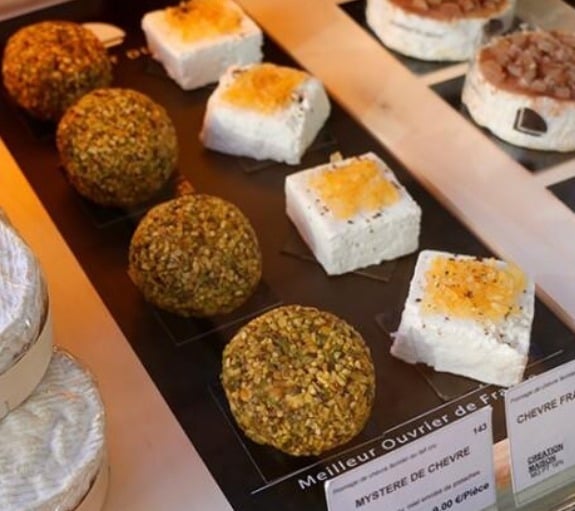
Explore the Marais through its flavors! Sample French delicacies while strolling historic Jewish quarters and chic boutiques.

Half a day on foot with a private guide, routed around what you want to see.
Louvre, Montmartre and Notre Dame in eight hours with a private driver-guide.