
The short version
- Book the cellars before you come. The big houses do not take walk-ins.
- Bring a sweater, even in August. The cellars stay at 10°C (50°F) all year.
- Taste a small grower’s champagne next to a famous one. You may like the small one better.
- Taste nine champagnes on our small-group day.

What to see
Reims Cathedral
Clovis, the first Christian king of the Franks, was baptized on this spot around the year 500. That is why twenty-five kings of France came here to be crowned. The one everybody remembers is Charles VII in 1429, because Joan of Arc fought her way across France to get him here. She stood beside him holding her banner.
German shells set the roof on fire in 1914, and the Rockefeller family helped pay to rebuild it. Look for the smiling angel by the left door. The fire knocked her head off, and the stonemasons put it back together from the pieces. The blue windows behind the altar are by Marc Chagall, from 1974.
The chalk cellars
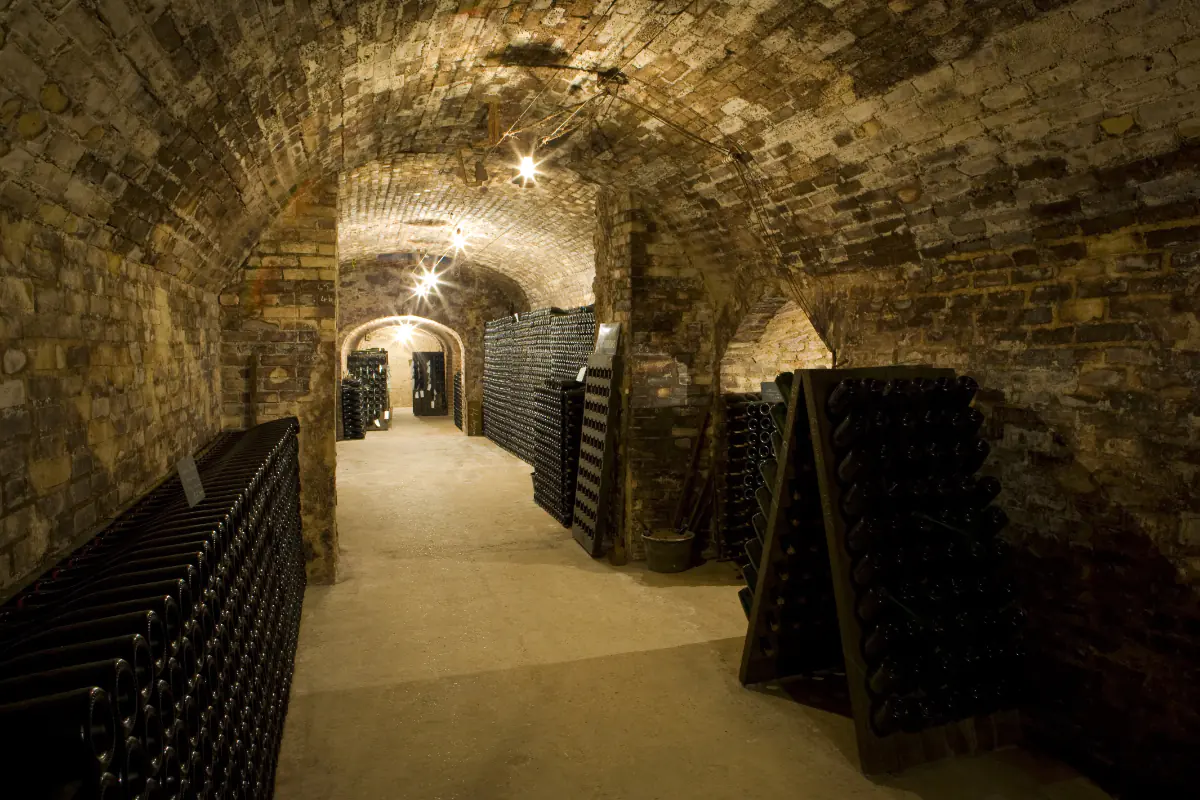
The Romans dug deep pits under Reims to quarry chalk for building. Centuries later the champagne houses found them cool, dark and exactly right for aging wine. During the First World War the city was shelled for four years, and thousands of people moved down among the bottles. They had schools, a hospital and church services underground.
The widow Clicquot
Veuve means widow. Barbe-Nicole Clicquot lost her husband in 1805, when she was 27, and took over his small wine business at a time when women did not run businesses. Champagne was cloudy then, full of dead yeast. She worked out how to clear it by standing the bottles neck down in a rack and turning them a little each day. The method is still in use.
The Avenue de Champagne
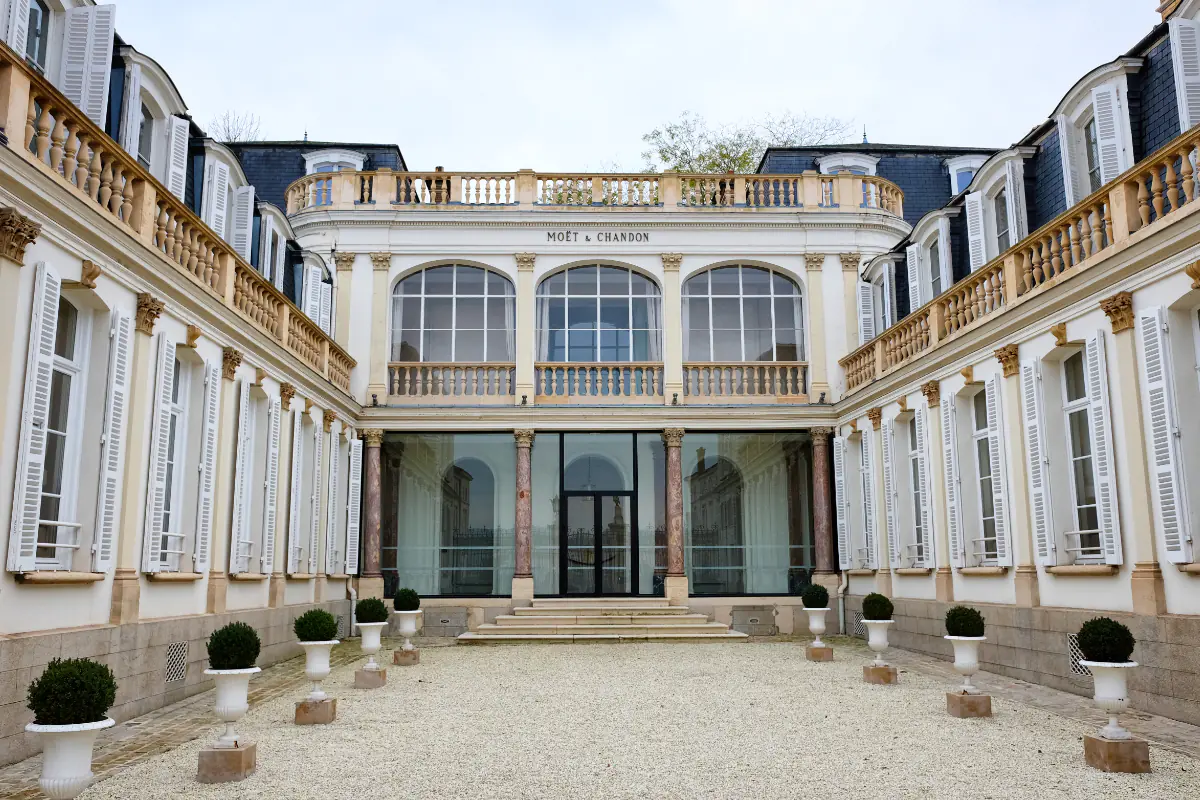
In Épernay the big houses line one avenue, with their mansions above ground and the cellars below. Some 200 million bottles are aging under the street. Moët & Chandon is at number 20. Napoleon was a friend of the family and stopped in to stock up before his campaigns, which is how Moët Impérial got its name.
Hautvillers
Dom Pérignon was the cellar master of the abbey in this hilltop village, and he is buried in its church. He did not invent the bubbles. He spent years trying to get rid of them, because bottles kept exploding. What he worked out was how to blend grapes from different vineyards, and champagne has been made that way ever since.
The growers
The famous houses buy most of their grapes from thousands of small family vineyards. Many of those families also make champagne under their own name, a few thousand bottles at a time. You will not find it at home, and it costs less than the big labels.
The room where the war ended
In the spring of 1945 General Eisenhower had his headquarters in a red-brick school near the station in Reims. Germany surrendered there in the early hours of May 7. The war in Europe ended in a classroom, and the maps are still on the walls.
Getting there
The TGV leaves from Paris Gare de l’Est, and the station in Reims is in the middle of town. Trains run back into the evening.
Épernay is the next town south, with the vineyard villages on the hills between the two.
When to go
The cellars are the same in every month, so there is no bad season. The vines are green from May and bare from November to March.
Summer is the busy time, and the houses fill their visits early.
Frequently Asked Questions
Is Reims a day trip from Paris?
Yes, the easiest one there is. The TGV takes under an hour, and trains run back into the evening.
Can you visit the champagne houses without booking?
Not the big ones. Every visit is a guided tour at a set time, booked ahead.
Reims or Épernay?
Reims has the cathedral and most of the famous cellars. Épernay has the Avenue de Champagne and sits below the vineyards. Which champagne house compares the big names.
Can you reach the vineyards by train?
No. Hautvillers has no station and no useful bus. The towns and the cellars are easy by train, and the villages need a car or a driver.
Is there a champagne tour from Paris?
Yes. Our Veuve Clicquot Day Tour takes in the cathedral, the Veuve Clicquot cellars, Épernay, Hautvillers and lunch at a family vineyard. It is $440 per person, or $560 with second-class rail, with nine champagnes, lunch and entrance fees included. It runs daily all year with eight guests at most.
Our Most Popular Day Trips From Paris
Moët & Chandon in Épernay, Hautvillers, and a family house. Seven tastings, lunch included.


