The short version
- Ride the funicular up and walk down. It takes a regular metro ticket and saves you 222 steps.
- Come early or at dusk. By late morning the steps are packed.
- Keep your hands in your pockets around the string-bracelet men on the steps, and keep walking.
- Let a driver-guide take you up the hill!

What to see
The hill
Montmartre means the mount of martyrs. The legend is that Saint Denis, the first bishop of Paris, was beheaded here around the year 250, picked up his head and walked north with it. For centuries after that the hill was windmills, vineyards and plaster quarries. The quarries left it so full of holes that the builders sank more than 80 stone shafts deep into the ground before the church could stand.
The white church
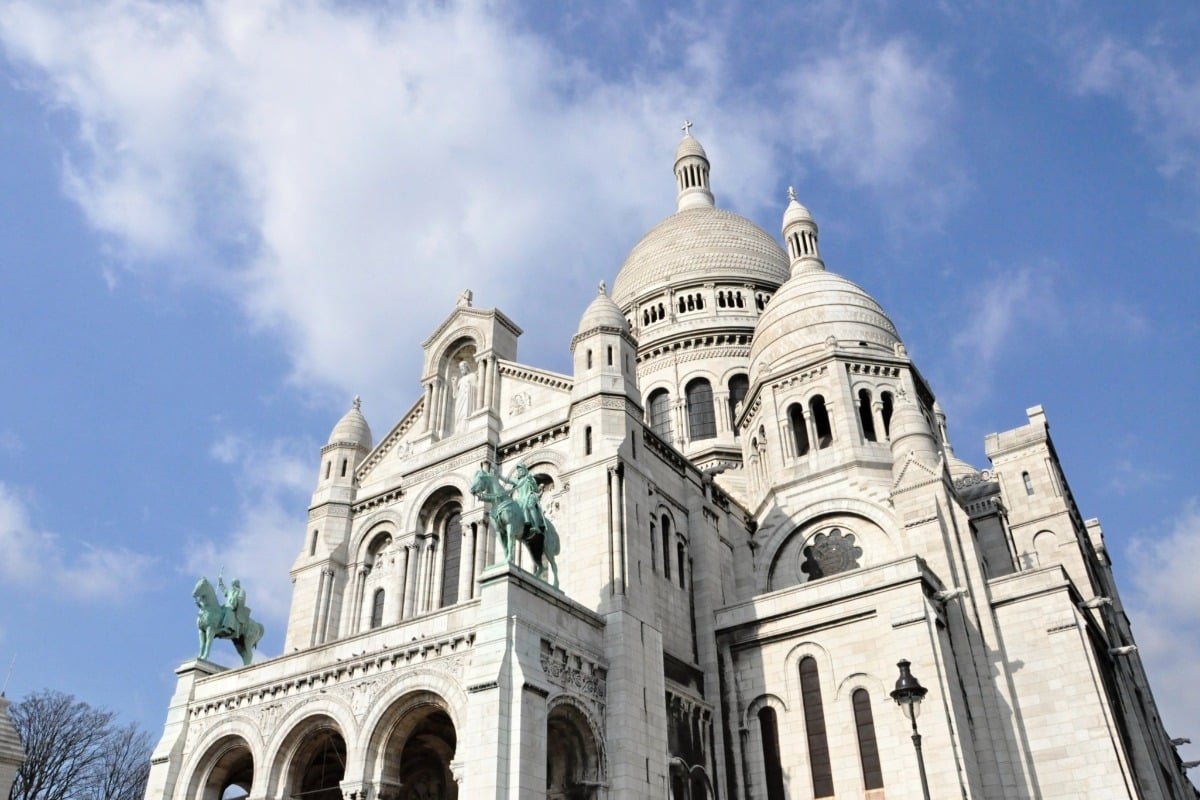
In March 1871 the uprising called the Paris Commune began on this hilltop, in a fight over cannons parked here. It ended two months later in a week of bloodshed. The National Assembly voted for the basilica in 1873, as an act of penance after the lost war with Prussia and the Commune. Parisians have argued about it ever since. The park at the foot of the steps is named for Louise Michel, one of the Commune’s leaders.
Building ran from 1875 to 1914, paid for by donations from all over France. The stone comes from Château-Landon, and it bleaches itself whiter every time it rains.
The mosaic
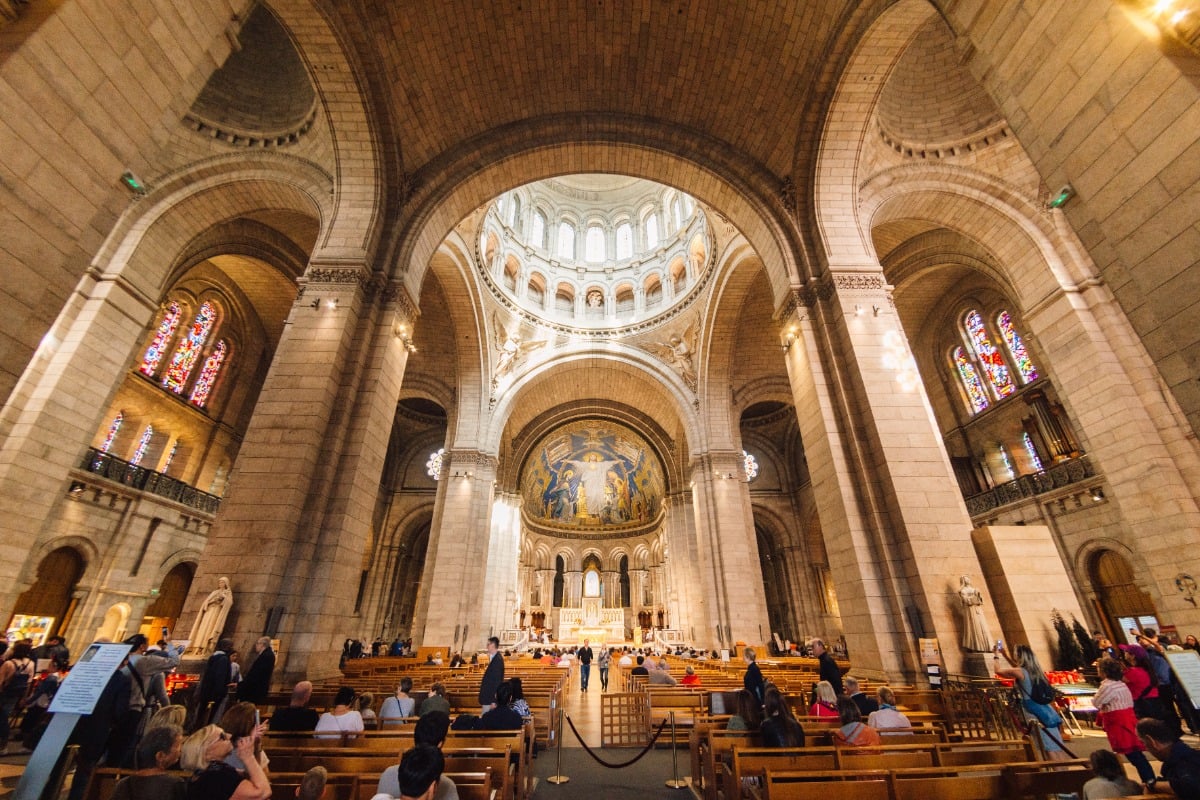
Inside, walk to the front and look up. The Christ with open arms above the altar is one of the largest mosaics in the world. The round-the-clock prayer goes on in shifts, and it has not stopped for two world wars. In 1944 bombs fell close enough to blow out the windows, and the prayer went on.
The bell
The bell in the tower is called the Savoyarde, a gift from the people of Savoy. It weighs about 19 tons and is one of the heaviest in France. A long team of horses hauled it up the hill in 1895.
The dome
The climb is a tight stone spiral with no elevator. From the gallery you see the north and west of the city, with the roofs of Montmartre at your feet. The dome closes in bad weather.
The steps
The view everyone photographs is free. From the terrace the whole city lies to the south, with the Panthéon and the Eiffel Tower on the skyline. Fans of the movie Amélie will know the carousel at the bottom.
Montmartre proper starts behind the church, with the painters of the Place du Tertre and a working vineyard.
Getting there
Anvers station puts you at the bottom of the steps, next to the funicular, which has been hauling people up the hill since 1900. Abbesses station puts you in the village behind the church, and that is the nicer way to arrive.
Nothing needs booking. Walk in through the central doors. It is a church first, so hats come off, shoulders are covered and voices stay low. The dome ticket is sold at a door on the left side of the building.
When to go
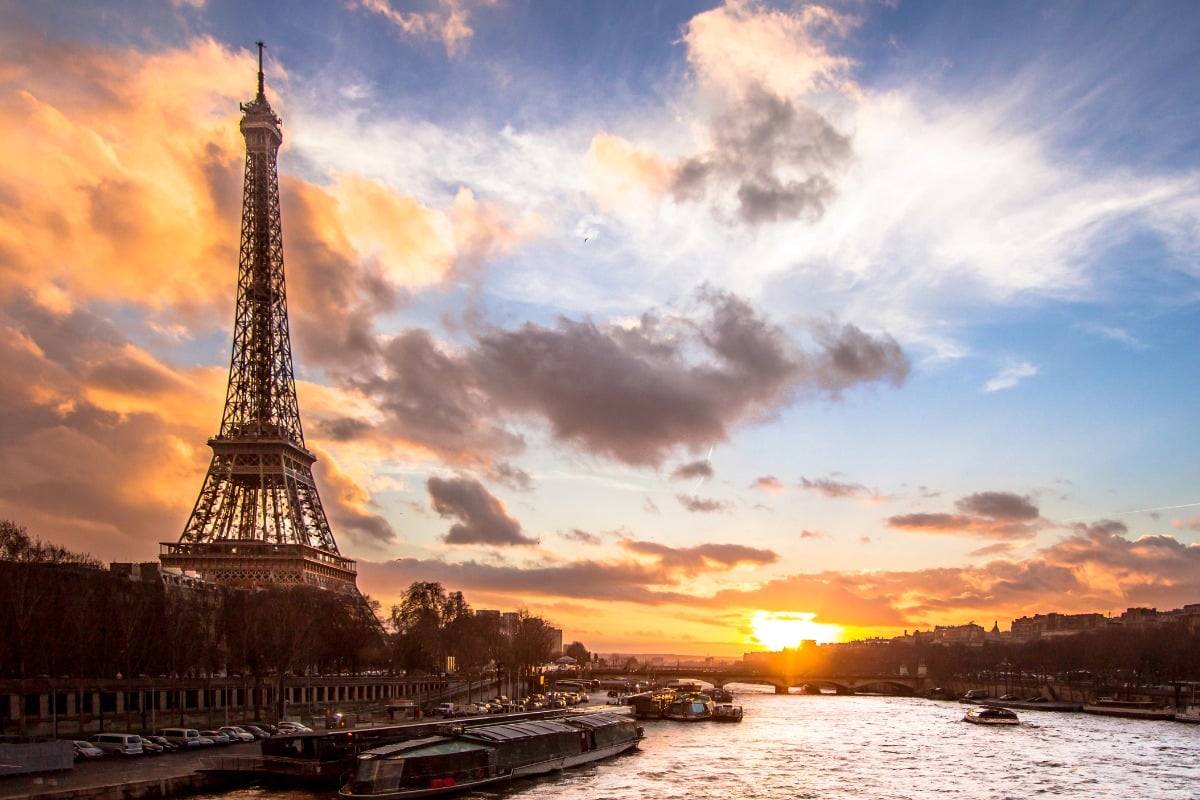
Come in the first two hours after opening and the steps are yours. Dusk is the other good hour, when the Eiffel Tower sparkles on the skyline.
From April to October, skip weekends between 11:00 a.m. and 5:00 p.m. The steps, the funicular and the Place du Tertre are all full then.
On the first Thursday of the month the basilica stays open until midnight.
Frequently Asked Questions
Is Sacré-Cœur free?
Yes. The basilica is free every day, with no ticket and no reservation. Only the dome climb is paid.
Is the funicular included in a metro ticket?
Yes. It takes a standard metro ticket or any pass that covers the metro.
How many steps is the dome?
About 300, with no elevator. Count on 30 minutes up and down.
Can I go in during Mass?
Yes. Visitors use the side aisles during services and keep quiet. Mass times are posted at the door and on the basilica’s site.
Is there a tour that includes Sacré-Cœur?
Yes. Our Private Paris in a Day Tour drives you up to Montmartre and also takes in the Louvre and Notre-Dame, with a driver-guide for eight hours. It is $2,200 for two, plus $70 for each additional person up to six. Louvre tickets and hotel pickup are included, and it runs daily except Tuesdays and major French holidays.
Our Most Popular Day Trips From Paris
Louvre, Montmartre and Notre Dame in eight hours with a private driver-guide.

Half a day on foot with a private guide, routed around what you want to see.