The short version
- Take line 12 to Abbesses, not line 2 to Anvers. Abbesses puts you in the village, and Anvers puts you under the tourist steps.
- Look at the Place du Tertre and eat somewhere else.
- Say no to the string-bracelet men at the foot of the hill, and keep your phone in your pocket on the basilica steps.
- Let our Paris in a Day driver handle the hill!

The walk
Abbesses
You come up under Hector Guimard’s glass canopy, one of only two left in Paris. The station is the deepest in the city, so take the elevator and save your legs for the hill. In the little square behind it, the Wall of Love says ‘I love you’ in 250 languages on dark blue tiles.
Rue Lepic and the windmill
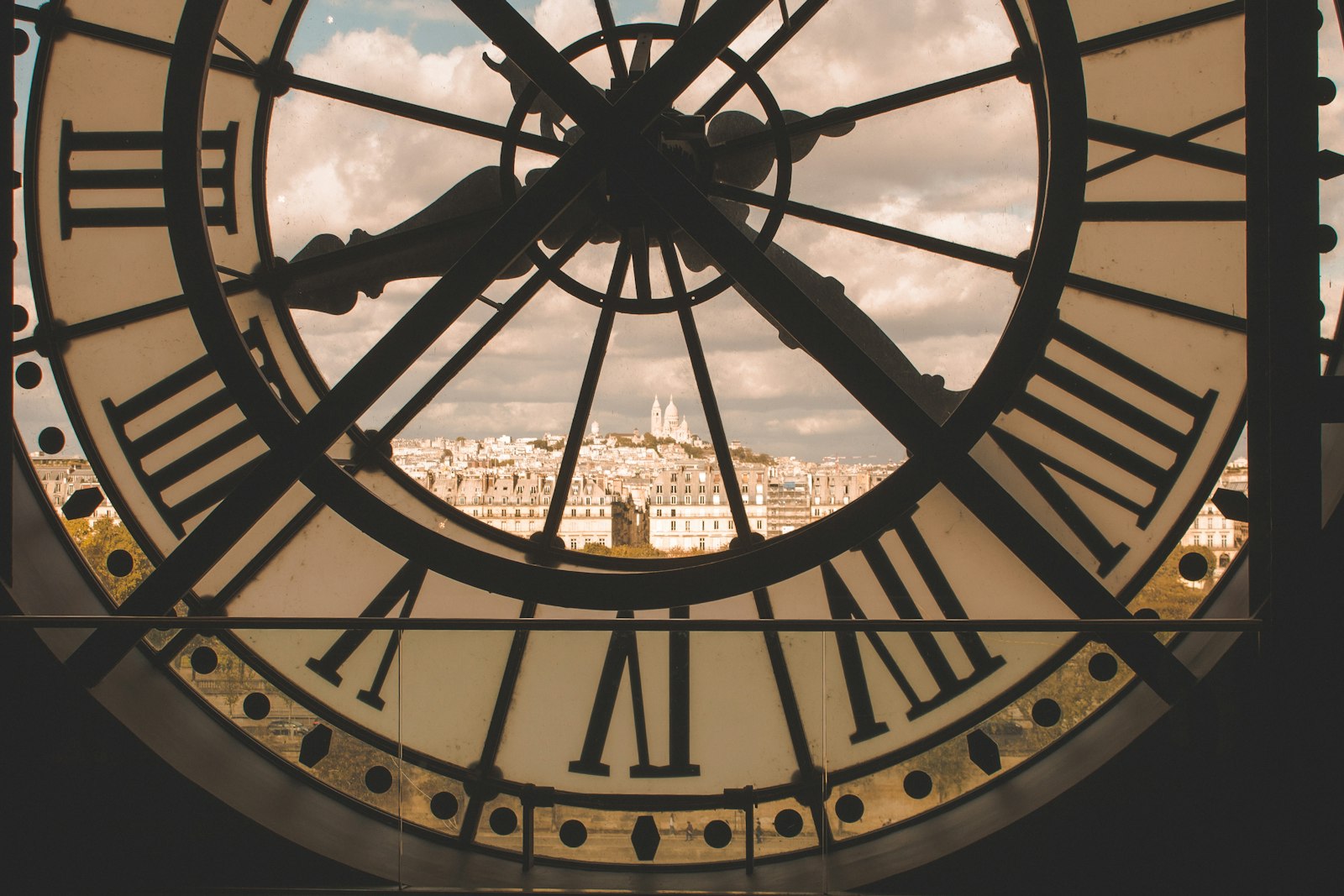
Rue Lepic winds uphill past number 54, where Vincent van Gogh shared an apartment with his brother Theo for two years. Farther up is the Moulin de la Galette. The hill once had more than a dozen windmills, and two are left. This one became a dance hall, where the miller’s family sold wine and a flat cake called a galette. Renoir painted the Sunday crowd there in 1876, and the picture now hangs in the Musée d’Orsay.
The vineyard
Turn onto rue des Saules and a vineyard appears on your left, in the middle of the city. Neighbors planted it in the 1930s to keep developers off the last open slope. It is still picked every October, and the bottles are auctioned for local charities. Nobody claims the wine is good. They buy it anyway.
The Lapin Agile
The cottage at the bottom of the street is the Lapin Agile, the cabaret where Picasso ran a tab. In 1910 a writer who was fed up with modern art tied a paintbrush to the tail of the owner’s donkey, Lolo. He hung the result in a big Paris art show under an invented Italian name. Some critics reviewed it with a straight face.
Rue Cortot
Around the corner, the Musée de Montmartre fills the oldest house on the hill. Renoir rented rooms here while he painted the Moulin de la Galette. Later Suzanne Valadon moved in. She had been a circus acrobat and a model for Renoir and Toulouse-Lautrec, and she became a better painter than most of the men who hired her. Her studio is still set up upstairs.
The Place du Tertre
The old village square is now wall-to-wall easels and portrait artists. A plaque on one restaurant claims the word bistro was born here in 1814, when Russian soldiers shouted ‘bystro,’ meaning quick, at the waiters. Historians doubt it. It’s a good story anyway.
Sacré-Cœur
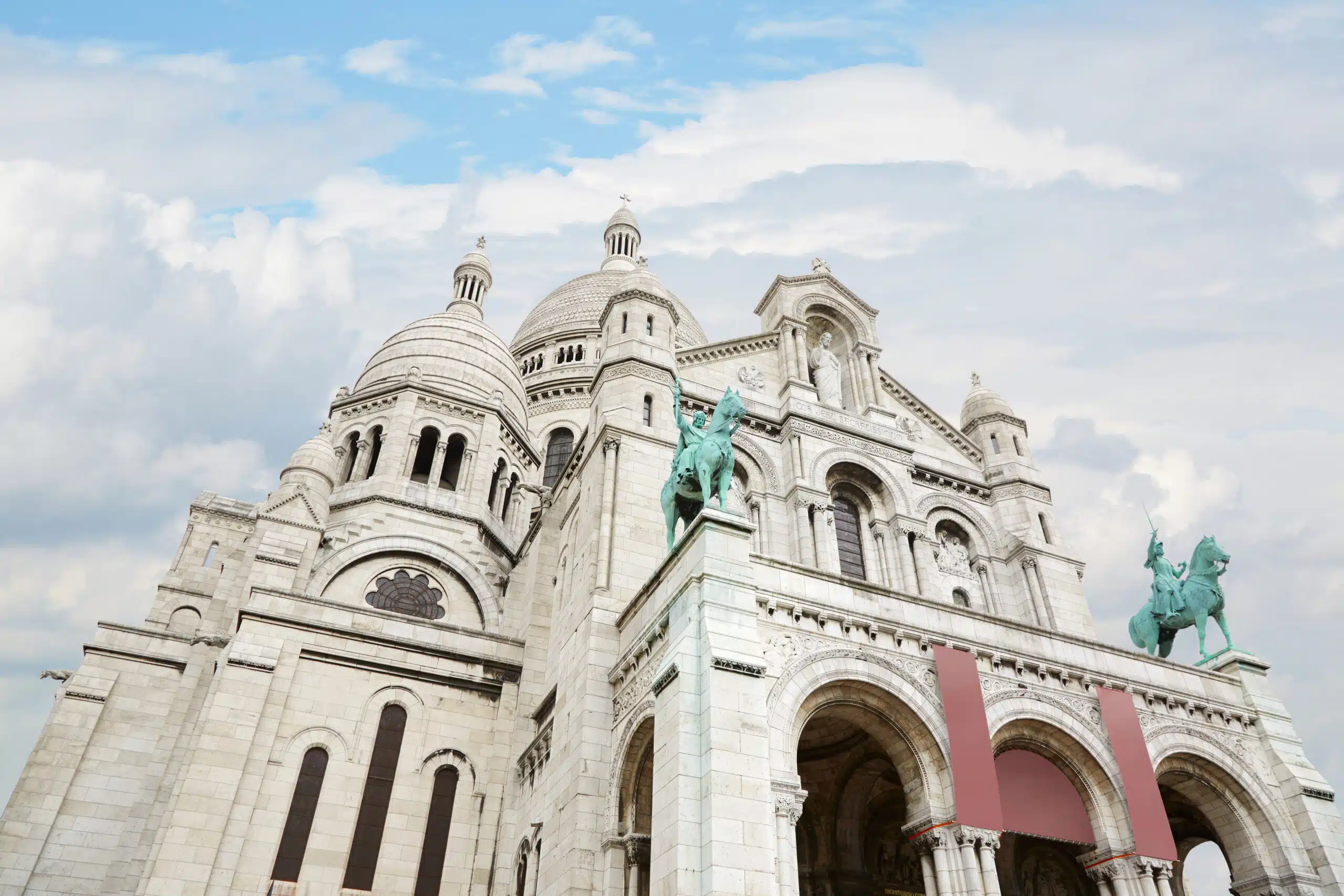
The white basilica is younger than it looks. France began it in 1875, after losing a war to Prussia and fighting a civil war that started on this very hill. It was finished in 1914. The stone gives off a white film when it rains, so the building washes itself and gets whiter with age. Go in, climb the dome if you like heights, then walk down the front steps with all of Paris below you.
Getting around
The funicular runs from the foot of the hill to the terrace below the basilica, beside the front steps. Ride it up if your legs say so, and walk down.
Lunch is on rue des Abbesses and rue Lepic, where the people who live on the hill buy their bread, cheese and wine. A picnic from rue Lepic on the basilica steps beats any table on the Place du Tertre.
Pigalle, at the bottom of the hill, is the old red-light district. It is loud and harmless in the early evening and best left alone late at night.
When to go
Early morning and the last hour of daylight are the two good times. At dusk the lights come on across the city below the basilica.
On weekend afternoons from April to October the hill is full. The funicular has a line and the Place du Tertre is shoulder to shoulder. A weekday is a different place.
The harvest festival, the Fête des Vendanges, takes over the hill for a weekend in early October, with a parade and wine stands. It is crowded and it is fun.
Frequently Asked Questions
Is the Montmartre funicular included in a metro ticket?
Yes. It takes a standard metro ticket or any pass that covers the metro, and it runs every few minutes.
Which metro stop is best for Montmartre?
Abbesses on line 12, for the village and the back way up. Anvers on line 2 leaves you at the bottom of the steps, where the crowd and the hawkers are.
How long does Montmartre take?
Half a day covers the walk and Sacré-Cœur. Add an hour for the Musée de Montmartre and another for lunch.
Is Montmartre safe?
In the daytime, yes. Watch for pickpockets on the basilica steps and the funicular, and ignore anyone who wants to tie a bracelet on your wrist.
Is there a tour that includes Montmartre?
Yes. Our Private Paris in a Day Tour is eight hours with a private driver-guide, covering Montmartre, the Louvre and Notre-Dame. It is $2,200 for two, plus $70 for each additional person up to six, and runs daily except Tuesdays and major French holidays.
Our Most Popular Day Trips From Paris

Louvre, Montmartre and Notre Dame in eight hours with a private driver-guide.

Half a day on foot with a private guide, routed around what you want to see.