
The short version
- Verdun has no station on a fast line. From Paris Est the TGV reaches Meuse TGV, in open country 25 kilometers away, in an hour, four direct a day, and an SNCF coach sold on the same ticket runs into Verdun in 30 minutes; the whole trip is 1 hour 40 at best, ten a day with a change. The last way home is the 18:03 coach for the TGV, in Paris at 19:55.
- Our Verdun and WWI Tour is a private day with a driver-guide that meets you at Reims, 46 minutes from Paris by TGV, first-class rail included: the Navarin ossuary on the Champagne front, the mine craters of the Butte de Vauquois, a drive through Verdun, the Pennsylvania Memorial at Varennes and the Meuse-Argonne American Cemetery, and Fort de Douaumont to finish, $1,835 for two and $185 for each extra guest up to six, daily from March to November.
- The Mémorial de Verdun at Fleury, the battlefield museum on the site of the vanished village’s station, is €14, or €22 with Fort de Douaumont and Fort de Vaux on a 48-hour ticket, open 9:30 to 17:30 in winter and to 18:30 from April to mid-September, closed all of January. Fort de Vaux reopened in July 2026 after a year of works; both forts are 12 degrees inside in any month.
- The Douaumont Ossuary, 137 meters long under its 46-meter tower, holds the remains gathered from the field, with the national cemetery of 16,142 graves in front of it; the cloister, the chapel and the cemetery are free, the film and the climb to the tower €7, and it closes in January. The Tranchée des Baïonnettes and the nine destroyed villages, Fleury among them, are open ground, free, all year.
- The battle ran from February 21 to December 18, 1916, 300 days, with some 306,000 dead and missing and 400,000 wounded on the two sides by the Mémorial’s count, and three-quarters of the French army rotated through it along the Voie Sacrée from Bar-le-Duc. In town the Citadelle souterraine runs you through the galleries in a guided pod with a headset, €16, 90 minutes, no under-8s, and the Monument à la Victoire climbs 73 steps above the Meuse.
- The battlefield is ten minutes from Verdun by car and nothing else: no public bus serves the Mémorial, the ossuary or the forts. The tourist office on place de la Nation rents e-bikes for €20 a half-day, runs an occasional French-language coach circuit, and lists taxis at the station without fares. The Friday market fills the covered hall on the quay from 8:00 to 13:00.

What to see
Start where the battle is explained. The Mémorial’s three floors hold 2,000 objects, the trucks and guns of the Voie Sacrée, and a hundred square meters of broken screen on which the 1916 ground heaves under the shells; its terraces look over the forest that has grown on the craters. Give it an hour and a half. Fort de Douaumont, nine hectares of concrete and earth, fell to the Germans on February 25, 1916, four days into the battle, and was held eight months; on May 8 an explosion inside killed up to a thousand of its garrison, who are walled in there still. Our day ends on its roof. Fort de Vaux, smaller and further east, is the siege of June 2 to 7, when Commandant Raynal’s men held out without water and sent their last message by pigeon.
The Ossuary at Douaumont was finished in 1932 with money raised town by town, each city’s shield on the facade, and the bones of the unidentified lie in 46 granite tombs, one for each sector of the front. The cemetery in front holds 16,142 French graves, with a Muslim plot of 592 colonial soldiers. The Tranchée des Baïonnettes nearby covers the trench where bayonet tips were said to stand above the buried men; the Bois des Caures, where Colonel Driant’s chasseurs took the first shells on February 21, is a short drive north. Fleury-devant-Douaumont changed hands sixteen times and was never rebuilt; the nine erased villages keep a chapel, a mayor and the outlines of their streets.
Verdun itself is the Citadelle: the 1916 underground town of bakeries, dormitories and command posts, visited in a wire-guided pod with a headset that follows one soldier through September 13, 1916, and ends in the hall where the Unknown Soldier was chosen on November 10, 1920; the galleries are 8 degrees. Above ground, the Porte Chaussée of the 14th century guards the river, the Monument à la Victoire of 1929 keeps the rolls of the men awarded the Verdun medal, and the Braquier factory has made the town’s dragées since 1783, with visits every morning and afternoon.
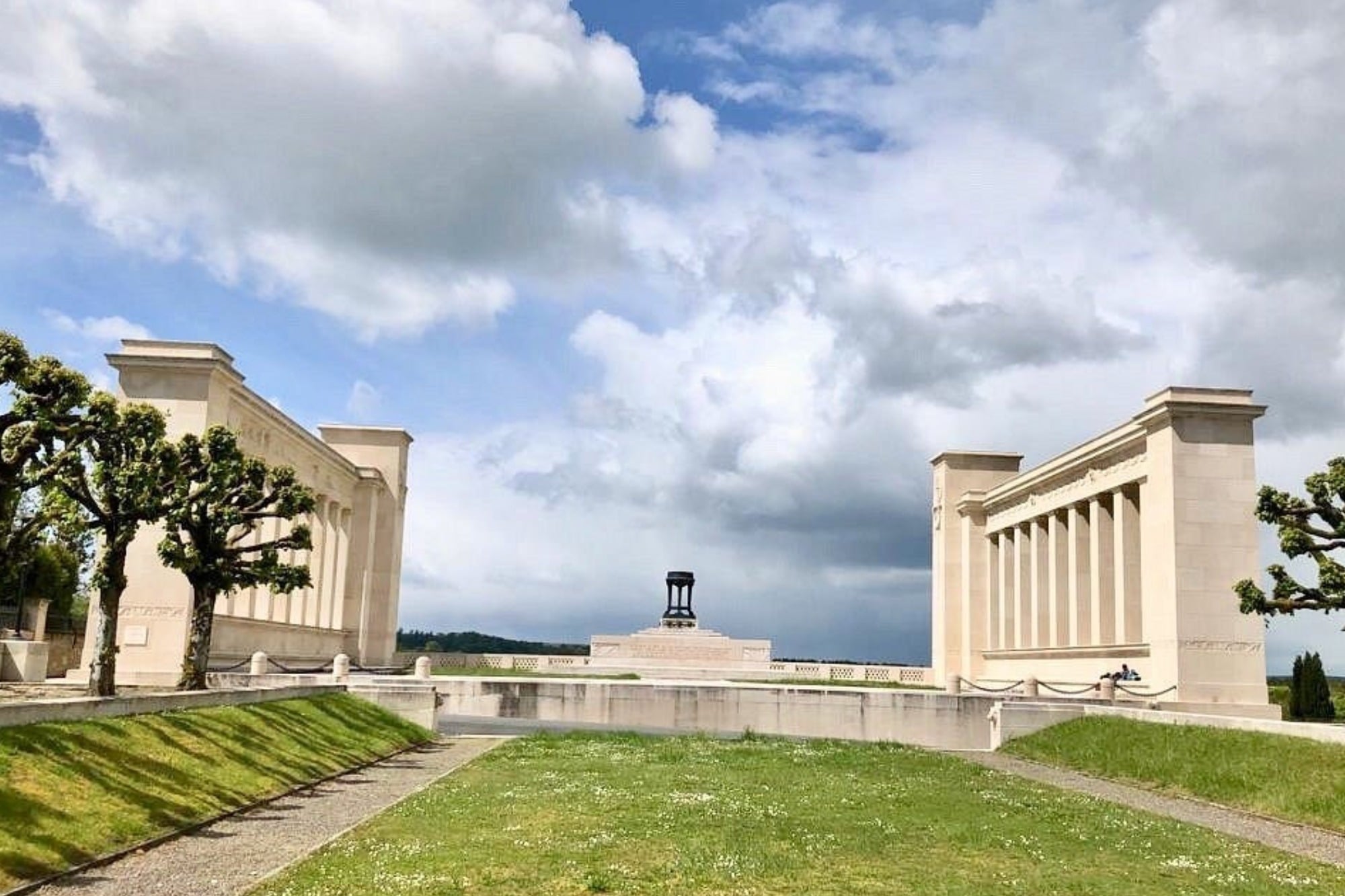
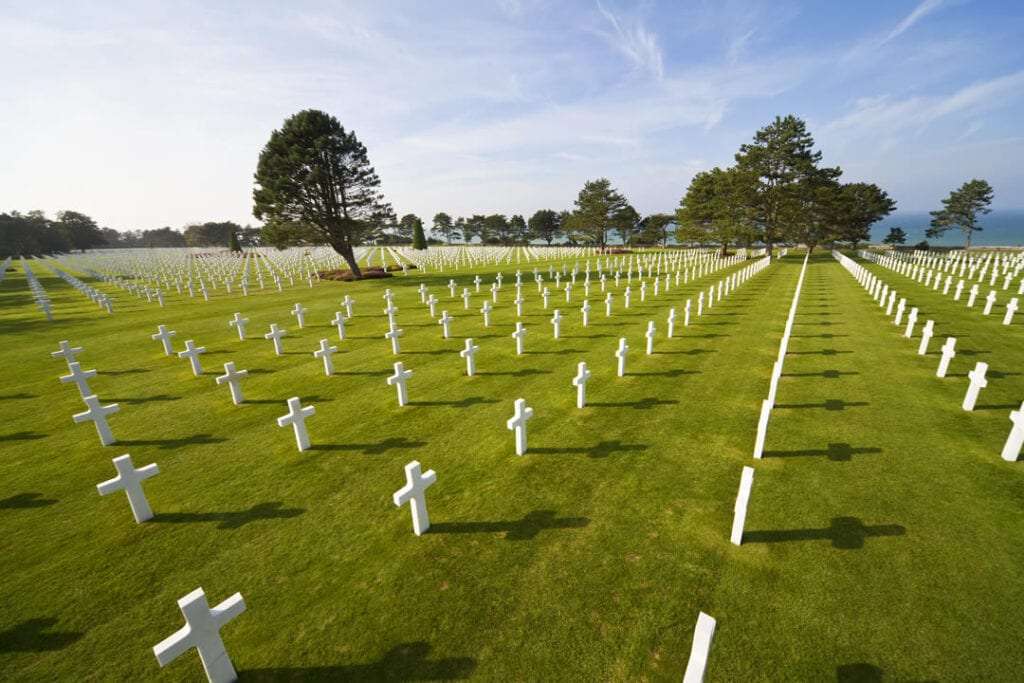
Our day draws the longer line. Navarin, on the Champagne front between Reims and Verdun, is the pyramid monument of 1924 to the dead of the armies of Champagne, with almost 10,000 unidentified soldiers of every nationality in its ossuary. The Butte de Vauquois is mine warfare: craters 10 to 20 meters deep where a village of 168 people once stood, kept as the armistice left it. The Pennsylvania Memorial at Varennes marks where that state’s division fought in September 1918, and the Meuse-Argonne American Cemetery at Romagne-sous-Montfaucon, 26 miles north-west of Verdun, holds 14,246 American dead from Pershing’s offensive, the largest American WWI cemetery in Europe, free, 9:00 to 17:00 every day but Christmas and New Year.
The table is Lorraine’s: quiche, pâté lorrain, the potée, mirabelle plums in August and in eau-de-vie the rest of the year, madeleines from Commercy down the Meuse, and a box of Verdun dragées to take home.
Getting there and around
From Paris Est the direct TGVs to Meuse TGV leave at 7:58, 13:58, 18:07 and 20:25, with the coach on through Souilly on the Voie Sacrée into Verdun at 10:01, 15:45, 19:47 and 22:05. The other way round is the TER through Metz, 3 hours 10 or more. Coming back, the 18:03 coach meets the TGV into Paris at 19:55, and the 18:59 train via Metz is the last of all, in Paris at 22:24. Verdun station is unstaffed, with a ticket machine on the forecourt; Meuse TGV has taxis and car hire and nothing else.
By road Verdun is 3 hours from Paris on the A4, exit 30, signed Voie Sacrée; 1 hour 15 from Reims; an hour from Metz. Parking is free at the Mémorial, both forts, the ossuary and the Citadelle. The sites close at 17:30 in winter and 18:30 in summer, so a day on the ground is the Mémorial, the ossuary and one fort, with the second fort or the Citadelle if you move.
The gap is the ten kilometers between the town and the field. No bus runs it; the tourist office’s e-bikes cover six circuits over hilly ground, the French-language coach circuit runs on single announced dates, and the taxis publish no fares. The Argonne sites are another 40 kilometers north-west, and Navarin is back toward Reims; nobody strings them together without a car and a day.
That is the day we sell. The Verdun and WWI Tour is private, with pickup at the tourist kiosk by Reims station off the 7:39 or 8:28 TGV, or at any hotel within 20 kilometers of Reims, 13 hours door to door with first-class rail from Paris included, Fort de Douaumont admission in, lunch at a place your guide picks, and an American-focused route on request; because it is private, tell us when you book if you want the ossuary or the Mémorial in the loop. The six-day WWII tour and the Bastogne day cover the other war.
When to go
The Meuse hills have a continental climate: July highs around 26 degrees, January days near 5 with 60 frost mornings a year, and the wettest weeks in December. The forts hold 12 degrees and the Citadelle 8 in any month, so bring a layer even in August, and the field is open to the wind, so bring rain gear in any season.
The Mémorial and both forts close for all of January and on December 24, 25 and January 1; the ossuary closes from early January into February and keeps half-days in February and December; the Citadelle closes from January 5 to February 1. Vauquois opens its galleries on the first Sunday of the month from March to October and on Tuesday and Thursday afternoons in July and August; the American cemetery opens every day but Christmas and New Year. Our tour runs from March to November, off-season by request.
February 21 is the anniversary: in 2026 the Mémorial marked the 110th with a dawn walk through the Bois des Caures at 5:45 and 7:45 among fifty re-enactors. November 11 brings readings at the Mémorial. The Flammes à la Lumière sound-and-light show plays on June 26 and through July 2027, and the three Mémorial sites are free on December 31, 2026.
April to June and September to October are the months: the sites open late, the ground is dry enough to walk, and the forest over the craters is at its most legible before the leaves come or after they fall.
Frequently Asked Questions
Is Verdun a day trip from Paris?
By train, barely: 1 hour 40 each way with a change to a coach at Meuse TGV, the first arrival at 10:01, the last connection home at 18:03, and nothing from Verdun station to the battlefield. Our day starts at Reims instead, 46 minutes from Paris with a train most hours, and the van covers the 300 kilometers of the front between the morning TGV and the evening one.
Can you see the Verdun battlefield without a car?
Not well. The Mémorial, the ossuary and the forts are ten minutes out of town by road and no bus goes there; the choices are a taxi with no posted fare, a tourist-office e-bike over the hills, or the coach circuit on the few dates it runs. What you give up is the rest of the front, Navarin, Vauquois and the American cemetery in the Argonne, which no one reaches by train, and the story told on the ground, which is what our driver-guide is for.
What is the difference between the Mémorial, the ossuary and the forts?
The Mémorial is the museum, built on the site of a village that no longer exists, and explains the battle in an hour and a half. The ossuary is the tomb, with the bones of the unidentified behind its facade and the cemetery of crosses in front, and it is free to walk. The forts, Douaumont and Vaux, are the concrete the battle was fought over, cold and damp, each about an hour and a quarter inside. Our tour ends at Fort de Douaumont.
Why does the tour start in Reims?
Because Reims has a direct TGV from Paris every hour or so, 46 minutes, and Verdun does not; because the Champagne front at Navarin lies between the two; and because a van from Reims can reach the Argonne, the American cemetery and Douaumont in one day and still make the evening train. Hotel pickups within 20 kilometers of Reims are included, so the day pairs with a night in Champagne.
Is there a tour from Paris?
Yes. Our Verdun and WWI Tour is a private day for two at $1,835 with first-class rail from Paris, $185 for each extra guest up to six, daily from March to November and off-season by request. Pair it with a Champagne day from the same station; our six-day WWII tour runs Normandy, Dunkirk and Bastogne and does not come to Verdun.
Our Most Popular Day Trips From Paris

Normandy and the Battle of the Bulge across six days with a private van and guide.


Your own expert driver-guide for the entire day. Flexible routing for up to 6 people.