The short version
- The Théâtre antique was built under Augustus in the first century, seats 9,000, and keeps the only complete stage wall in the Roman west, 103 meters long and 37 high, with the emperor’s statue in the central niche; Louis XIV called it the finest wall in his kingdom. It is open every day, 9:30 to 17:00 from November to February and 9:00 to 19:00 in summer, €11.50 with the handset and the art and history museum across the street, where the marble land register of the Roman colony is kept. UNESCO listed it with the arch in 1981.
- Our One Night in Provence meets your late-morning train at Avignon TGV and spends the first afternoon on exactly these two places, the Roman theatre with the ticket included and a Châteauneuf-du-Pape cellar for the tour and the tasting, then a four-star hotel in Avignon, with Arles, Les Baux and Saint-Rémy the next day, $775 per person, daily, eight guests at most. Our Best of Provence in Three Days, $1,925, gives Châteauneuf its last morning at two wineries; the Six Days pairs it with Tavel one afternoon; the Five Days ends there with lunch.
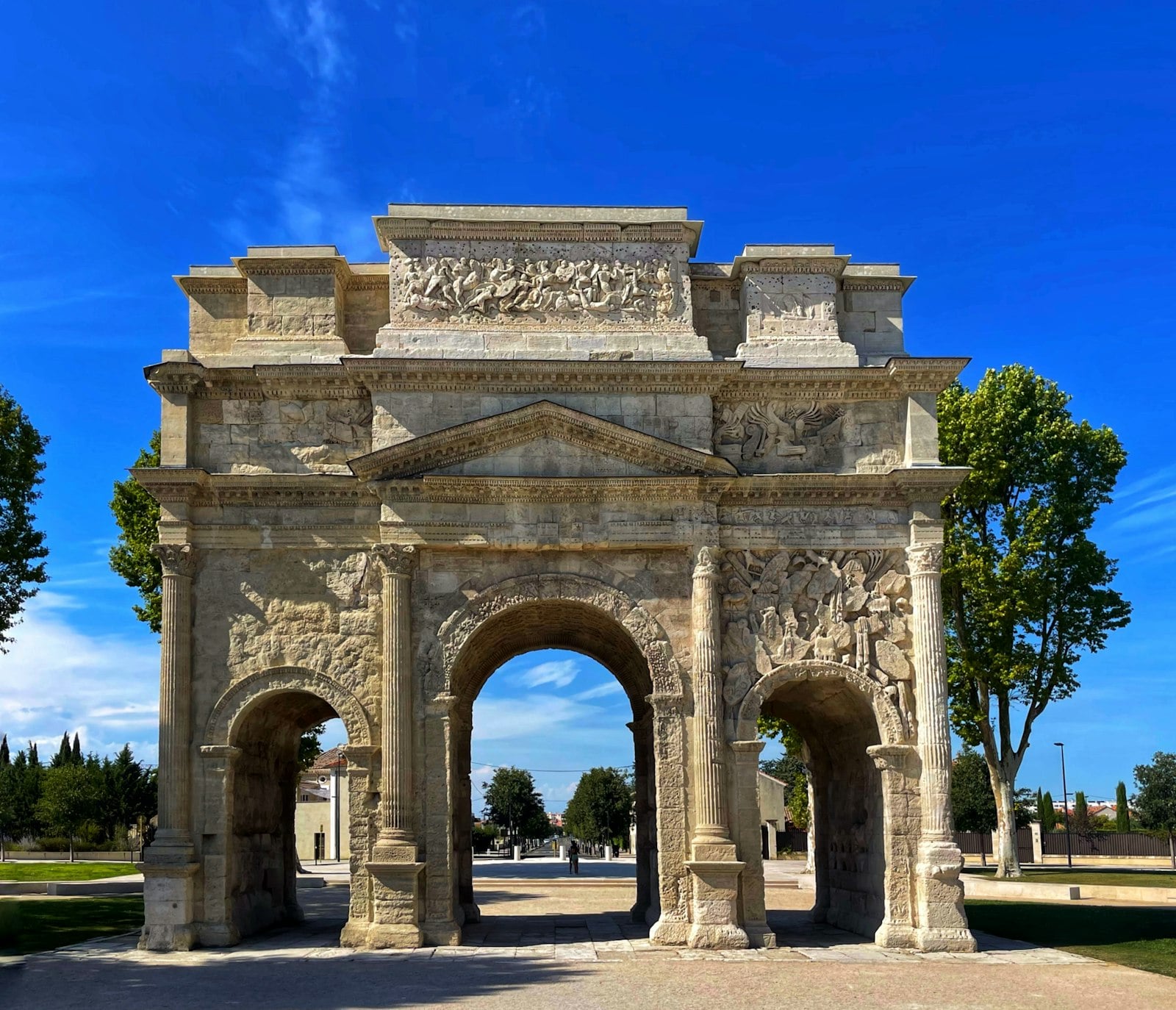
- The Arc de triomphe at the north edge of the old town, on the line of the Via Agrippa, went up around 20 BC for the veterans of the Second Legion who founded the colony: 19 meters high, three bays, with naval battles, cavalry fights and heaps of Gaulish weapons carved across it. It stands free in the open, ten minutes from the theatre. Above the theatre the Colline Saint-Eutrope gives the view over the Comtat to the Dentelles and Mont Ventoux, with the stumps of the castle Louis XIV had pulled down in 1673; the castle area is under restoration, with a belvedere over the theatre due in 2027.
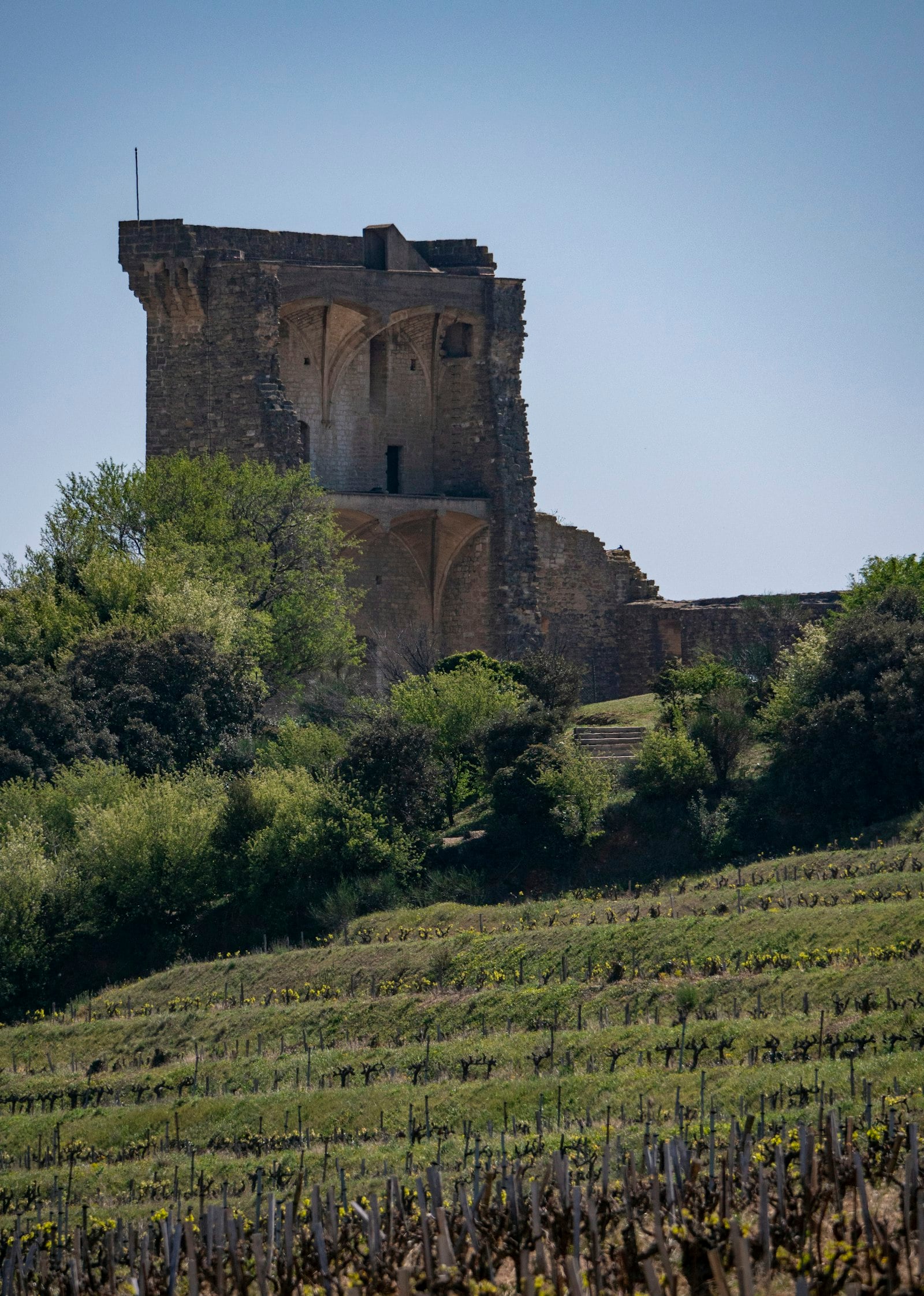
- Châteauneuf-du-Pape is a village of some 2,000 under the keep of the castle John XXII built in the 1320s as a summer house for the popes of Avignon, free to climb to, with the Rhône valley, the Dentelles, Ventoux and on clear days the Alps laid out from the esplanade. The appellation below it is 3,150 hectares on five communes, 300 growers, 93 percent red from up to thirteen grapes with Grenache in charge, grown on the famous galets, the rounded stones the Rhône tore from the Alps, which store the day’s heat for the vines. Baron Le Roy’s rules of 1923 for this village were the model for every French appellation.
- In the village you can taste without a booking: Vinadea, the Maison des Vins on the rue Maréchal Foch, pours from a hundred estates and sells 250 wines from Monday to Saturday, the Brotte wine museum on the Sorgues road runs a 45-minute visit every day of the year with tastings from €10, and a handful of caveaux on the lanes open their doors with a free glass. The estates out in the vines, Beaucastel, Vieux Télégraphe, Mont-Redon, La Nerthe, take visitors by reservation, and the growers’ own tasting room on the rue de la République opens from May to the autumn only.
- Orange is 15 minutes from Avignon Centre by TER, 21 trains a day from 5:41 to 19:53 and the last back at 21:27, with the theatre under 15 minutes’ walk from the station. Châteauneuf has no station; the stop called Sorgues-Châteauneuf-du-Pape is in Sorgues, six minutes from Avignon, and the Zou 922 bus goes on to the village in 15 minutes about nine times a day from Monday to Friday, never on a weekend or a holiday. By car the village is 26 minutes from Avignon and ten from the Orange exit of the A7.

What to see
Take the theatre first and take your time: the handset walks you up the tiers, the wall is best from the top row, and the museum across the street holds the three marble slabs of the Roman cadastre, the survey of the colony’s fields carved in the first century, which no other city has. From April to December the theatre also runs the Odyssée Sonore, a 45-minute walk through the building in headphones with the sound of the ancient crowd, €22, not for under-sevens. Then the arch, down the cours and out along the old Roman road, and the climb up the montée des Princes behind the theatre to the hilltop park for the view back down into the cavea. The Thursday market fills the streets of the centre with 300 traders from 8:00 to 12:30 all year, and the cathedral of Notre-Dame-de-Nazareth is Romanesque under its later work.
The Chorégies are the reason to be here on a July night: the oldest festival in France, founded in 1869, puts opera and orchestras on the Roman stage at nightfall, about 21:30, with the wall as the only set. The 2026 season ran from June 27 to July 18; the 2027 dates were not announced when we wrote this. The theatre stays open to visitors through the festival but closes early on rehearsal and performance days, and the last train back to Avignon is at 21:27, so a Chorégies night means a bed in Orange or a car.
Châteauneuf-du-Pape is the lanes up to the castle and the cellars under them. The keep is all that the wars of religion and a German demolition in 1944 left of John XXII’s palace, and the terrace at its foot is the view the growers mean when they talk about the terroir: the Rhône on one side, the Dentelles and Ventoux on the other, the vines on their stones between. The village tourist office on the rue de la République has the list of caveaux and the map of the two vineyard trails, a 5.4-kilometer loop through the plots and the galets, an hour and a half to two and a half, and a four-kilometer one on the biodiversity of the hedges. The Friday market is on the main square. The thing to understand before you taste is the thirteen grapes and the five soils: limestone splinters to the west for the whites, sand and safres to the east for the silkier reds, the rolled stones on the terraces for the big ones, red sandstone and red clay for the rest.
Our afternoon does it in the right order. The van leaves Avignon after the morning TGV, the theatre comes first while the light is on the wall, and the cellar is a grower who has set aside the hour, with the driver-guide to pour and to drive; non-drinkers can trade the wine for a half-day of history or art. The Three Days and Five Days take you to two cellars in a morning or a day, the Six Days adds Tavel across the river, the only appellation in the Rhône that makes nothing but rosé, and all of them put you back at Avignon TGV for the train.
The glass is Châteauneuf red, Grenache-led, warm and peppery, with the rare whites from Grenache blanc, Roussanne and Clairette; Côtes du Rhône from the villages around Orange, with Gigondas, Vacqueyras and the sweet Muscat of Beaumes-de-Venise in the Dentelles to the east; Tavel and Lirac across the Rhône. On the table, the black truffle from December to March, olive oil from Nyons, tapenade and anchoïade with raw vegetables, Cavaillon melon in summer, berlingots from Carpentras and nougat from Montélimar up the river. The growers’ Tauléjades food market is in the village on December 11 to 13, 2026.
Getting there and around
From Paris it is the TGV to Avignon, 2 hours 40 to 3 hours from Gare de Lyon, and everything here is within half an hour of that station. Two TGVs a day run through to Orange itself, the 12:14 arriving 15:35 and the 17:14 arriving 20:41, with the 6:16 and the 18:21 coming back direct; every other connection changes at Avignon TGV and again at Avignon Centre, because the Orange trains leave from the old station in town, not the TGV station outside it.
Orange is the short part: the TER from Avignon Centre takes 13 to 22 minutes, roughly hourly with a gap in the late morning, and the theatre is 1.2 kilometers from the station, under 15 minutes on foot, with two hours’ free parking under the Cours Pourtoules if you drive. The arch, the theatre, the museum, the hill and the tourist office on the cours Aristide Briand are all within ten minutes of each other.
Châteauneuf is the gap. The 922 bus runs Orange to Sorgues through the village on weekdays only, six times from Orange and nine from Sorgues, with nothing on Saturdays, Sundays or public holidays; the hourly 902 from Avignon to Orange passes Sorgues and Courthézon without entering the village; the taxis publish no fares; and the estates outside the village are on no bus at all. The village is 12 kilometers north of Avignon, 26 minutes by car from the centre and 27 from the TGV station, and ten minutes from the A7 at the Orange-Sud toll.
That is why the cellar is on our afternoon and not on the bus. The One Night in Provence is $775 per person with the Avignon hotel, breakfast, the theatre ticket and the cellar tour and tasting in, the Van Gogh day to Arles, Les Baux and Saint-Rémy after it, and the driver-guide for both; rail from Paris is not included and we book it once the tour times are confirmed. The Three Days at $1,925 is the fuller version, with the Palais des Papes, the six-stop Provence day and two Châteauneuf wineries before the train home.
When to go
The Rhône corridor is Mediterranean with the mistral down it: hot, dry summers past 30 degrees on the galets, most of the rain in autumn, mild winters, and the north wind that clears the sky for days and keeps the vines healthy, by the growers’ own account. The theatre is open-air and the hilltop exposed, so the wind matters more than the cold.
The vines colour at véraison in late July and the village celebrates it on the first weekend of August, three days of a medieval fair with Pope Clement VI and his court parading at 11:00, banquets and concerts, €10 for the wristband and the glass; the 2026 edition ran July 31 to August 2. The harvest is September, when the estates are busiest and least able to receive visitors; from November to March the vines are bare and the stones they grow on are easiest to see.
In winter the theatre keeps 9:30 to 17:00 and the museum shuts for lunch from October to March, the growers’ tasting room on the rue de la République is closed until May, the Brotte museum closes between 10:45 and 14:00 from mid-October to mid-April, Vinadea closes on Sunday, the Orange tourist office closes on Sunday, and the 922 bus does not run on holidays. The Colline Saint-Eutrope stays open while the castle is rebuilt around it, with the belvedere due in 2027.
The Chorégies take the theatre at night from late June to mid-July, and the theatre charges €1.50 more by day on show days from early July to mid-August. The Rhône growers pour the new vintage at Millévin in Avignon on the third Thursday of November, and Châteauneuf holds its growers’ weekend in mid-November and the Tauléjades market in December. April to June and September to October are the months for the theatre by day and the lanes of the village without the heat.
Frequently Asked Questions
Is Orange a day trip from Avignon?
Yes: 15 minutes by TER from Avignon Centre, trains most hours, and the theatre, the arch and the hill within a 15-minute walk of the station; half a day covers them. Our One Night in Provence folds the theatre into an afternoon that also reaches a Châteauneuf cellar, which the train does not.
Can I visit Châteauneuf-du-Pape on my own, without a car?
On a weekday, yes: train to Sorgues, six minutes from Avignon, then the 922 bus to the village, 15 minutes, nine times a day, and the castle, Vinadea and the village caveaux on foot. What you give up is the weekend, when the bus does not run, the estates out in the vines, which take visitors by appointment and are on no bus, and the driver afterwards, which is the part of a wine afternoon our guests are happiest to hand over.
Which cellars does the tour visit?
We do not name them on the page because they change with the day and the season; our guides work with growers who set aside the time for a tour and a tasting rather than a counter pour. On the One Night it is one cellar after the theatre, on the Three Days and Five Days two of them, and on the Six Days one in Châteauneuf after Tavel. Non-drinkers on the One Night can swap the wine for a history or art half-day.
When are the Chorégies d’Orange?
Late June to mid-July, with opera and concerts in the Roman theatre at nightfall; 2026 ran June 27 to July 18 and the 2027 programme is published on choregies.fr over the winter. Tickets go fast for the operas; the theatre closes early to visitors on rehearsal and show days, and the last train back to Avignon leaves at 21:27, before the curtain falls, so plan a night in Orange or a car.
Is there a tour from Paris?
Yes. Our One Night in Provence, $775 per person, meets your morning TGV at Avignon TGV and takes you to the Roman theatre in Orange and a Châteauneuf-du-Pape cellar that afternoon, with Arles, Les Baux and Saint-Rémy the next day. Our Best of Provence in Three Days, $1,925, the Five Days, $1,850, and the Six Days, $2,350, each give Châteauneuf a morning or an afternoon. Rail is not included; we book it once your dates are set.
Our Most Popular Day Trips From Paris


Ride between Avignon and the Provence villages with two hotel nights along the way.