The short version
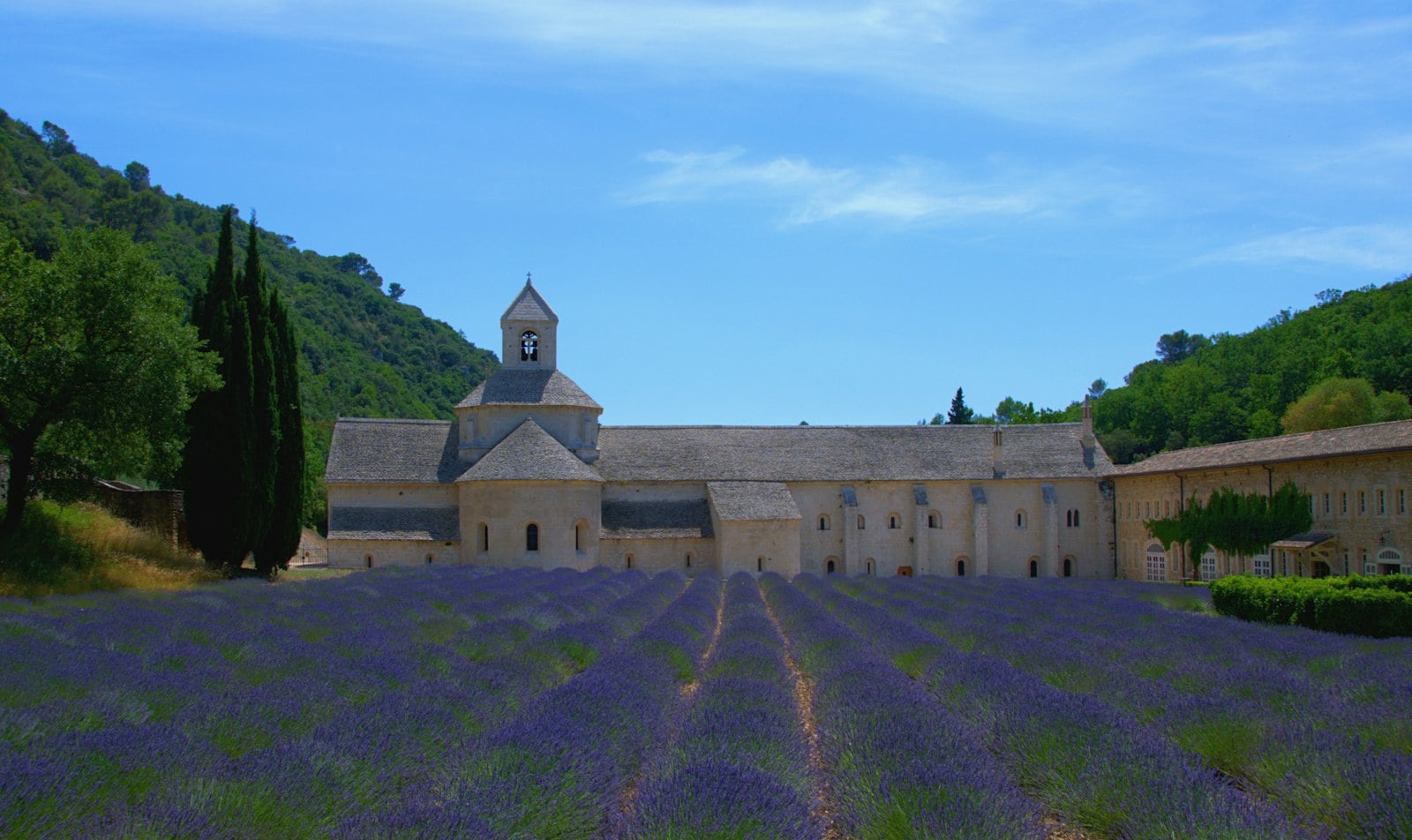
- Three places make the pictures. The Valensole plateau in the Alpes-de-Haute-Provence, 800 square kilometers at 500 meters, is the sea of rows, almost all of it lavandin, a hybrid grown for bulk oil; the plateau of Sault and Albion above Carpentras, at 700 to 1,100 meters, is where true lavender grows, the fine-scented plant of the AOC Lavande de Haute-Provence, which must come from above 800 meters; and the abbey of Sénanque below Gordes has the one field everybody photographs, a strip of lavandin in front of a Cistercian church of 1148.
- Our Provence Lavender Tour runs from July 6 to 25, when the Sault plateau is at its best: you come down to Avignon from Paris the day before, meet the driver-guide at the Avignon Tourist Office at 8:00, start at a village market, climb to Sault, the lavender capital, with its distilleries and nougat, then Gordes and the abbey at Sénanque, back about 5:30 p.m., $160 per person, eight guests at most, rail and hotel not included. It sells out in the spring. Our Five Days in Provence and Two-Night Biking visit the lavender museum and the fields around the Luberon in June and July.
- The calendar is the whole game. On the Valensole plateau the bloom starts in mid-June, peaks in early July and the harvest usually begins around July 14, though in 2026 the cutters were out on June 29; the dates move ten to fifteen days with the spring. At Sault, higher and later, the fine lavender opens at the end of June, holds through the first half of July, and is cut from mid-July into August; Sénanque’s field runs mid-June to mid-July. By the first week of August the plateaus are green stubble and the stills are running.
- The rules are the farmers’: stay on the edge of the field or the track, do not walk into the rows, pick nothing, fly nothing, and park in the lay-bys, never on a bend or a verge. Sénanque bars its field outright to protect the crop, reports drones to the police, and asks for quiet and covered shoulders inside; the visit is €8, an hour with a guide in French or with a tablet in eleven languages, and there is no visit on Sunday mornings. At Valensole and Sault the distilleries open their doors for free and are the better place to stand among the plants.
- The Musée de la Lavande at Coustellet, 45 minutes from Avignon on the Gordes road, explains the difference between lavender and lavandin with its old copper stills, €8 for an hour, open every day from April to December 23 and distilling in July and August. Sault has two free distilleries, Vallon des Lavandes and Aroma’Plantes, and a 5.5-kilometer marked loop through the fields from the village; the Agnels distillery at Apt runs guided visits in summer; at Valensole the Angelvin farm on the Manosque road lets visitors walk in through the heart of July.
- None of it is on a bus worth planning around. Sénanque has no service at all; the Valensole fields have a commuter bus to Manosque that is no use for a day out; Sault has three coaches a day from Carpentras from Monday to Saturday, out at 9:05 and back at 14:25 or 16:35, and nothing on holidays, including the day of its own festival. By car Sault is an hour and a quarter from Avignon, Valensole about 50 minutes from Aix-en-Provence TGV and half an hour from Moustiers and the Verdon, and Sénanque three kilometers down a one-way lane from Gordes.

What to see
Learn the plant first and the photographs make sense. True lavender, Lavandula angustifolia, grows from seed above 600 meters, has a single flower spike on a short stem and gives a soft oil the perfumers want; it is what the AOC protects on the Sault plateau, and a hectare of it yields a third of the oil of lavandin. Lavandin is the hybrid of true lavender and the spike lavender of the lowlands, sterile, planted from cuttings, taller and bushier with a stronger camphor note, and it is what covers Valensole and fills the soaps, the detergents and the abbey field. France grew 27,500 hectares of the two in 2024, fewer than a few years ago, and the pictures you know are almost all lavandin.
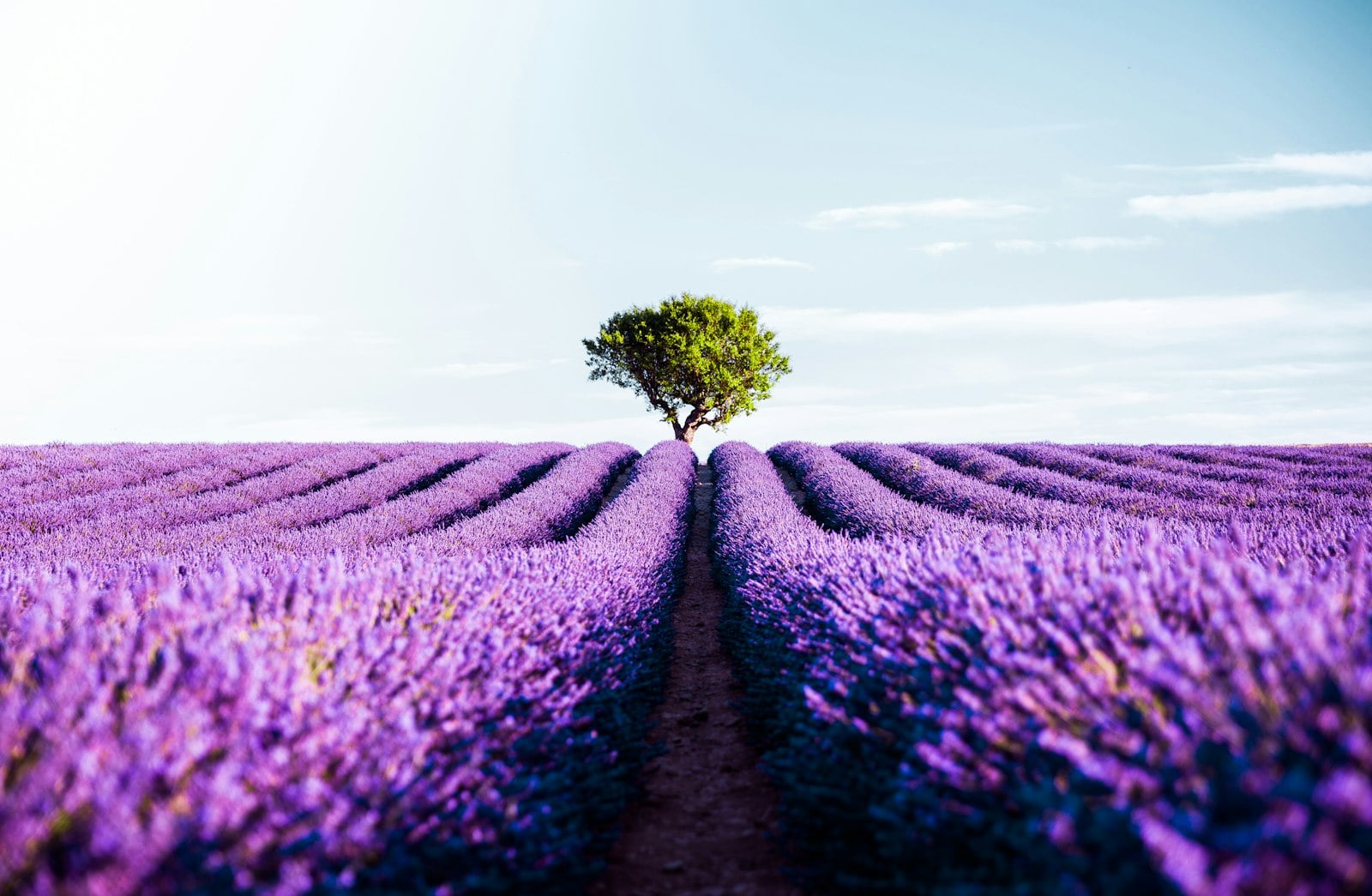
Valensole is the drive. The fields lie along the D6 toward Puimoisson and Riez, the D8 and the D56, with the lone trees and the stone huts the photographers queue for, and the tourist office’s Routes de la Lavande loop runs 92 kilometers around the plateau through Riez, Allemagne-en-Provence and Gréoux-les-Bains in about four hours. The Angelvin farm and the Jaubert family’s shop sell oil and almonds on the Manosque road, and Terres de Bonaventure, the last traditional still on the plateau, gives free guided visits by booking from May to September. On the third Sunday of July, Valensole holds its Fête de la Lavande, 80 producers in the streets and a parade of the lavandières at 10:00; in 2026 it was July 19. Moustiers-Sainte-Marie and the Gorges du Verdon are half an hour on, which is why people pair them.
Sault is the village on the edge of the high plateau, at 700 meters, with true lavender on the slopes above it toward the Albion plateau and Mont Ventoux across the valley. Walk or drive the Chemin des Lavandes from the village, 5.5 kilometers; stop at Vallon des Lavandes for the hour-long visit of a still fired with lavender straw, open without booking in July and August, or at Aroma’Plantes on the Ventoux road, 30 minutes, every day of the year; buy nougat at André Boyer, who has made it with lavender honey since the 19th century, and the petit épeautre, the einkorn of the plateau, at the Maison des Producteurs. The Wednesday market is 8:30 to 12:30. On August 15 the Fête de la Lavande fills the Sault racecourse with the French sickle-cutting championship, a producers’ market and parades of folk groups and old tractors, free, with a farm lunch for €25; by then the plateau is being cut, which is the point.
Sénanque is the picture with a church in it. The abbey was founded in 1148 by Cistercians from Mazan, the monks came back in 1988 and are there still, and the field in front of the apse is theirs: photograph it from the road and the car park, where everyone does, and go inside for the cloister, the chapter house and the dormitory, bare and grey and cool. The D177 down from Gordes is one way from March 15 to September 30, the car park is free and five minutes from the door, and on foot from Gordes it is half an hour down and an hour back. Our lavender day finishes here after Gordes; the biking trip sleeps in Gordes, three kilometers up the hill. The Three Days passes Gordes on its Provence day and fits lavender viewing into it in June and July.
The table is the plateau’s: lavender honey, pale and mild, from hives trucked onto the fields in bloom; the white and black nougat of Sault; petit épeautre de Haute-Provence, the einkorn with its own IGP, in soups and salads; Banon goat’s cheese in its chestnut leaf from the villages between the two plateaus; the almonds of Valensole, which blossom in March before the lavender is even green; and the lavender ice cream, syrup and biscuits of every distillery shop. The markets are Sault on Wednesday, Riez on Wednesday, Gordes on Tuesday and Carpentras on Friday.
Getting there and around
From Paris the lavender is the TGV to Avignon, 2 hours 40 to 3 hours from Gare de Lyon, for Sault, Sénanque and the Luberon, or the TGV to Aix-en-Provence, about 3 hours, for Valensole. Neither plateau has a railway of its own; the nearest stations are Carpentras for Sault, Cavaillon for Sénanque and Manosque, 38 kilometers short, for Valensole, and all three need a car, a taxi with no posted fare, or a van like ours from there.
By car the triangle is wide: Avignon to Sault an hour and a quarter by the D942 through the Nesque gorge, Avignon to Coustellet and the lavender museum 45 minutes and Gordes 15 more, Apt to Sault 45 minutes over the Claparèdes plateau, where the Luberon’s own lavender grows; Aix to Valensole about 50 minutes up the A51 and the D6, Manosque to Valensole 15 minutes, Moustiers 30. Valensole and Sault are an hour and a quarter apart, so a day is one plateau, not both. The roads on the Valensole plateau are small and the lay-bys fill by nine in July; the D177 to Sénanque is one way downhill through the summer and coaches cannot turn in the village.
By bus, honestly: the Zou 912 from Carpentras reaches Sault at 10:10 and leaves at 14:25 or 16:35, Monday to Saturday, never on a holiday, which rules out the August 15 fête; the Luberon buses reach Gordes four times a day from Coustellet and never on Sunday, and Sénanque is then a walk; the Valensole line is a school and commuter run into Manosque in the morning and out in the afternoon, the wrong way round for a visitor. The lavender museum at Coustellet is the one lavender stop with a bus at the door, the 907 from Avignon, with 20 percent off the ticket for showing it.
That is the day we sell. The Provence Lavender Tour, $160 per person, is a driver-guide and a van of eight from the Avignon Tourist Office at 8:00 for a market, Sault, Gordes and Sénanque, back about 5:30 p.m., from July 6 to 25 only; you book your own Avignon hotel or ask us, and we can book the Paris trains once the tour time is confirmed. Outside those three weeks, the Five Days ends with the lavender museum and the fields in June and July, and the biking trip rides past them from Gordes.
When to go
The plateaus are high Provence: Valensole’s weather station at 600 meters reads a July average high of 30 degrees and a January one of 9.5, with 670 millimeters of rain a year, most of it in October and November and almost none in July. The mistral blows down both plateaus on clear days; the sun on the fields at midday is white, and the colour is deepest in the first and last hours, which is when the photographers are out and the tractors are not.
Bloom, then, in order of height: the Luberon and Sénanque from mid-June to mid-July, Valensole from mid-June with the peak in early July and the cut from around July 14, Sault and Albion from the end of June through the first half of July and into the last week at the top, with the mechanical cut from mid-July to mid-August. The flowering phase lasts three to four weeks wherever you are, and it moves ten to fifteen days with the spring; 2025 and 2026 were both early. Our tour’s window, July 6 to 25, is the Sault window; by its last week Sénanque’s field may already be cut, and the guide goes where the colour is.
The fêtes follow the harvest: Ferrassières on the first Sunday of July, Apt on the second weekend, Valensole on the third Sunday, with the Digne corso in early August and Sault on August 15, every year, with the sickle championship. The lavender museum closes from December 24 to the end of March, the Agnels distillery takes visits by appointment only from November to March, Vallon des Lavandes closes from the end of November to April, and Sénanque keeps winter hours with no Sunday mornings.
Off season the plateaus are still worth the drive: almond blossom on Valensole in March, the green rows in May before the colour, the stills running in late July and August with the smell over the whole village, and the truffle markets of the Ventoux in winter. For the purple, the first ten days of July, early in the morning, and a guide who was there yesterday.
Frequently Asked Questions
When is the lavender in bloom in Provence?
Mid-June to mid-July as a rule, later the higher you go: the Luberon and Sénanque from mid-June, Valensole peaking in early July and cut from about July 14, Sault into the last week of July. The dates shift ten to fifteen days with the spring, and 2026 was two weeks early. The first ten days of July are the safest for all three, which is why our tour runs from July 6 to 25.
Can I see the lavender fields on my own, without a car?
Sault, on a weekday, with the 9:05 bus from Carpentras and a four-hour stay; the lavender museum at Coustellet on the Avignon bus; Gordes by bus and Sénanque on foot from there, an hour each way. What you give up is Valensole altogether, which has no bus a visitor can use, every Sunday and holiday, and the thing that makes a lavender day work, which is someone who knows which field was cut yesterday and which farmer welcomes you at the still; that is what our driver-guide is for.
Valensole or Sault?
Valensole for the endless rows and the famous lone trees, lavandin, best in early July and an hour from Aix; Sault for true lavender on a high plateau under Mont Ventoux, smaller fields, distilleries that let you in for free, and a bloom that lasts into late July. Our tour goes to Sault, because it is reachable from Avignon in a day with Gordes and Sénanque, and because its window is the longest.
Can I walk into the lavender at Sénanque?
No. The field is the monks’ crop and closed to walkers, and the abbey reports drones to the police. Photograph it from the road above and the car park, then visit the abbey itself, €8, with a guide in French or a tablet in English, except on Sunday mornings. The distilleries at Sault and Valensole are where you can stand among the plants with the farmer’s blessing.
Is there a tour from Paris?
Yes. Our Provence Lavender Tour is a day from Avignon, $160 per person, eight guests at most, July 6 to 25, with a market, Sault, Gordes and Sénanque; you take the TGV down the day before and we can book it. In June and July our Five Days in Provence, $1,850, and Two-Night Biking, $1,185, include the lavender museum and the fields around the Luberon.
Our Most Popular Day Trips From Paris


Ride between Avignon and the Provence villages with two hotel nights along the way.


