The short version
- Come on a Sunday morning if you can. The Bastille market is at its biggest, and the Aligre market is open too.
- Don’t look for the prison. Look down, for the line of paving stones that traces its walls.
- Book dinner on rue de Charonne. The bistros around it are some of the best value in Paris.
- Hungry? Take a food tour of the Marais next door!

The walk
Marché Bastille
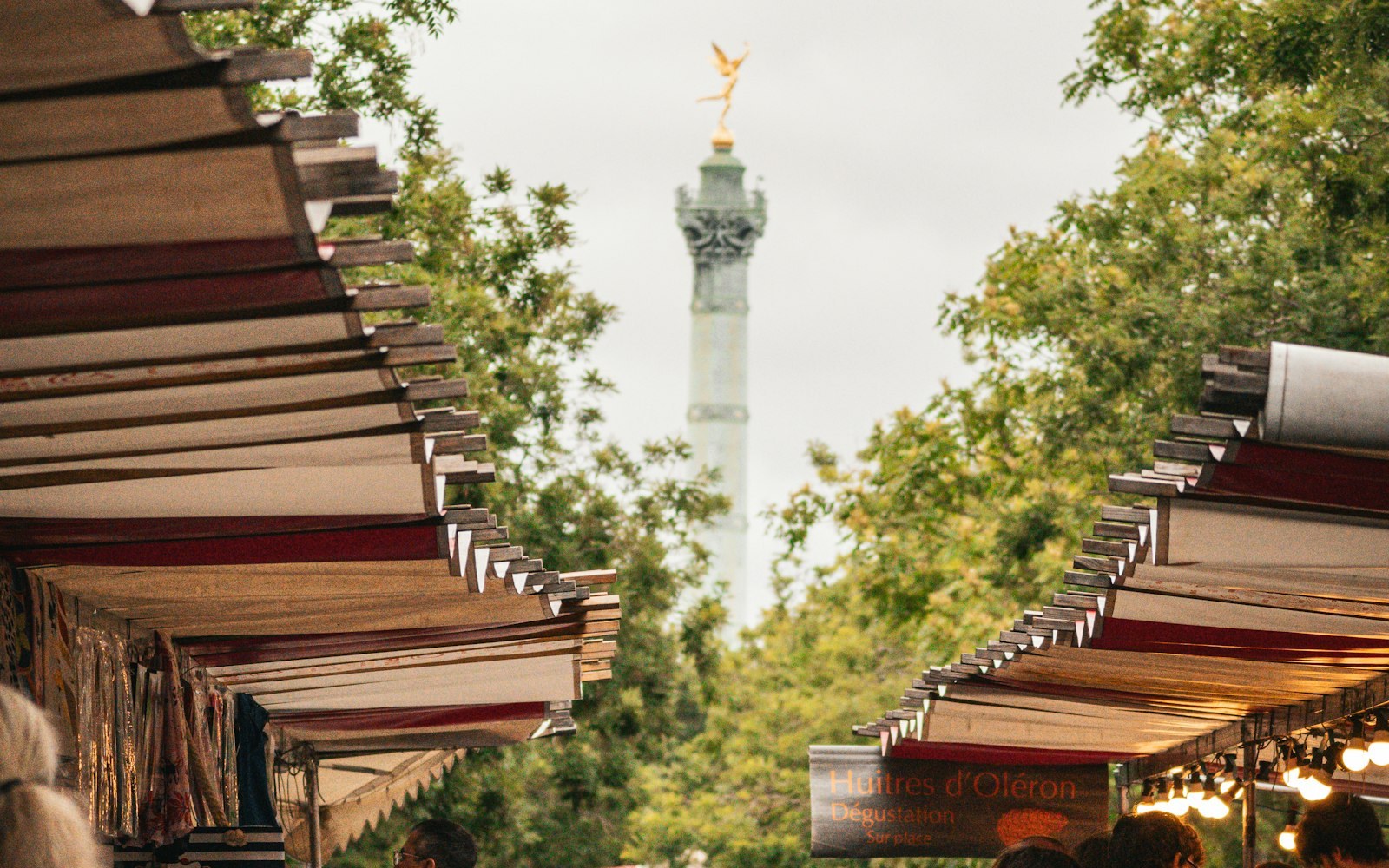
Start at the top of boulevard Richard-Lenoir on a market morning and walk the stalls south toward the column. The boulevard is this wide for a reason. The Canal Saint-Martin runs in a tunnel right under your feet, roofed over in the 1860s. Look for the rotisserie stands, where the potatoes cook in the drippings under the chickens.
Place de la Bastille
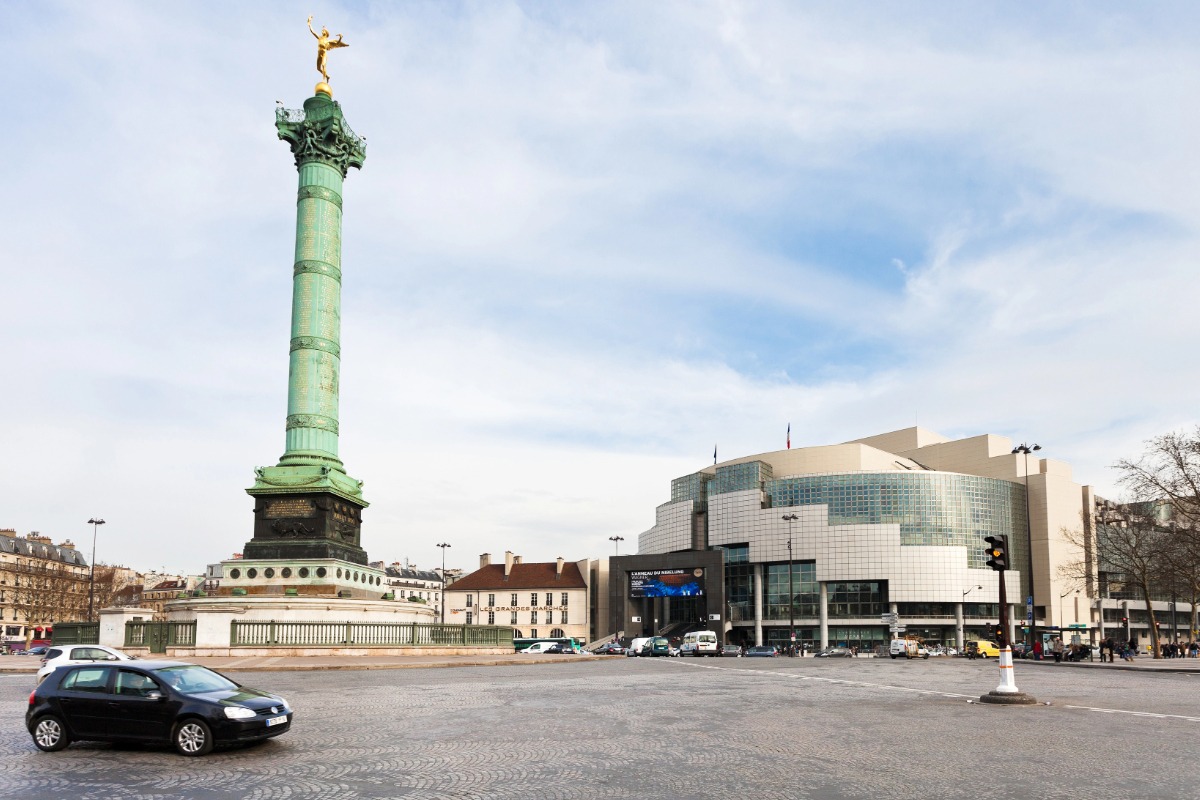
On July 14, 1789, a crowd took the fortress that stood here. It held seven prisoners that day. A contractor started tearing it down almost at once and sold the stones as souvenirs. Lafayette sent the main key to George Washington, and it still hangs in his house, Mount Vernon.
The column in the middle has nothing to do with 1789. It honors the revolution of 1830. Before it went up, Napoleon planned a giant bronze elephant for this spot. Only a plaster model was ever built, and it stood here crumbling for decades. Victor Hugo gave it to the street boy Gavroche as a home in Les Misérables.
The Coulée Verte
Behind the Opéra Bastille, climb the stairs on avenue Daumesnil. Trains to Vincennes once ran along the top of this brick viaduct. In 1993 the city turned the old line into a garden path, years before New York did the same with the High Line. You walk east at rooftop height, level with the top-floor windows. The arches underneath hold the workshops and stores of the Viaduc des Arts.
Marché d’Aligre
After about 20 minutes, come down to rue d’Aligre. This market is cheaper, louder and more local than the first. The street stalls sell fruit and vegetables, and the covered Beauvau hall beside them has the cheese, meat and fish. The square has a small flea market, a wine bar and a café. Have lunch at a table there.
Rue de Charonne and rue de Lappe
Walk back west through the Faubourg Saint-Antoine. For centuries this was the furniture makers’ quarter, where craftsmen were free of the guild rules that bound the rest of Paris. Their workshops filled the courtyards and passages that open off the streets. Rue de Charonne and rue Keller have the boutiques now, and they are quieter than the Marais.
Rue de Lappe was the street of the dance halls. Families from the Auvergne ran the cafés here and brought the accordion music that Paris calls bal musette. The Balajo opened on this street in the 1930s. Finish with a drink.
Getting around
The walk begins and ends near Bastille station. Le Marais starts on the far side of the square, down rue Saint-Antoine, and makes an easy second half of the day.
For a late dinner, go north to rue Oberkampf and rue Jean-Pierre-Timbaud. That is where the falafel, the burgers, the Lebanese food and the bars are.
When to go
Thursday gives you both markets, the same as Sunday. On other mornings the Aligre market is open alone, except on Monday, the quiet day.
Weekend nights belong to rue de Lappe and rue Oberkampf. They start late, and they are loud.
Around July 14 the fire stations of the 11th hold their firemen’s balls.
Frequently Asked Questions
When is the Bastille market?
Thursday from 7:00 a.m. to 1:30 p.m. and Sunday from 7:00 a.m. to 2:30 p.m., on boulevard Richard-Lenoir. The city lists every market’s days on paris.fr.
Is there anything left of the Bastille prison?
Not on the square. The outline is marked in the paving, and some foundation stones were moved to the Square Henri-Galli, by the river.
What is the Coulée Verte?
A planted walkway on top of the old Vincennes railway viaduct. It runs about 4.5 km east from the Opéra Bastille toward the Bois de Vincennes, and it is free.
Is the area safe at night?
Yes, and busy. Watch your phone in the crowded bars, as you would anywhere.
Is there a food tour near the Bastille?
Yes. Our Private Marais Food Tour meets in front of Saint-Paul-Saint-Louis church on rue Saint-Antoine, about ten minutes from the square. It is two and a half hours, with ten tastings and a bistro lunch with wine. It costs $745 for two people, plus $95 for each additional person up to six.
Our Most Popular Day Trips From Paris
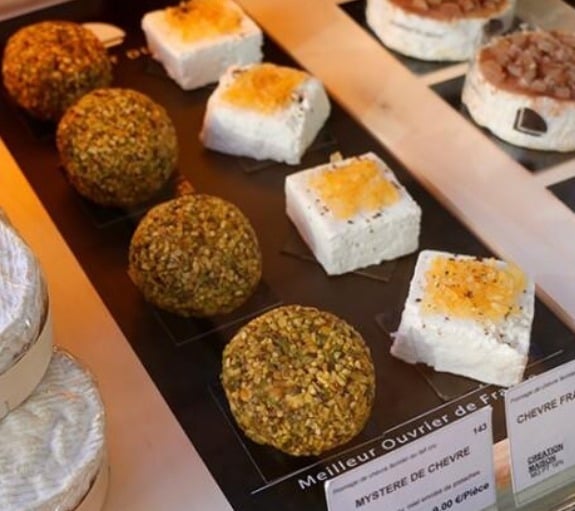
Explore the Marais through its flavors! Sample French delicacies while strolling historic Jewish quarters and chic boutiques.

Half a day on foot with a private guide, routed around what you want to see.