The short version
- Aim for the first ten days of July. The bloom can shift by two weeks with the spring weather.
- Pick one plateau for the day. Valensole and Sault are an hour and a quarter apart.
- Stay at the edge of the rows. Every field is a farmer’s crop, and the bees are working.
- See it in bloom on our lavender day.

What to see
Two plants, one color
The Romans scented their baths with lavender, and the name comes from the Latin word for washing. True lavender grows wild in the high country of Provence. For centuries shepherds and farm families cut it on the hillsides with sickles and sold it to the perfume makers of Grasse.
Most of what you see in the famous photographs is lavandin, a taller and stronger-smelling cross that grows lower down. It gives about five times as much oil, and it ends up in soap and laundry detergent. The fine perfume still comes from true lavender, grown above 800 meters.
Sault
Sault sits on the edge of a high plateau facing Mont Ventoux, and it calls itself the lavender capital. This is true-lavender country, and because it is high, it blooms last. A marked path loops through the fields from the village. In town, André Boyer has been making nougat with lavender honey since the 1800s.
Sénanque Abbey
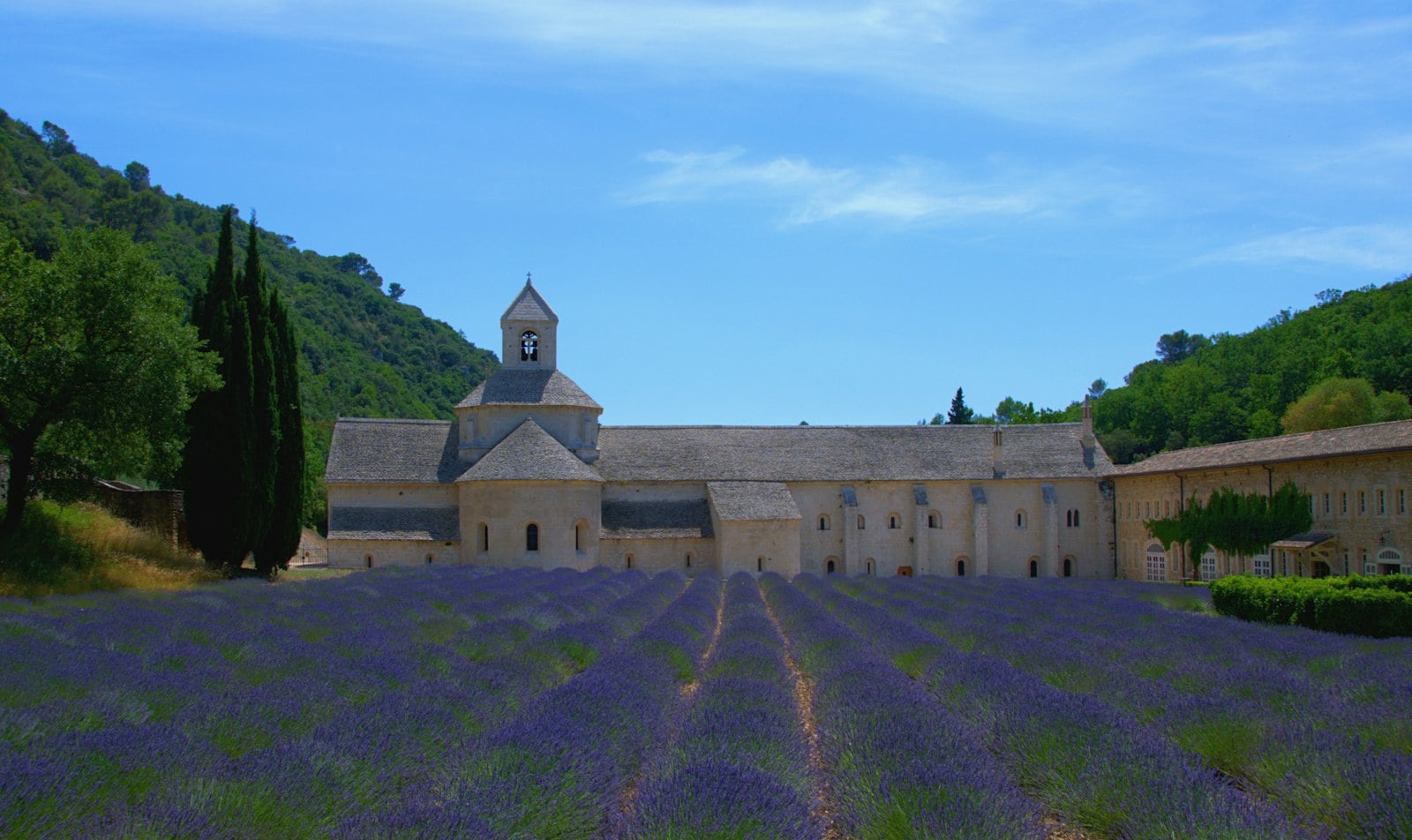
Cistercian monks founded Sénanque in 1148 in a narrow valley below Gordes. They wanted silence and plain gray stone, with no decoration to distract them. Monks came back in 1988, and they live here still. The lavender in front of the church is their crop, and it may be the most photographed field in France.
Take your picture from the road, then go inside to see the cloister and the dormitory. Dress as you would for church, and keep your voice down.
Valensole
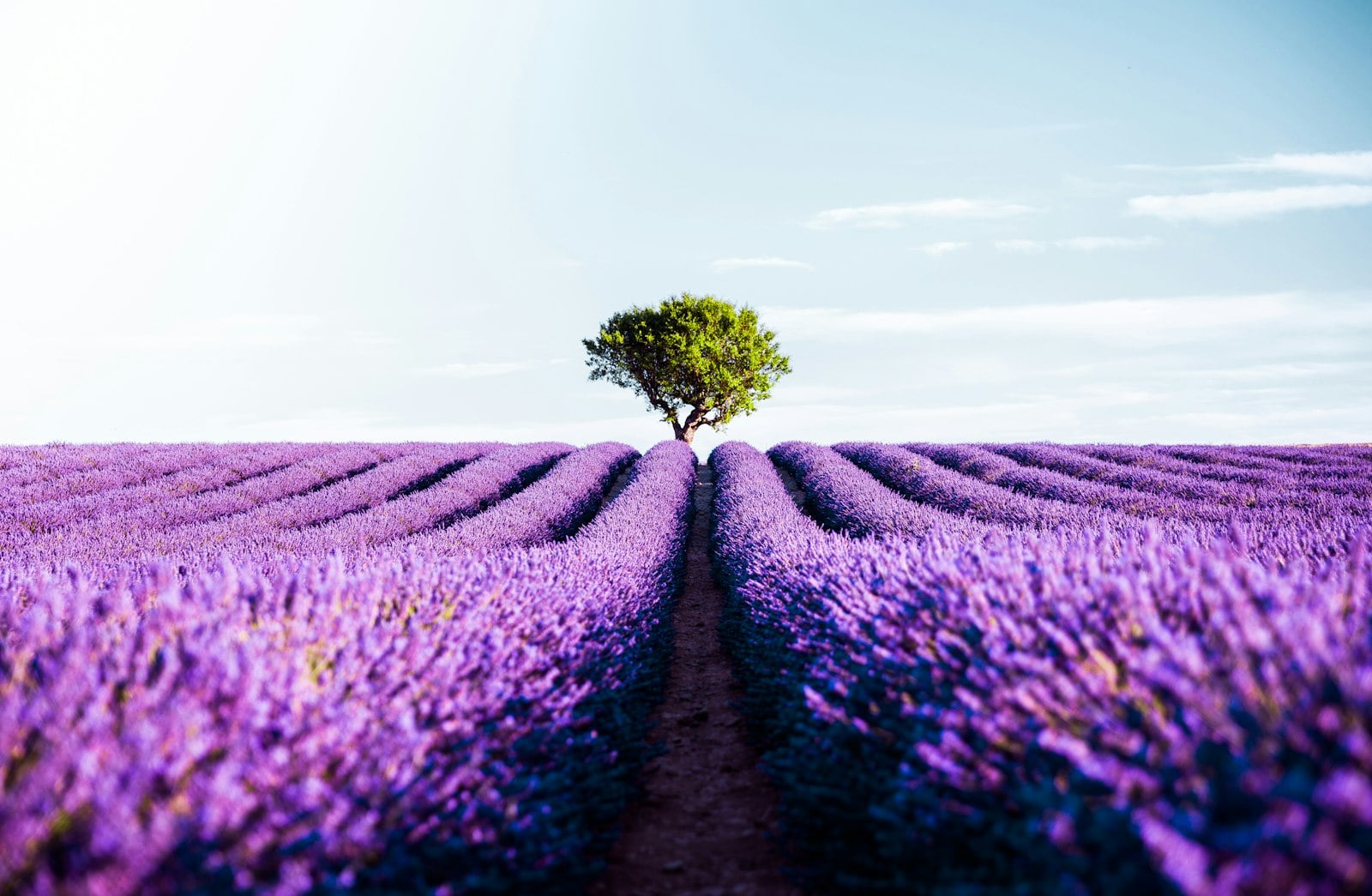
The Valensole plateau is the big one, with rows running to the horizon and a lone tree here and there for the photographers. Nearly all of it is lavandin. The same plateau grows almonds, and the trees bloom white in March, long before the lavender turns.
The stills
After the cut, the flowers go into copper stills. Steam passes through them and carries off the oil. Sault has two distilleries that let you in for free, and one fires its still with lavender straw. The Musée de la Lavande in Coustellet, on the road from Avignon to Gordes, shows how it all works.
Lavender oil has one more story. Around 1910 a French chemist named René-Maurice Gattefossé burned his hand in his laboratory and, the story goes, treated it with lavender oil. He was so impressed that he spent years studying plant oils. He later gave the study a name, aromatherapy.
What to taste
Beekeepers truck their hives up to the fields for the bloom, and the honey is pale and mild. Look for Banon too, a goat cheese wrapped in chestnut leaves. Every distillery shop sells lavender ice cream.
Getting there
The TGV from Paris Gare de Lyon reaches Avignon in about three hours. Avignon is the base for Sault, Gordes and Sénanque. For Valensole, take the TGV to Aix-en-Provence, and the plateau is about 50 minutes away by car.
Buses are no help here. Sault has three a day from Carpentras, and nothing runs to Sénanque or to the Valensole fields. Plan on a car or a driver.
When to go
The bloom climbs the hills. It starts around Sénanque and Valensole in mid-June and peaks in early July. Sault opens at the end of June and holds its color into late July. Some years the Valensole harvest begins two weeks early, at the end of June.
By the first week of August the fields are stubble and the stills are running. Sault holds its lavender festival on August 15, with the French championship of cutting by sickle.
Go early in the day. The color is deepest in the first and last hours of light, and the roadside pull-offs in Valensole fill by 9:00 a.m. in July.
Frequently Asked Questions
When is the lavender in bloom in Provence?
From mid-June to mid-July as a rule, and later the higher you go. The first ten days of July are the safest bet for every area.
Valensole or Sault?
Choose Valensole for the endless rows and the famous lone trees, best in early July. Choose Sault for true lavender under Mont Ventoux, smaller fields, free distilleries and a later bloom.
Can I walk into the lavender field in front of Sénanque Abbey?
No. The field belongs to the monks and is closed to walkers, and drones are reported to the police. Photograph it from the road. The abbey has no visits on Sunday mornings.
Is there still lavender in August?
Very little. Most fields are cut between mid-July and mid-August. What August has is the smell of the stills and the festival in Sault on the 15th.
Is there a lavender tour from Paris?
Yes. Our Provence Lavender Tour is a day out from Avignon with a driver-guide. It visits a village market, the lavender fields near Roussillon or Sault, Gordes and Sénanque Abbey. It costs $200 per person, with rail and hotel not included, and runs every day from June 7 to July 19. You take the train down the day before.
Our Most Popular Day Trips From Paris


Ride between Avignon and the Provence villages with two hotel nights along the way.


