The short version
- In Paris four days or fewer? Buy single rides on your phone or a Navigo Easy card.
- In Paris from Monday to Sunday? Get the week pass. Arriving on a Thursday or later, skip it.
- Keep your ticket until you are out of the station. Inspectors check in the corridors, and the fine is far more than the fare.
- Or let a driver-guide show you Paris by car.

A railway built for a party
The first line opened in July 1900, in time for the World’s Fair. It is still line 1, and it still runs under the Rue de Rivoli past the Louvre. The engineer was Fulgence Bienvenüe, and the big station under Montparnasse carries his name.
The green entrances
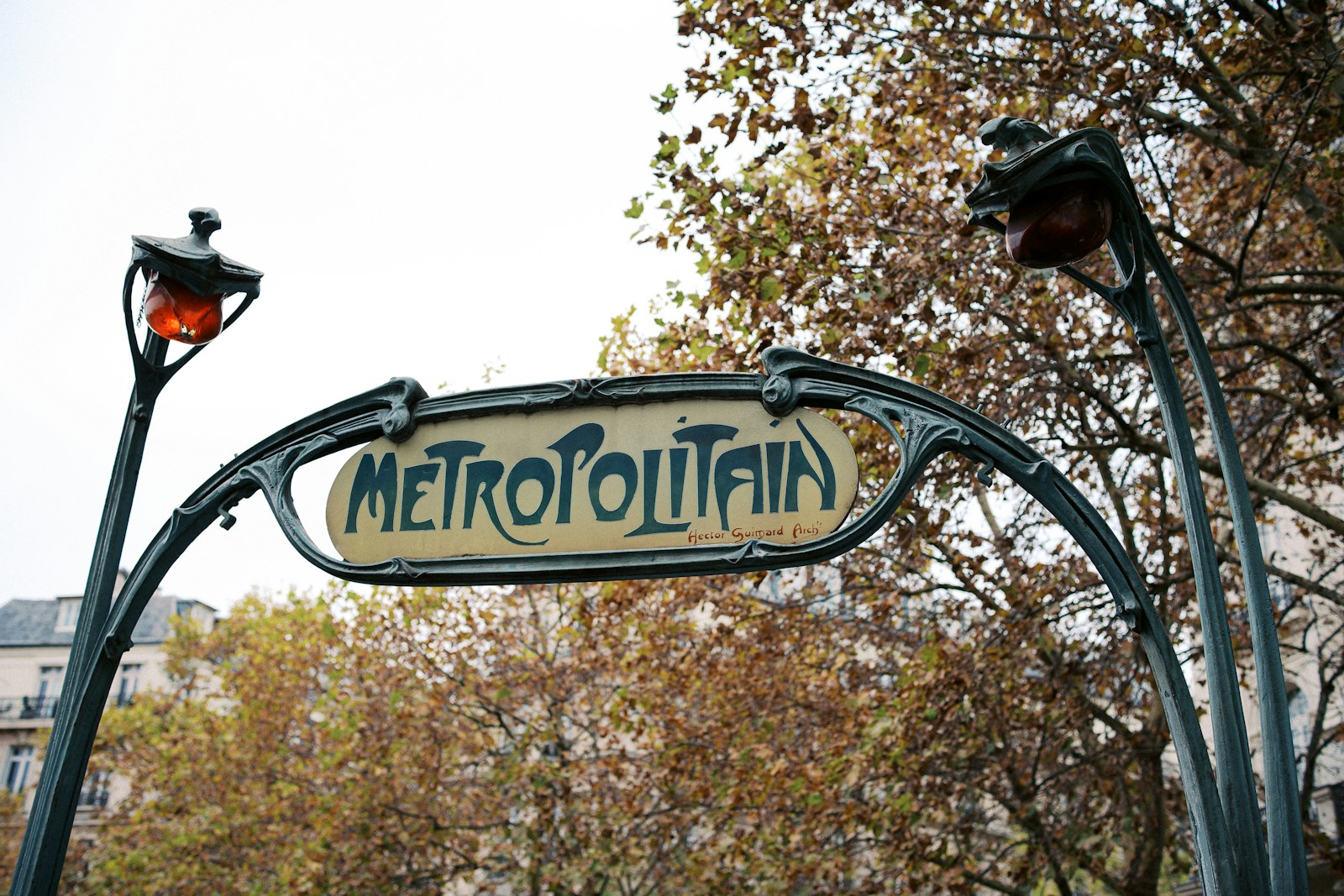
The curling green ironwork and the word Métropolitain are the work of Hector Guimard. Plenty of Parisians in 1900 found his Art Nouveau entrances strange. Today dozens still stand over station stairs. Two of the rare glass-roofed ones are in Montmartre, over Abbesses station, and out west, over Porte Dauphine.
Stations worth a look
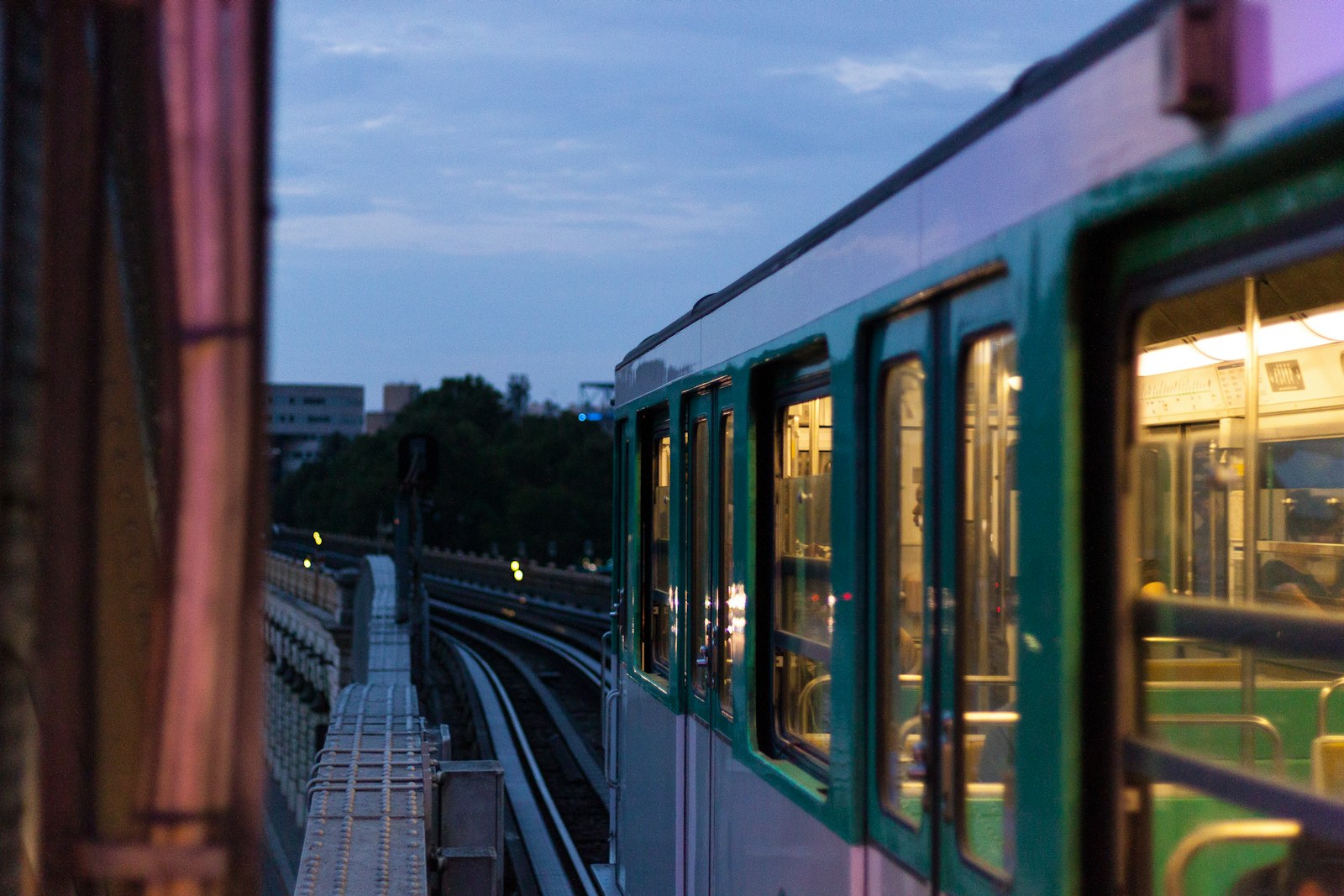
Arts et Métiers on line 11 is lined in copper with portholes, like the inside of Captain Nemo’s submarine. Louvre-Rivoli on line 1 has copies of the museum’s statues set into the walls. And line 6 climbs out of the ground to cross the Seine in the open air.
How it works
Metro lines are numbered 1 to 14. Each direction is named for the last station on the line, and that name is on every sign and every train. Find your line, find the end station in your direction, and go.
The RER is the regional express, lettered A to E. Inside Paris it works like a faster metro with fewer stops. Outside it runs to Versailles (C), Disneyland (A) and the airports (B).
A change of lines is marked Correspondance. Some changes, like Châtelet and Montparnasse, mean a long walk through tunnels. Trains run from about 5:30 a.m. to around 1:15 a.m., and later on Friday and Saturday nights. After that it is the Noctilien night buses or a taxi.
Which ticket
For a short stay, buy single rides in the Île-de-France Mobilités app, or load them on a Navigo Easy card from any station machine. Most visitors take four to six rides a day. The day pass pays off at five metro rides, so save it for your busiest day.
The week pass covers every metro, RER, bus and tram in the region, plus the airports and the trips to Versailles, Disneyland and Fontainebleau. It always runs Monday to Sunday, so one bought on a Friday is good for three days. It goes on a Navigo Découverte card, sold at staffed station counters, and you need a small ID photo.
The airports are the trap. A regular ticket will not open the gates in the CDG or Orly stations, and the airport ticket can’t share a Navigo Easy card with regular tickets. Keep one on the card and one on your phone. Our guides to CDG and Orly have the rest.
If a gate refuses your ticket, take it to the staffed counter and they will swap it.
Frequently Asked Questions
How much is a metro ticket in Paris?
A single metro, train or RER ride is €2.55 anywhere in the region except the airports, connections included. A bus or tram ride is €2.05.
Is the Navigo week pass worth it?
Yes, if you are in Paris from Monday to Sunday and ride every day. It costs €32.40 and covers the whole region, airports and Versailles included. Arriving on a Thursday, no.
Can I use my phone for the metro?
Yes. Buy tickets and day passes in the Île-de-France Mobilités app and tap your phone on the gate. Some phones can also hold tickets in the wallet app.
Is the metro safe?
Yes. Watch for pickpockets on crowded trains, especially on line 1 and the RER B to the airport. Late at night, sit near other people or take a taxi.
Is there a way to see Paris without the metro?
Yes. Our Private Tour of Paris by Car is four hours with an English-speaking driver-guide who picks you up where you are staying. It costs $725 for up to 4 people and $865 for 5-7 people, and it runs morning, afternoon or night.
Our Most Popular Day Trips From Paris

Louvre, Montmartre and Notre Dame in eight hours with a private driver-guide.





Visit the historic abbey and environs. Marvel at this UNESCO World Heritage site.