The short version
- Ride the escalators to the fifth floor first. The Impressionists are up there, and those rooms fill by late morning.
- Buy a timed ticket on the museum’s site and nowhere else. The museum turns away tickets from street sellers and copycat sites.
- Give it two hours. A third hour gets you the Art Nouveau rooms on the middle level, which most people walk right past.
- Bring a private guide along!

What to see
The train station
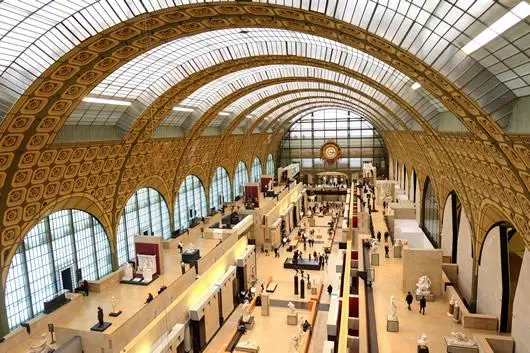
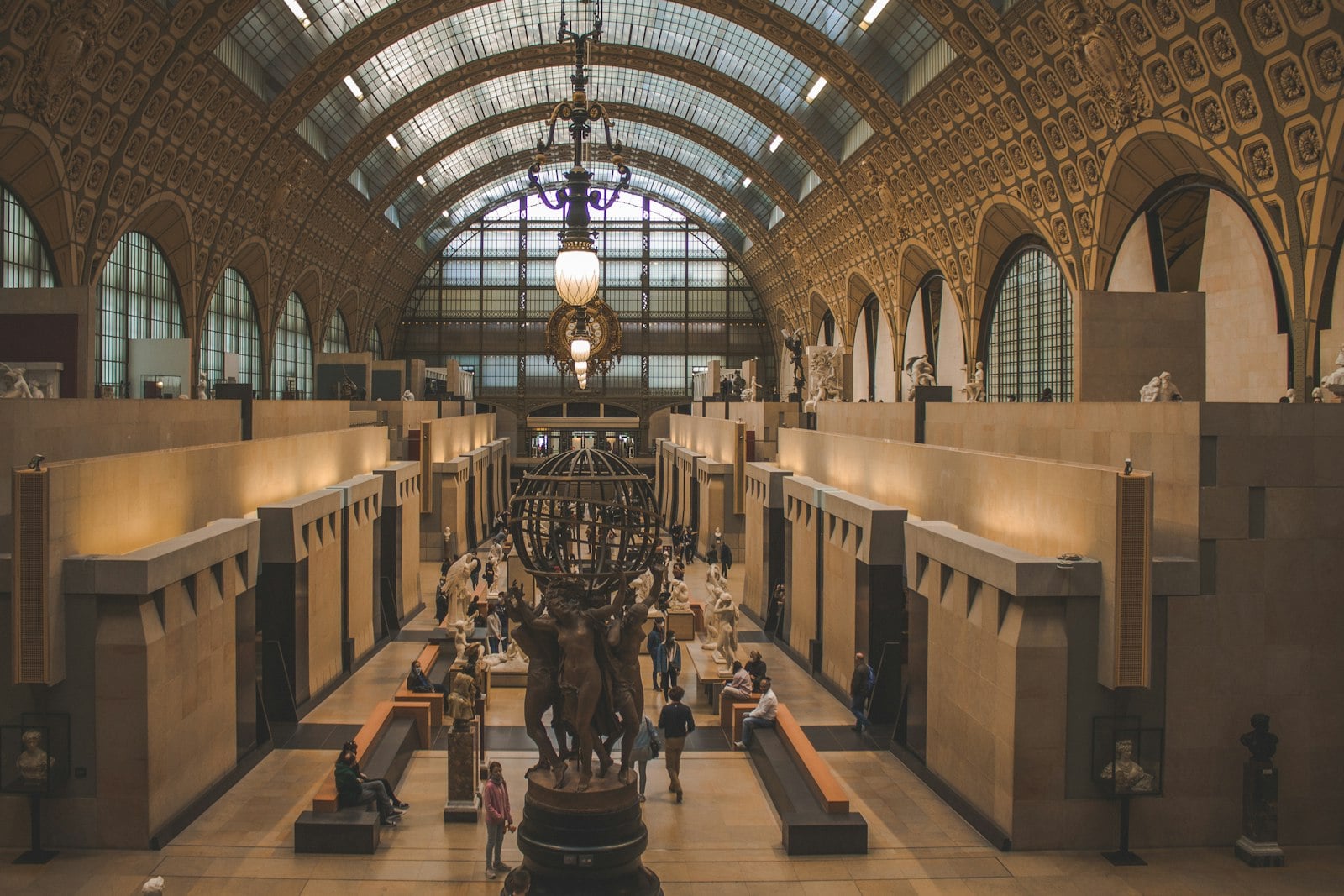
The building opened in 1900 as a railway station, finished in time for that year’s World’s Fair. Within forty years the trains had grown too long for its platforms. After that it was a mail depot, a movie set for Orson Welles and, by the 1970s, a candidate for the wrecking ball. France made it a museum instead, and it opened in 1986. Look up at the glass roof when you walk in.
Manet’s Olympia
In 1865 this painting nearly caused a riot. Nudes were fine in Paris as long as they were goddesses. Manet painted a real Parisian woman who looks straight back at you, and the crowd was furious. Guards had to protect the canvas, and the Salon ended up hanging it high above a doorway.
Whistler’s Mother
One of the best-known American paintings lives in Paris. James McNeill Whistler, born in Massachusetts, painted his mother in London in 1871. The story goes that his model failed to turn up, so Anna Whistler sat in. France bought the picture in 1891 and has owned it ever since.
Monet’s cathedrals
Monet rented a room across from Rouen Cathedral and painted its front more than thirty times, switching canvases as the light moved. Several of them hang here side by side. The painting that gave Impressionism its name is across town in the Musée Marmottan Monet.
Renoir’s Sunday dance
Bal du Moulin de la Galette is a Sunday afternoon in 1876 at an outdoor dance hall in Montmartre. Renoir was working nearby and talked his friends into posing as the dancers. Look at the spots of sunlight coming through the trees.
Degas’s Little Dancer
She was a fourteen-year-old student at the Paris Opera ballet school named Marie van Goethem. Degas modeled her in wax, then dressed her in a real tutu and a real hair ribbon. When he showed her in 1881, critics called her ugly. He never exhibited another sculpture. The bronzes were cast after he died.
Van Gogh
Van Gogh painted Starry Night Over the Rhône in Arles in 1888, standing on the riverbank after dark. The self-portrait with the swirling blue background came a year later, from the asylum in Saint-Rémy. He sold almost nothing while he lived.
The clock
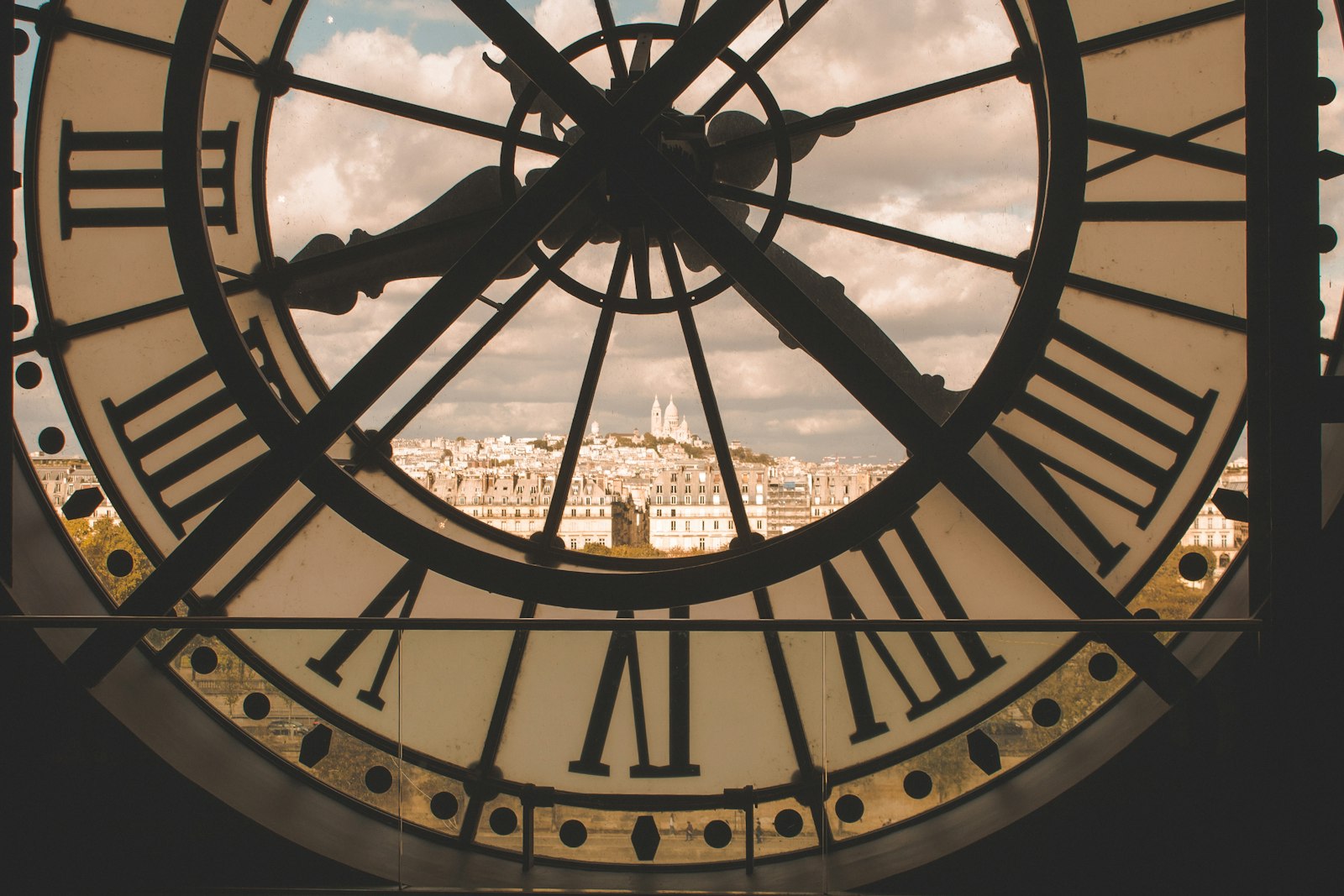
The station’s giant clocks still face the river. Stand behind the glass dial on the fifth floor and look through it. The Seine is below you, and Sacré-Cœur sits white on its hill in the distance. The café behind the other big clock is the place to sit down.
Getting in
Timed tickets go in at the Quay entrance, on the river side. Without a ticket, you join the line at the Forecourt entrance. The entrance hall is being rebuilt until summer 2028 and the doors have moved, so follow the signs.
Last entry is 5:00 p.m., and the rooms start closing at 5:30. Once you walk out, you can’t come back in.
When to go
Thursday evening is the one. From 6:00 until closing the ticket drops to €12, and the fifth floor is as quiet as it gets. If Thursday doesn’t work, be there for the 9:30 a.m. opening on a Tuesday or Wednesday.
The first Sunday of the month is free, and it is the busiest day of the month. On a Monday, when the Orsay is closed, the Orangerie across the river is open. The museum also closes on May 1 and December 25.
Frequently Asked Questions
Do I need a timed ticket for the Musée d’Orsay?
Get one. A timed ticket uses the Quay entrance. Without it you wait in the Forecourt line, which is long by mid-morning. Paris Museum Pass holders need a free slot booked online to use it too.
How long does the Musée d’Orsay take?
Plan two hours for the Impressionists and the nave. Make it three if you want the Art Nouveau rooms and a coffee behind the clock.
Is the Musée d’Orsay free?
It is free for everyone under 18 and for EU and EEA citizens aged 18 to 25. It is also free for everyone on the first Sunday of the month, with a slot booked online.
Is there a combined ticket with the Orangerie or the Rodin?
Yes to both. The Orsay and Orangerie ticket is €20 and is sold at the museums only. The Orsay and Rodin ticket is €25 and stays valid for three months.
Is there a guided tour of the Musée d’Orsay?
Yes. Our Private Musée d’Orsay Tour is $725 for two people, plus $70 for each additional person up to six, with timed tickets included. It lasts two hours and runs daily except Sundays and Mondays. Your guide meets you by the elephant statue in front of the museum.