The short version
- Go downstairs first. The Monet room is under the garden, and it is why you came.
- Walk over from the metro through the Ranelagh gardens. They are a good place to sit afterward, too.
- Pick Thursday evening if you can. The house empties out after 6:00 p.m., and the ticket costs the same.
- See the Orsay’s Monets with a private guide!

What to see
Impression, Sunrise
Monet painted the harbor of Le Havre from a hotel window one misty morning in 1872. Two years later he needed a title for an exhibition catalog and said to put down Impression. A critic used the word to mock the whole show, calling the painters Impressionists. They took the insult and kept it.
The robbery
On a Sunday morning in October 1985, armed men walked in with the visitors, held up the guards and left with nine paintings. Impression, Sunrise was one of them. For five years nobody knew where it was. The police found all nine in Corsica in 1990, and the painting has been back on the wall ever since.
A son’s gift
Michel Monet was the painter’s only surviving son. He had no children, and in 1966 he left everything to this museum. More than a hundred canvases arrived, the ones his father had kept for himself. The biggest were too large for the salons, so a room was dug for them under the garden.
The late Water Lilies
These are the pond in Giverny, painted when Monet was in his seventies and eighties and his eyes were failing. The brushwork goes wide and loose, and the Japanese bridge nearly dissolves into red and gold. Painters a generation later looked at these and saw the start of abstract art. The giant finished versions are in the Orangerie.
Berthe Morisot
Morisot showed at the very first Impressionist exhibition in 1874 and at nearly every one after it. She married Édouard Manet’s brother, and Manet painted her again and again. Her family held on to her work for generations and then gave it here. It is the largest group of her paintings anywhere.
The house
The building began as a hunting lodge at the edge of the Bois de Boulogne. Paul Marmottan, who inherited it, was mad about Napoleon and filled the rooms with Empire furniture, clocks and portraits. The salons are still his. One cabinet holds 322 pages cut from medieval manuscripts, bright as the day they were painted.
Getting in
The museum is at 2 rue Louis-Boilly. You don’t need a reservation. An online ticket from the museum’s site comes with a time slot and skips the ticket line, which helps on weekend afternoons.
Last entry is 5:00 p.m., or 8:00 on Thursdays.
When to go
Thursday evening is the quiet time. Otherwise, be there for the 10:00 a.m. opening on a weekday. Weekend afternoons during a big exhibition are the busiest hours.
The museum is also closed on January 1, May 1 and December 25.
Frequently Asked Questions
Do I need to book the Marmottan in advance?
No. Tickets are sold at the door. An online ticket is timed and can’t be refunded or exchanged, but it lets you skip the ticket line.
Is the Marmottan free?
Not for adults. The ticket is €14, with a lower price for under-18s and students under 25, and children under 7 are free. There is no free first Sunday here.
How long does the Marmottan take?
Plan about 90 minutes. Give 40 of them to the Monet room under the garden, 30 to Morisot and the salons, and the remainder to the exhibition.
Marmottan, Orangerie or Orsay: which one for Monet?
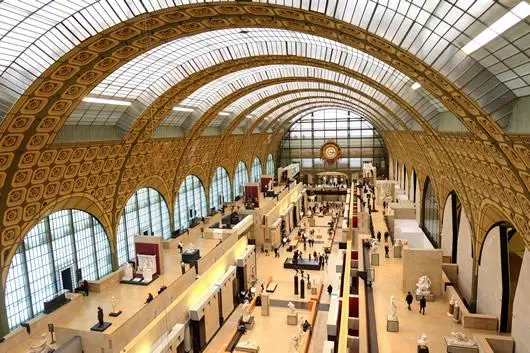
All three, for different reasons. The Marmottan has the most Monets in one place, the Orangerie has the wraparound Water Lilies, and the Musée d’Orsay has his friends too.
Is there a guided tour for Monet fans?
Not of the Marmottan, but there is one of the Orsay. Our Private Musée d’Orsay Tour is $725 for two people, plus $70 for each additional person up to six, with timed tickets included. It lasts two hours and runs daily except Sundays and Mondays.