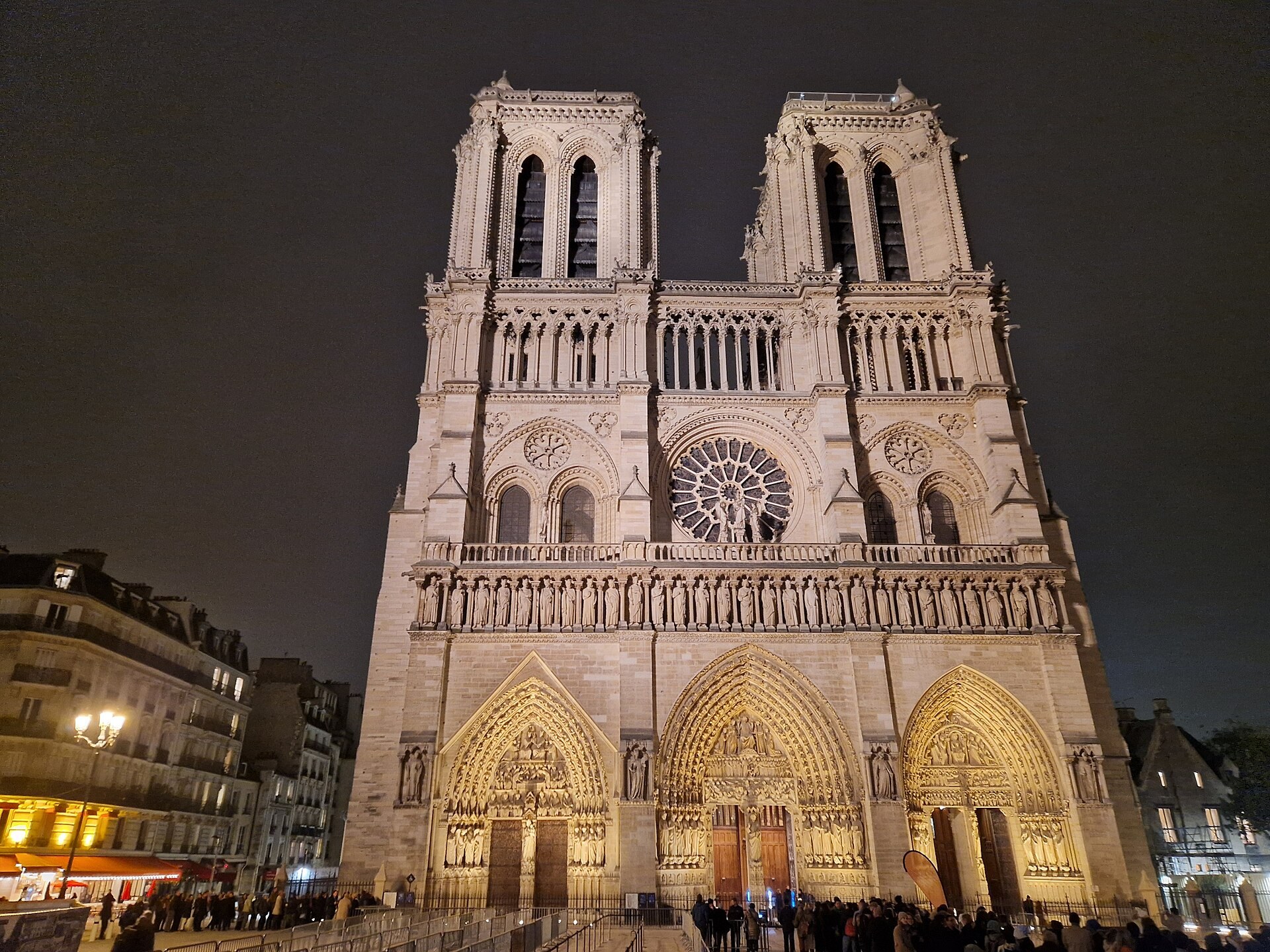
The short version
- Book the free time slot on the cathedral’s site a day or two ahead. It has its own entrance, and the walk-up line can run an hour on a weekend afternoon.
- No reservation? Come before 9:00 a.m. or in the last hour before closing.
- The towers are a separate visit with their own ticket. The day’s slots are usually gone, so book before you go.
- Go private, with a pastry stop on the way!

What to see
The west front
Stand back on the square before you go in. The 28 statues in a row above the doors are the kings of Judah. In 1793 a revolutionary crowd took them for kings of France and knocked their heads off. The ones you see are copies from the 1800s. In 1977 workers digging under a bank across town found 21 of the original heads, and they are now in the Cluny museum in the Latin Quarter.
Point zero
Look for the small bronze star set in the paving in front of the doors. Every road distance in France is measured from it. People stand on it for luck.
The nave
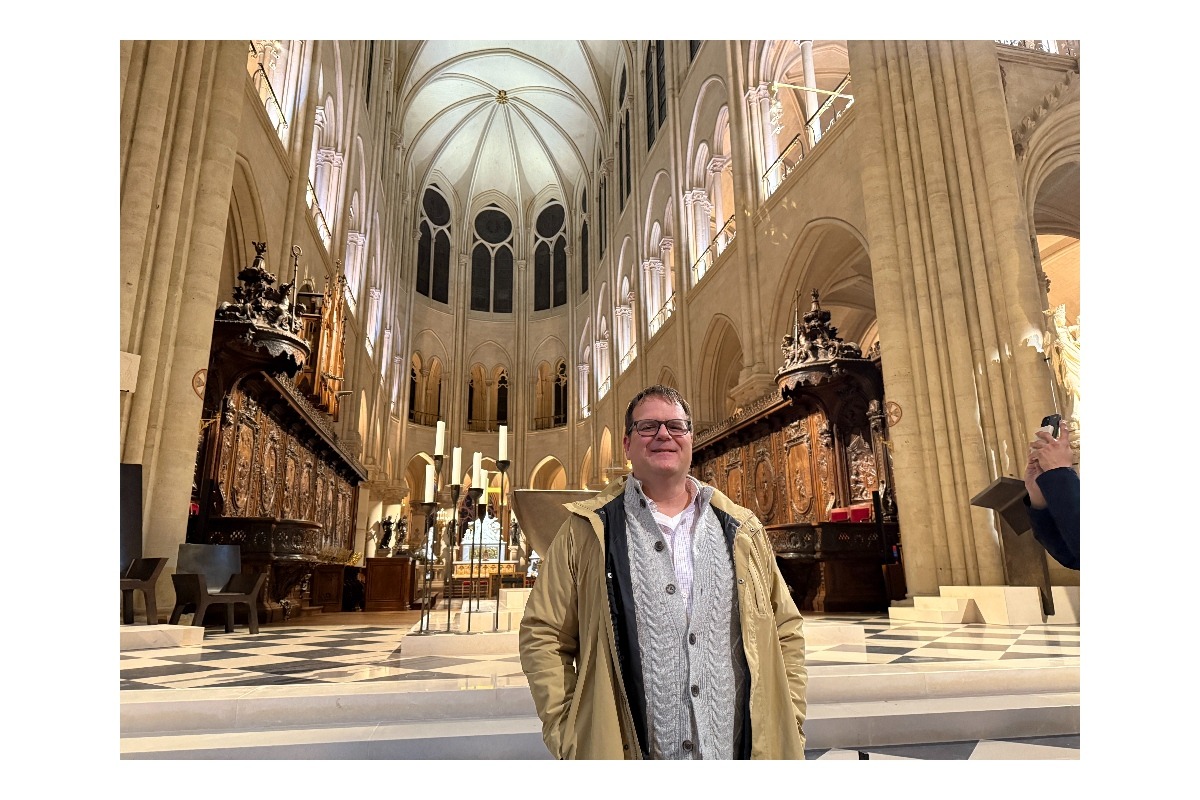
The first stone was laid in 1163, and the builders kept at it for almost two hundred years. By the 1820s the place was falling apart and nobody much cared. Then Victor Hugo wrote a novel with a hunchbacked bell ringer in it. Readers came to see the church in the book, and a full restoration started in the 1840s.
The rose windows
All three of the big round windows came through the fire of April 15, 2019. The north one dates from the 1250s. Find it on your left as you walk toward the altar.
The Virgin of Paris
The stone Virgin and Child by the southeast pillar was carved in the 1300s. When the burning spire came down through the roof, it landed a few feet from her. She was found the next morning unharmed.
Napoleon crowned himself emperor a few steps from here in 1804, with the pope sitting behind him. The huge painting of that day hangs in the Louvre.
The Crown of Thorns
King Louis IX bought this relic in 1239 and built Sainte-Chapelle to hold it. On the night of the fire, the fire brigade’s chaplain went in with the firefighters and brought it out. Its new reliquary is on the visitor route behind the choir.
The spire and the rooster
The spire that fell was a 19th-century addition by the architect Viollet-le-Duc. The new one is a copy of his design, framed in oak from more than a thousand French trees. The copper rooster from the old spire turned up in the rubble the day after the fire, dented but whole. A new golden one sits up there now.
The towers
The climb takes you past the bells. The biggest, named Emmanuel, has rung for more than 300 years. The Revolution melted the other bells for cannon and left that one alone. The stone monsters looking out over the city are not medieval. Viollet-le-Duc added them in the 1800s, and they have been on postcards ever since.
Getting in
Two lines form on the square, one for people with a reservation and one for everybody else. Bags go through an X-ray either way, so leave the suitcase at the hotel.
Inside, a one-way route runs around the nave and behind the choir. This is a working church with Mass several times a day, and visitors keep walking the aisles quietly while it goes on. The treasury is a separate paid ticket at its door.
The towers have their own entrance on the north side and their own line. See the cathedral first and climb afterward.
When to go
The first hour after opening on a weekday is the best one. The square is empty, and the light comes through the east windows.
Thursday is the late night, and a quiet one. Sunday morning belongs to Mass, so come then for the great organ and its 8,000 pipes, or wait until the last service is over.
The cathedral is open every day of the year. Weekend afternoons from April to October are the crowded ones, along with the week after Christmas.
Frequently Asked Questions
Is Notre-Dame free?
Yes. The cathedral is free every day and needs no ticket. The towers and the treasury are separate paid visits.
Do I need a reservation for Notre-Dame?
No, but the free one gives you a time slot and a shorter line. Slots open a day or two ahead on the cathedral’s site and app.
Can I climb the towers?
Yes. It costs €16 and is free for EU residents under 26. There are 424 steps and no elevator, and tickets are timed.
How long does Notre-Dame take?
About 45 minutes inside, or an hour if you sit down. Add an hour for the towers and 20 minutes for the treasury.
Is there a guided tour of Notre-Dame?
Yes, of the old city around it. Our Private Latin Quarter & Notre Dame Walking Tour is $560 for two people, plus $25 for each additional person up to six. It lasts two hours, meets by the Charlemagne statue in front of the cathedral and includes a pastry tasting. You go inside the cathedral afterward at your own pace, with the stories fresh. It runs every day.
Our Most Popular Day Trips From Paris
Louvre, Montmartre and Notre Dame in eight hours with a private driver-guide.

Half a day on foot with a private guide, routed around what you want to see.

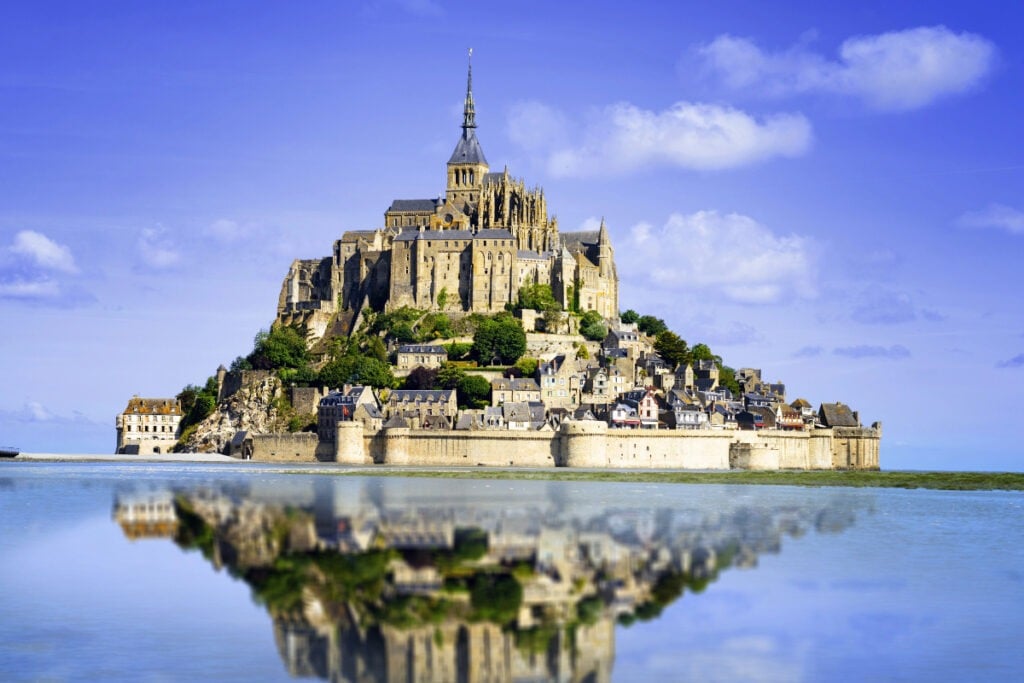
Visit the historic abbey and environs. Marvel at this UNESCO World Heritage site.