The short version
- Climb to the top row of the theater before anything else. The wall looks its best from up there.
- Châteauneuf has no station and its bus skips weekends, so plan on a car or a driver.
- To taste without a booking, go to Vinadea in the village. It pours wines from a hundred estates, Monday to Saturday.
- Our One Night in Provence spends its first afternoon here.

What to see
The Roman theater
The Romans built it under the emperor Augustus, in the first century, for 9,000 people. Every Roman theater had a tall stage wall, and almost all of them have fallen down. This one is still up, with a statue of the emperor looking out from a niche in the middle. Louis XIV called it the finest wall in his kingdom.
It survived because people kept using it. In the Middle Ages the town moved in and built houses on the seats. They were cleared out in the 1800s, and in 1869 the theater got its audience back with the Chorégies, the oldest festival in France. Opera is still sung here on summer nights, with the wall as the only set.
The triumphal arch
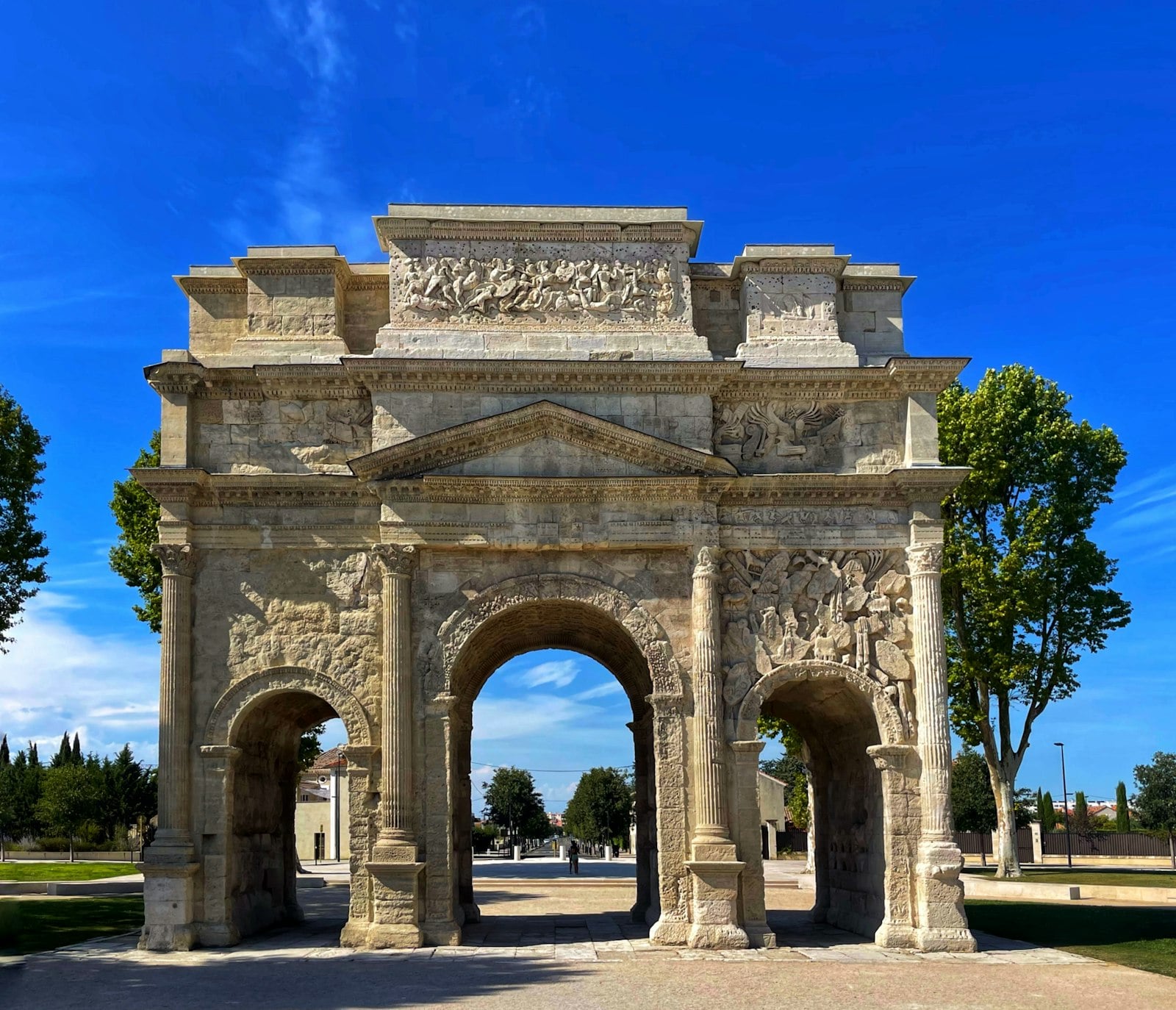
On the north edge of the old town, a three-bay arch stands across the old Roman road. It went up around 20 BC for the retired soldiers of the Second Legion, who founded the town. Look closely at the carving. It shows sea battles, cavalry fights and heaps of captured Gaulish shields and swords.
A town called Orange
The name has nothing to do with the fruit. It comes from Arausio, the Roman name for the town. In 1544 the title Prince of Orange passed to a young German count, William of Nassau. His descendants are the Dutch royal family, which is why the Dutch wear orange.
Louis XIV had the princes’ castle on the hill pulled down in 1673. The hilltop is a park now, with a view over the theater to Mont Ventoux.
The pope’s new castle
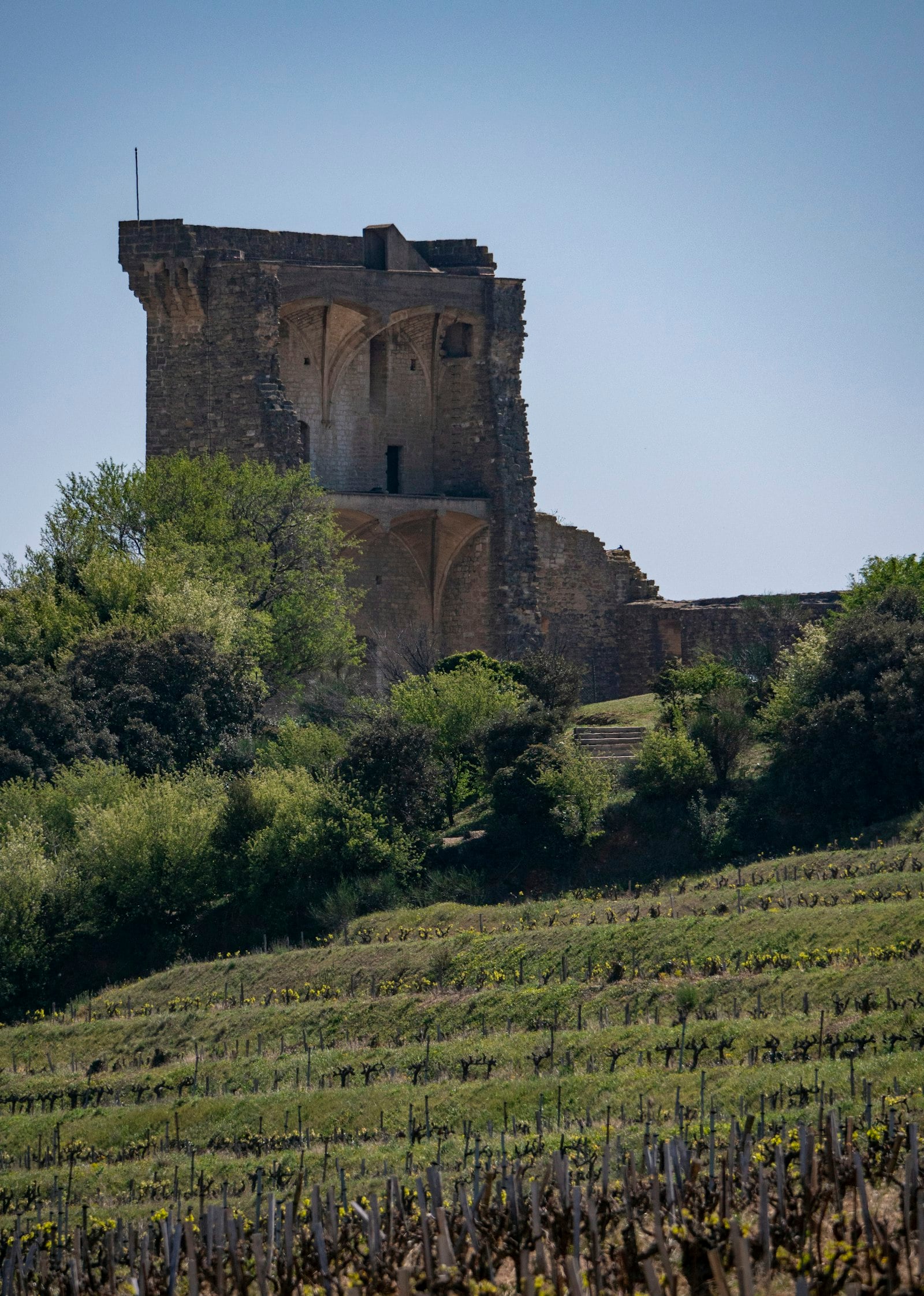
Châteauneuf-du-Pape means just that. In the 1300s the popes lived in Avignon, and Pope John XXII built a summer house on this hill and planted vines around it. Wars wore the castle down, and German troops blew up most of what was left in 1944. One tall wall of the keep still stands, and the walk up to it is free. From the terrace you see the Rhône, the vineyards and Mont Ventoux.
The stones and the wine
The vineyards look like a dry riverbed. The Rhône rolled these round stones down from the Alps, and they soak up the sun all day and warm the vines at night. The red wine is big and peppery, and the rules allow up to thirteen grape varieties in the blend, with Grenache in charge.
Those rules started here. In 1923 Baron Le Roy, a local grower and a fighter pilot in the First World War, wrote down where and how the wine could be made. His rules became the model for every French wine appellation.
The village wrote one more famous rule. In 1954 the mayor banned flying saucers from flying over, landing in or taking off from Châteauneuf-du-Pape. None has tried since.
Getting there
From Paris, take the TGV to Avignon. Trains to Orange leave from Avignon Centre, the old station in town, and the theater is under 15 minutes on foot from Orange station.
Châteauneuf is harder. On weekdays a train runs from Avignon to Sorgues in six minutes, and the 922 bus goes on to the village in 15. By car the village is 26 minutes from Avignon.
When to go
April to June and September to October are the best months. The theater is open to the sky and the hilltop is exposed, so a day of mistral wind is the one to avoid.
The theater is open from 9:30 a.m. to 5:00 p.m. from November to February and from 9:00 a.m. to 7:00 p.m. in summer.
Châteauneuf throws a medieval fair on the first weekend of August, when the grapes change color. September is harvest, and the growers have little time for visitors.
Frequently Asked Questions
Is Orange a day trip from Avignon?
Yes, and an easy one. The train takes 15 minutes, and half a day covers the theater, the arch and the hill.
How do I get to Châteauneuf-du-Pape without a car?
On a weekday, take the train from Avignon to Sorgues and the 922 bus from there. The bus does not run on weekends or holidays.
Can I taste wine in Châteauneuf-du-Pape without a reservation?
Yes, in the village. Vinadea pours from a hundred estates. The Brotte wine museum has tastings from €10, and a few cellars on the lanes open their doors. The well-known estates out in the vines take visitors by reservation.
When are the Chorégies d’Orange?
From late June to mid-July, at nightfall. The last train back to Avignon leaves at 9:27 p.m., before the show ends, so plan a night in Orange.
Is there a tour from Paris?
Yes. Our One Night in Provence meets your morning TGV in Avignon and visits the Roman theater and a Châteauneuf-du-Pape cellar that afternoon. The next day covers Arles, Les Baux and Saint-Rémy. It costs $775 per person, rail not included.
Our Most Popular Day Trips From Paris


Ride between Avignon and the Provence villages with two hotel nights along the way.