The short version
- Stay in Nice and take the train. Villefranche, Monaco and Menton are on one line, so two of them fit in a day.
- Èze and Saint-Paul-de-Vence are up in the hills. Give each one half a day by bus.
- Leave the car behind. Every one of the six has a train or a bus from Nice.
- Our Provence trip ends with a day here.

The six villages
Villefranche-sur-Mer
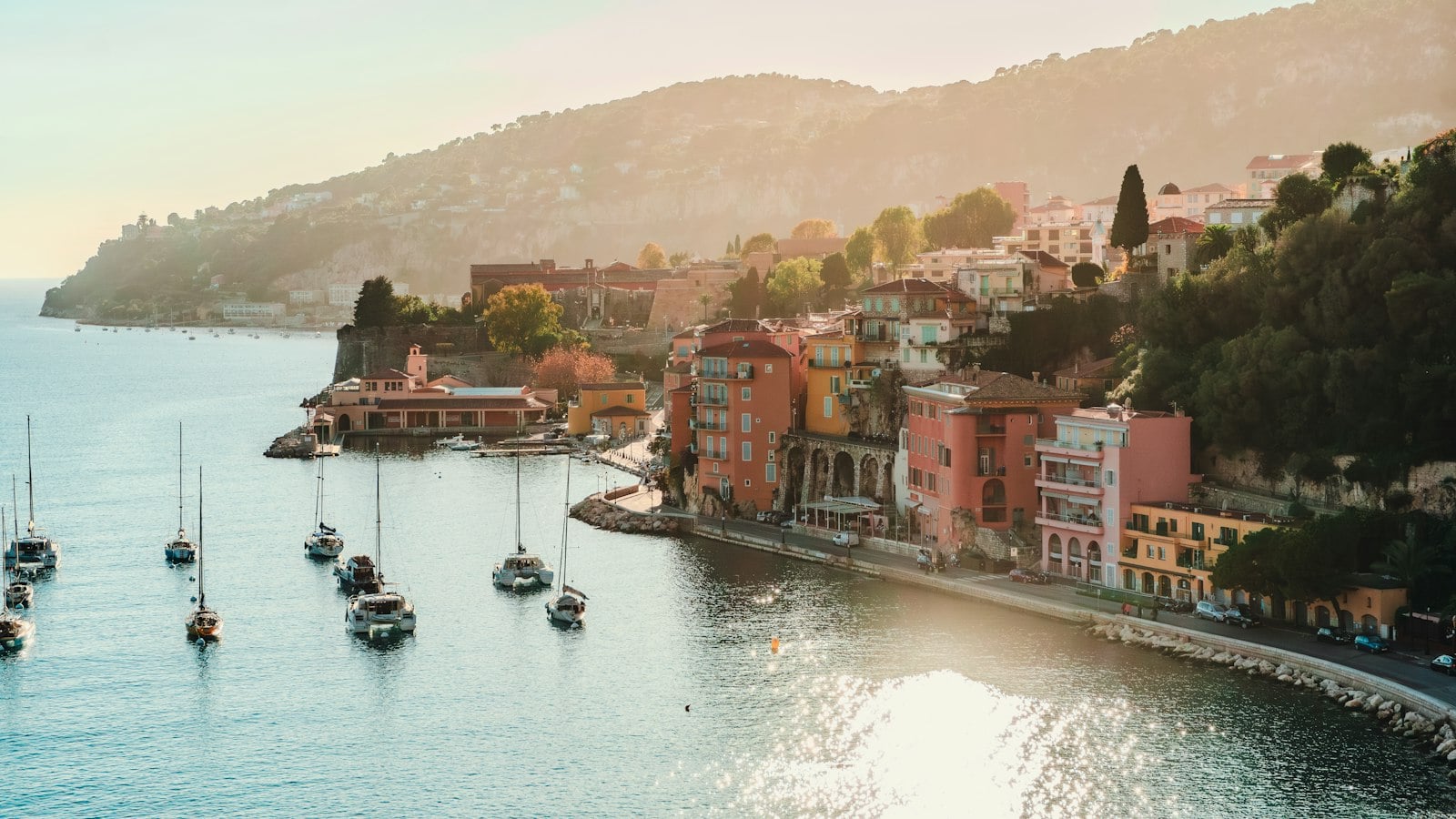
The bay here is one of the deepest on the Mediterranean, and for years after World War II the U.S. Sixth Fleet anchored in it. Jean Cocteau stayed in a hotel on the quay in the 1920s. In 1957 he came back and covered the inside of the fishermen’s chapel with paintings. The fishermen had been storing their nets in it.
In 1971 the Rolling Stones recorded most of Exile on Main St. in the basement of a villa above the bay. The Cocteau chapel is open Wednesday to Sunday and closes from mid-November to mid-December.
Èze
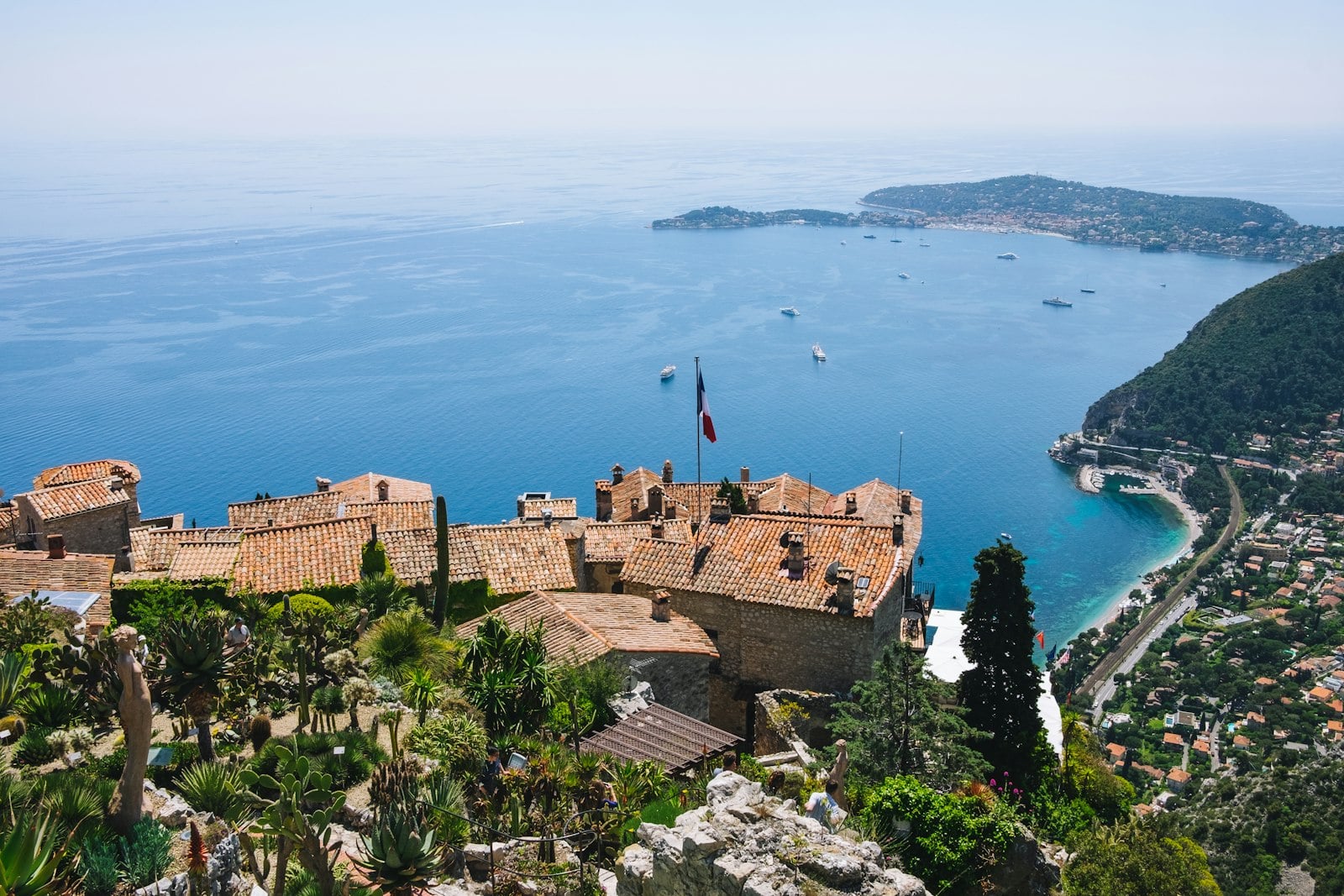
Èze is a stone village on a rock about 1,400 feet above the sea. A cactus garden grows in the ruins of the castle on top. The philosopher Friedrich Nietzsche spent winters down on the coast in the 1880s and climbed up here on foot, working out a book in his head. The trail is named for him. Walk it downhill to Èze-sur-Mer and take the train back.
Monaco
The Grimaldi family has ruled this rock since 1297. That year François Grimaldi got through the fortress gate dressed as a monk, with a sword under his robe. Two monks with swords still hold up the family coat of arms.
The casino in Monte Carlo saved the family from going broke in the 1860s. Monaco’s own citizens are not allowed to gamble in it. In 1956 Prince Rainier married Grace Kelly of Philadelphia, and she is buried in the cathedral. The Oceanographic Museum hangs on the cliff nearby, and Jacques Cousteau ran it for three decades. The guard changes in front of the palace every day at 11:55 a.m.
Menton
Menton is the last town before Italy, and it lives on lemons. The legend says Eve carried one out of the Garden of Eden and planted it here, the closest thing to paradise she could find. Every February the town builds giant sculptures out of lemons and oranges for the Fête du Citron.
Cocteau left his mark here too. He decorated the Bastion, a small fort on the harbor, which is closed on Tuesday. The covered market by the port is open every morning.
Antibes
In 1946 the town lent Pablo Picasso rooms in the Château Grimaldi, an old castle on the sea wall, to use as a studio. He worked there for a few months and left the town nearly everything he made. The castle is now the Musée Picasso. It is closed on Monday.
Out on the Cap d’Antibes, an American couple named Gerald and Sara Murphy talked a hotel into staying open for the summer of 1923. Until then the Riviera was a winter resort. Their friend F. Scott Fitzgerald put them, and the Cap, into Tender Is the Night. The Provençal market in the covered hall is open Tuesday to Sunday mornings, and every day in summer.
Saint-Paul-de-Vence
This walled hill village has an inn, La Colombe d’Or, whose first owner let hungry painters pay with pictures. Picasso, Matisse and Braque all did, and the pictures still hang in the dining room. Marc Chagall lived here for almost twenty years and is buried in the village cemetery.
Just outside the walls, the Fondation Maeght is a modern art museum with a garden of sculptures by Miró and Giacometti. It is open every day.
Getting around
Regional trains leave Nice-Ville station all day. The Zou! 600 bus also runs along the coast from Nice to Villefranche, Monaco and Menton.
For Èze, take bus 82 from the Vauban stop in Nice. For Saint-Paul-de-Vence, take the train to Cagnes-sur-Mer and bus 655 from the station square.
When to go
Spring and fall are the best seasons, on either side of the July and August crowds.
Menton’s Fête du Citron comes in February, at the same time as Carnival in Nice. Everyone needs a ticket for the Menton parades, children included.
The Monaco Grand Prix comes in early June, and the Oceanographic Museum and the palace close that weekend. In winter the garden in Èze closes at 4:30 p.m.
Frequently Asked Questions
Which Riviera villages can you visit in a day from Nice?
Any of them. Villefranche, Monaco and Menton are on the same train line east of Nice, and two fit in one day. Antibes is to the west. Èze and Saint-Paul-de-Vence each take half a day by bus.
Do you need a car on the French Riviera?
No. Trains run along the coast all day, and buses go up to Èze and Saint-Paul-de-Vence.
How do you get from Nice to Èze?
Take bus 82 from Vauban in Nice to the village. You can also take the train to Èze-sur-Mer and bus 83 up the hill.
Can you visit the Prince’s Palace in Monaco?
In season, yes. The state apartments close for the winter and open again in spring. The changing of the guard on the square outside goes on every day.
Is there a tour that covers the Riviera?
Yes. Our Six Days in Provence spends three days around Avignon, then takes the TGV to Nice for a full-day tour of Monaco, Èze, Cannes and Antibes. It costs $2,350 per person, with a four-person minimum. Rail from Paris is not included.
Our Most Popular Day Trips From Paris


Louvre, Montmartre and Notre Dame in eight hours with a private driver-guide.