The short version
- Take the one-hour sightseeing boat on a first trip. It covers the whole center of Paris.
- Book the hour before sunset. You get gold light on the stone going out and the bridges lit up coming back.
- Skip the dinner cruise unless dinner is the point. The view is the same from every boat.
- Or toast the bridges on our Champagne cruise!
What you pass
Parisians call any tour boat a bateau-mouche. The name comes from the Mouche district of Lyon, where the first ones were built for the 1867 World’s Fair. In the 1950s a boat owner invented a founder named Jean-Sébastien Mouche as an April Fools’ joke, and plenty of people believed him.
The Zouave
Look for the stone soldier standing on a pier of the Pont de l’Alma. Parisians use him as a flood gauge. When his feet are wet, the riverside paths close. In the great flood of 1910 the water reached his shoulders.
Pont Alexandre III
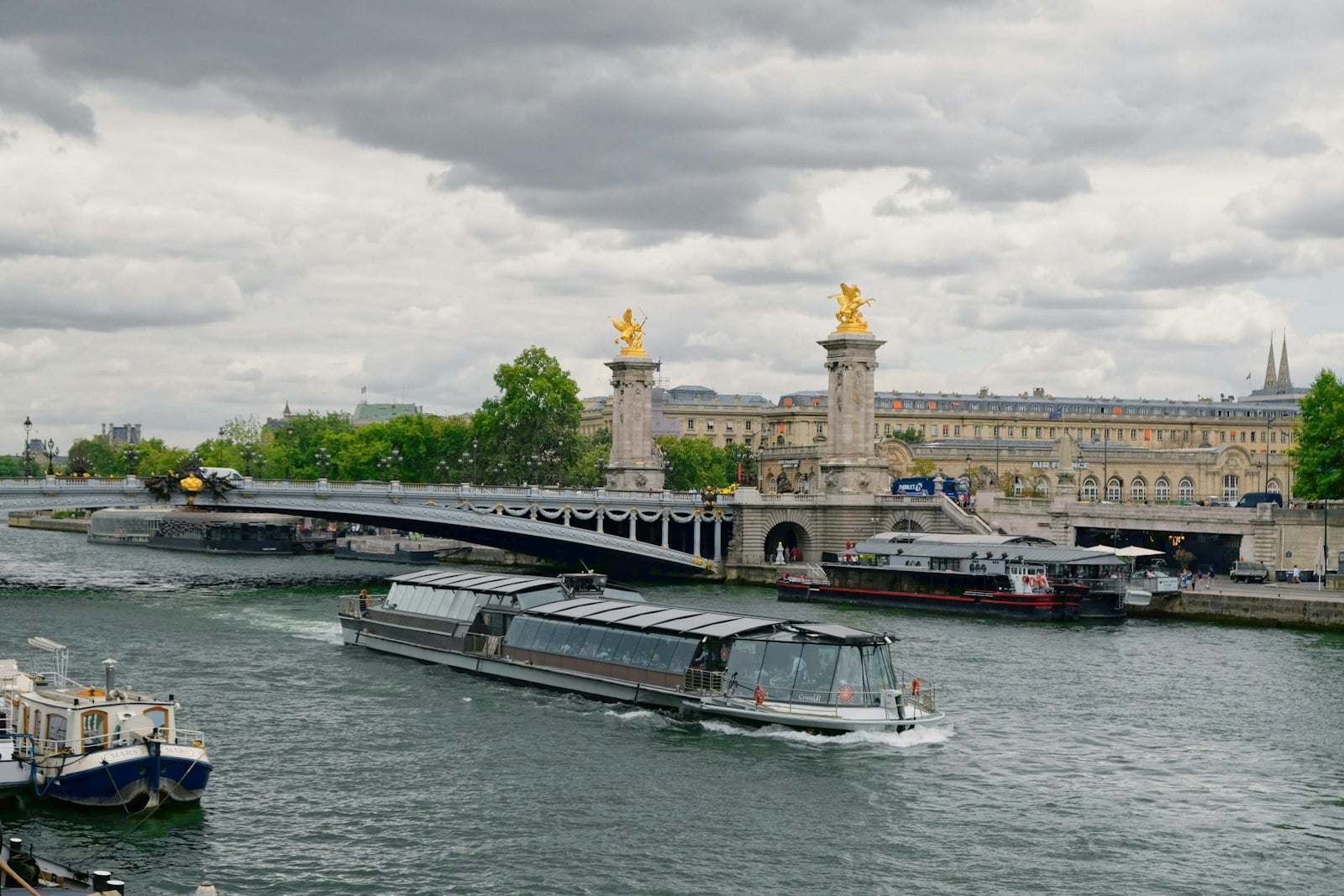
The most decorated bridge in Paris was built for the 1900 World’s Fair and named for a Russian tsar. His son, Nicholas II, laid the first stone. The gold winged horses on the four pillars are hard to miss, even from underneath.
The Orsay and the Louvre
The building with the two giant clocks is the Musée d’Orsay, which opened in 1900 as a train station. Across the water, the Louvre runs along the bank for close to half a mile.
Pont des Arts
This footbridge is where couples used to clip a padlock to the railing and throw the key in the river. By 2015 the locks weighed about 45 tons, and a section of railing had given way. The city took them all off and put up glass panels.
Pont Neuf
The name means New Bridge, and it is the oldest one in Paris. King Henri IV opened it in 1607. It was the first bridge here with sidewalks and no houses on it, so people came just to look at the river. Hundreds of carved stone faces line its sides.
The little park at the tip of the island is named the Vert-Galant, the king’s nickname. It means something like the old charmer.
The islands
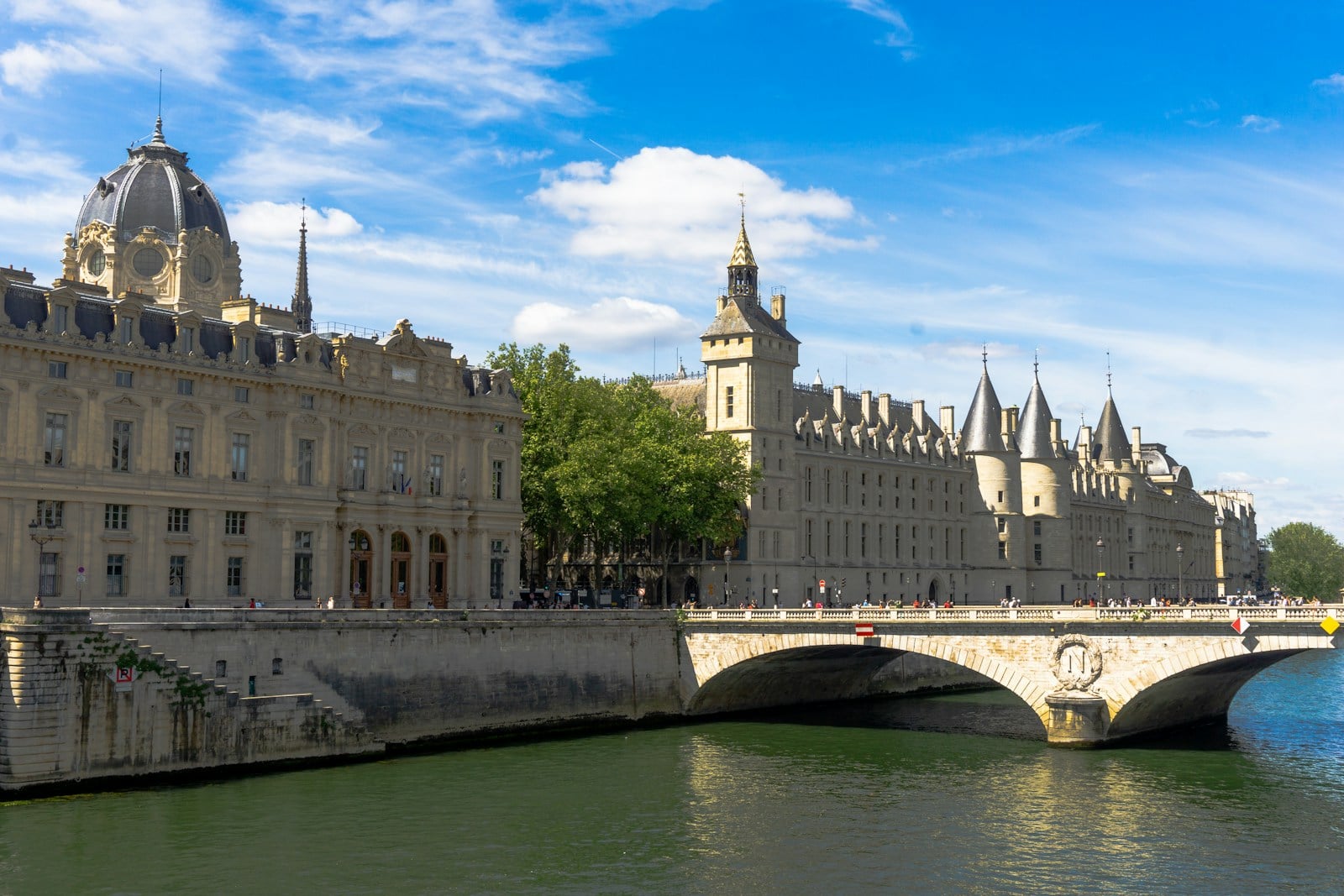
Then come the two islands. The round towers of the Conciergerie are first, then Notre-Dame with its new spire. The Île Saint-Louis behind it was cow pasture until the 1600s, when developers lined it with the mansions you see today.
The Eiffel Tower
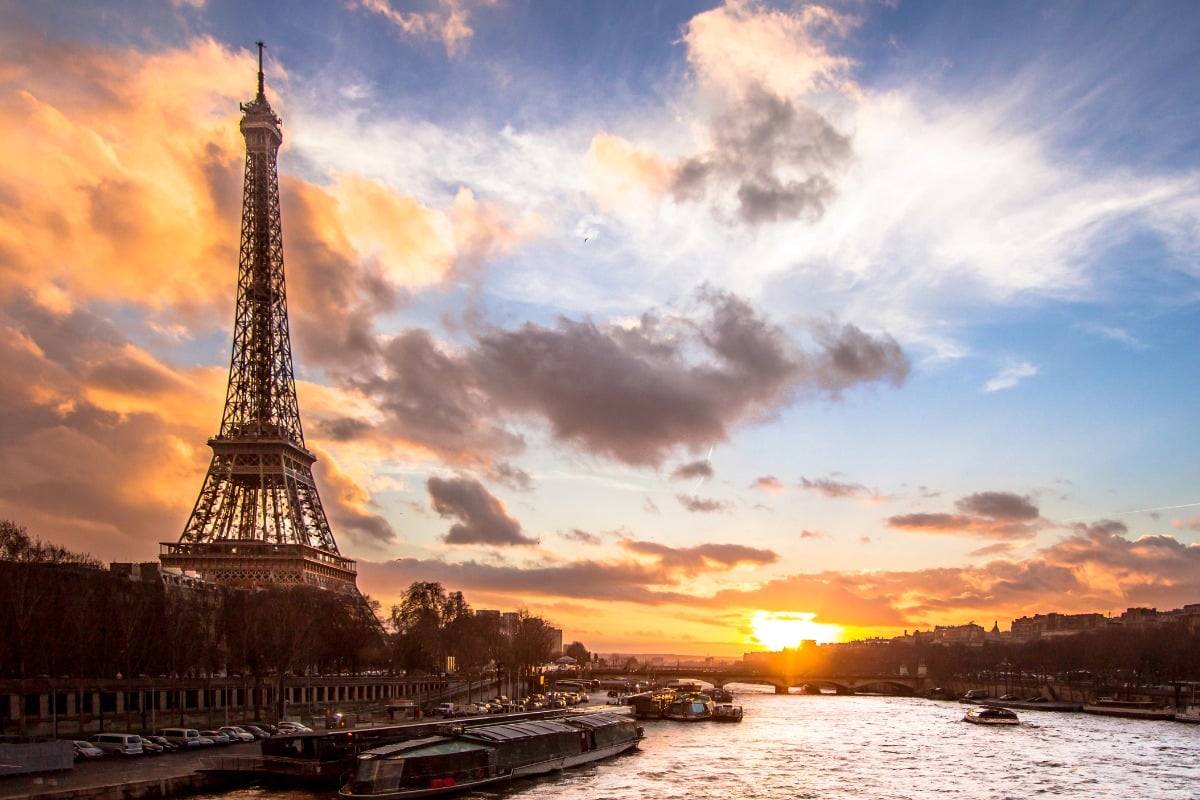
The boat turns around past the islands and comes back along the other bank. After dark the tower sparkles for five minutes on the hour, and the river is a fine place to be when it does.
Which boat
The sightseeing boats have commentary in English and take timed tickets. Dinner cruises last two to three hours, and the food varies from boat to boat.
The Batobus is the hop-on boat. A day pass lets you ride between stops on both banks, with no commentary. Think of it as a bus with a view.
When to go
The sunset slot is the one everybody wants. It falls around 5:00 p.m. in winter and after 9:00 p.m. in June.
Sit on the open top deck if the weather allows, and bring a layer even in summer. The river is cooler than the street.
On the way back, the left side of the boat has Notre-Dame.
Frequently Asked Questions
Which Seine cruise is best?
For a first visit, take the one-hour sightseeing cruise from the Eiffel Tower. It costs a fraction of a dinner cruise.
How long is a Seine cruise?
The sightseeing boats take one hour. Dinner cruises run two to three hours. The Batobus is a day pass with no fixed length.
When is the best time for a Seine cruise?
The hour before sunset is best. After dark is good too, for the Eiffel Tower sparkling on the hour.
Do the boats run in winter?
Yes. The sightseeing boats run all year, with fewer departures in the evening.
Is there a Champagne cruise?
Yes. Our Paris Champagne Cruise is one hour in a private lounge at the bow, with a sommelier and three Champagnes. It runs Thursday, Friday and Saturday at 6:00 p.m. with 20 guests at most, and it costs $125 per person.
Our Most Popular Day Trips From Paris


Louvre, Montmartre and Notre Dame in eight hours with a private driver-guide.