
The short version
- Book every cellar visit ahead. The famous châteaux take a few visitors on weekdays, by appointment, and some take none.
- Decide who is driving before the first glass. The villages are miles apart, and the train reaches only some of them.
- Stop in Pauillac for lunch. The local lamb is on the menus from December to June, and the quay looks across the widest estuary in Europe.
- Let us do the driving.

What to see
The 1855 list
In 1855 Napoleon III wanted the best wines of Bordeaux shown off at the Paris World’s Fair. The city’s wine brokers ranked about 60 châteaux in five classes, mostly by what the wine sold for. It took them a couple of weeks, and the list still rules the Médoc today. It has seen one promotion. In 1973, after fifty years of lobbying by Baron Philippe de Rothschild, Mouton moved up from second class to first.
Margaux
The château stands like a temple at the end of an avenue of plane trees. Thomas Jefferson came through Bordeaux in 1787, when he was the American minister to France, and wrote down his four favorite wines. Château Margaux was on the list. So were Lafite and Latour, sixty-eight years before the brokers got around to it.
Saint-Julien
The story goes that ships passing Château Beychevelle lowered their sails to salute its owner, an admiral of France. The name is said to come from the order, baisse voile, and a ship with a lowered sail is still on the label. Up the road, Gruaud-Larose sits back on its lawns like a country house in a film.
Pauillac
Three of the five first growths are in this one small town. They are Lafite, Latour and Mouton Rothschild. The tower on the Latour label is not a castle. It is a pigeon house. Mouton has put a different artist on its label every year since 1945, and Picasso, Chagall and Warhol all took the job. They were paid in wine.
Saint-Estèphe
Cos d’Estournel has pagodas on the roof. Its founder, Louis-Gaspard d’Estournel, sold his wine as far away as India in the early 1800s and liked what he saw there. People called him the Maharajah of Saint-Estèphe, and the carved front door came from a palace in Zanzibar.
The estuary and the ocean
Out in the mouth of the Gironde stands the Phare de Cordouan, a lighthouse finished in 1611 with a chapel inside. Boats go out from April to October when the tide allows. The other side of the peninsula is one long Atlantic beach, with surfers in Lacanau and old seaside villas in Soulac.

Getting around
The road to drive is the D2, the Route des Châteaux, which runs north from Bordeaux with the estuary on your right. A local train from Bordeaux Saint-Jean stops in Margaux and reaches Pauillac in about an hour. From the stations, most châteaux are a taxi or a bike ride away.
The great names keep their own rules. Lafite is closed to visitors until January 2028. Château Margaux and Mouton Rothschild both close for the harvest. Lynch-Bages in Pauillac is the friendly exception, with a 90-minute visit six days a week.
When to go
May and June are green and calm. The harvest runs through September into early October, when the roads fill with tractors and the big houses shut their doors.
The Marathon du Médoc runs through the vineyards in early September. The runners wear costumes, the water stations pour wine, and there are oysters and steak near the finish. Hotels fill a year ahead.
Winter is empty and quiet, and the bare vines show off the châteaux.
Frequently Asked Questions
Is the Médoc a day trip from Bordeaux?
Yes. Margaux is 40 minutes from the city by car and Pauillac is an hour. One day covers the four famous villages, with time for two cellar visits.
Can you visit Château Margaux or Mouton Rothschild?
Sometimes, with patience. Both take small groups on weekdays by appointment, and Mouton wants about two months’ notice. Château Margaux shows its cellars but pours no tasting for the public.
What is a first growth?
It is the top class of the 1855 ranking. There are five. Lafite, Latour, Margaux and Mouton Rothschild are in the Médoc, and Haut-Brion is south of Bordeaux.
What grape is Médoc wine made from?
Mostly Cabernet Sauvignon, blended with Merlot. The vines grow on deep gravel, which drains fast and holds the day’s heat. Saint-Émilion, across the river, leans on Merlot instead.
Is there a Médoc tour from Paris?
Yes, two. Our Bordeaux Food and Wine Day Trip spends the morning in Bordeaux’s food shops and the afternoon tasting in two classified Médoc châteaux. It is $265 per person, or $485 with second-class rail, on Tuesdays, Wednesdays and Fridays from April through October. The Bordeaux Overnight adds a night in a four-star hotel and a photo stop outside Château Margaux. It is $625 per person, or $845 with second-class rail.
Our Most Popular Day Trips From Paris


Visit France’s legendary wine capital! Taste world-class wines and tour historic châteaux.

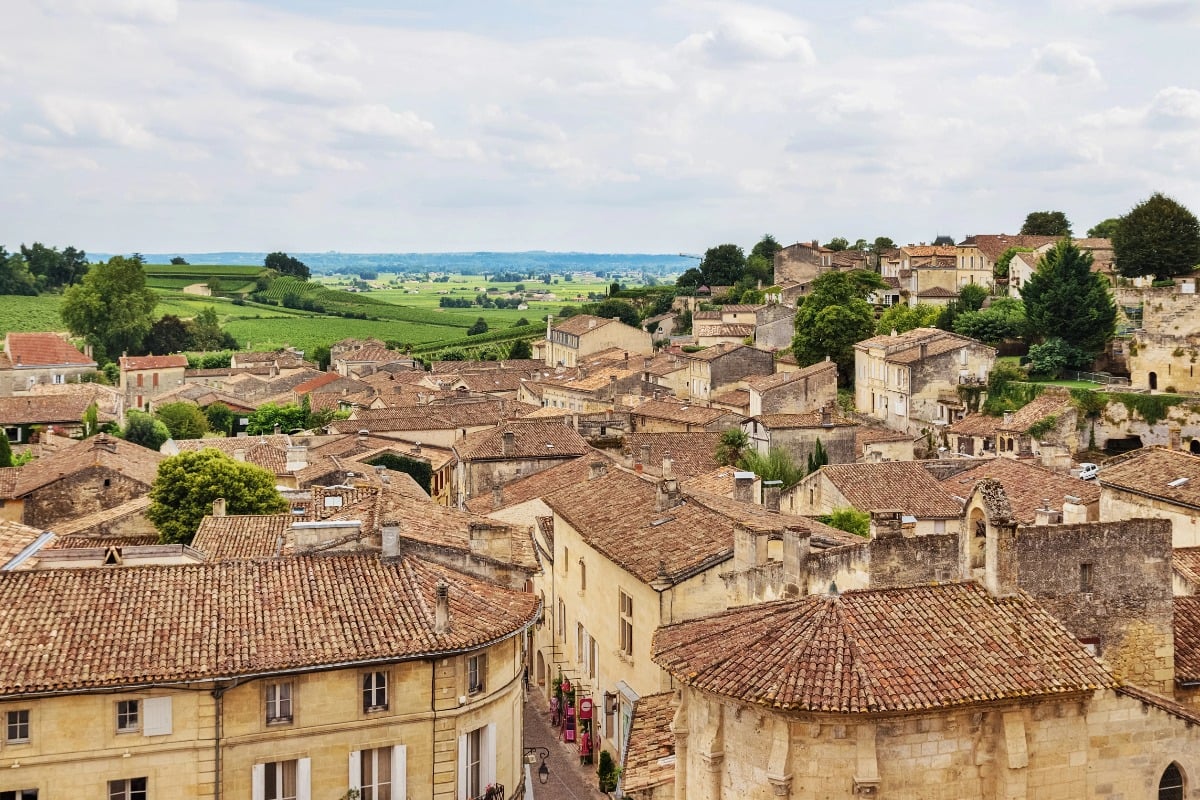
Three nights in Bordeaux with an Arcachon Bay day and a Saint-Émilion morning.

Four nights split between Bordeaux and Cognac. See both regions properly.