
The short version
- Book your château visits well ahead. The famous ones fill weeks in advance.
- Come any day but Monday, when most châteaux are closed.
- Take a later train home and spend the evening on the Bordeaux riverfront.
- Picnic at a château on our small-group day.

What to see
Saint-Émilion
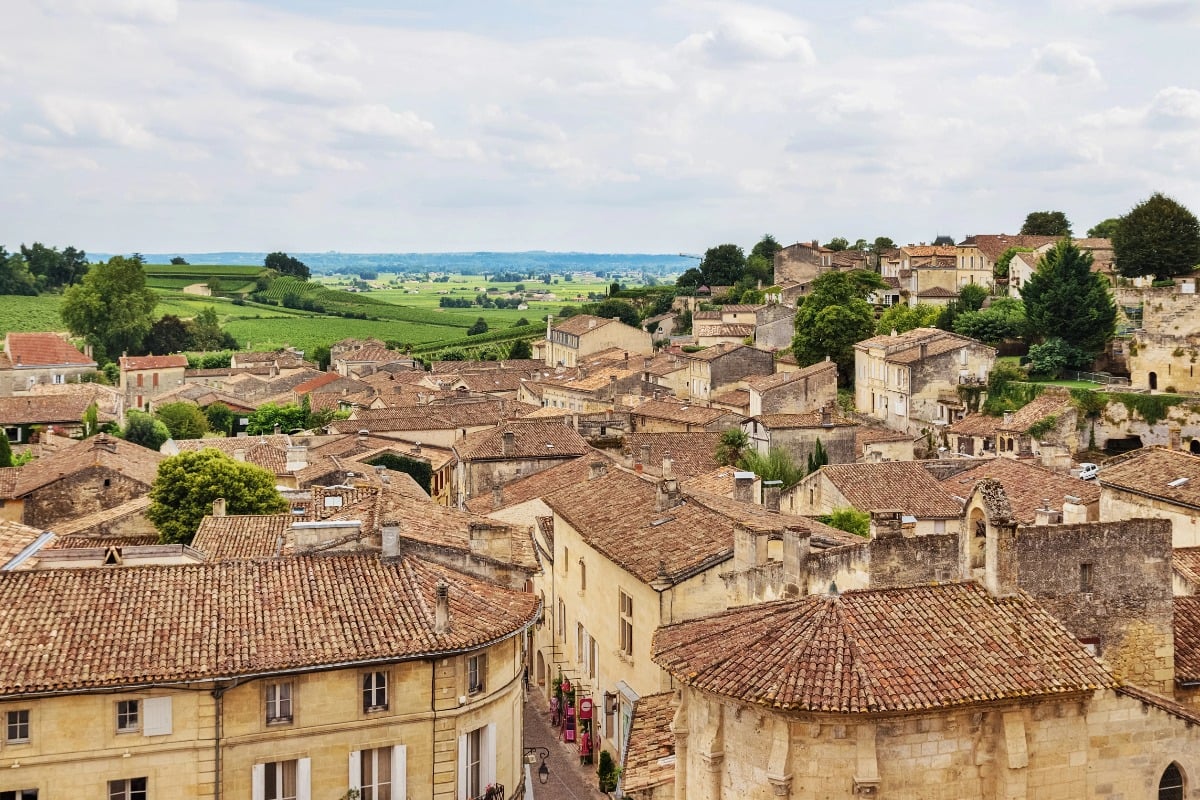
The village is named for a monk who lived in a cave here in the 700s. The monks who came after him carved a whole church out of the hillside by hand. It is the biggest underground church in Europe, and its bell tower stands on the ground above it. The village is built of the same honey-colored limestone, and the quarries it came from are now wine cellars.
Why the English call it claret
In 1152 Eleanor of Aquitaine married the man who became King of England, and Bordeaux was English for the next 300 years. The English bought its wine by the shipload and called it claret, and they still do. They lost the region in 1453, in a battle a few miles east of Saint-Émilion. It was the last one of the Hundred Years’ War.
The men in red robes
Saint-Émilion’s wine council is called the Jurade, and it got its charter from King John of England in 1199. Its members still dress in long red robes. Every September they climb the old royal tower and announce to the village that the harvest may begin.
The wine
This is Merlot country, so the wines are softer and rounder than the Cabernets of the Médoc across the river. The estates are small and close together, and nearly all of them call themselves a château. Some have the turrets to prove it. Others are a farmhouse with a very good cellar.
Something sweet
Nuns in Saint-Émilion were baking almond macarons by 1620, and the village still sells them from the old recipe. Bordeaux has the canelé, a small fluted cake with a dark caramel crust. The story goes that winemakers used egg whites to clear their wine and gave the leftover yolks to the convents.
Bordeaux
Bordeaux built its riverfront in the 1700s with wine money, a long curve of pale stone along the Garonne. The Place de la Bourse faces a sheet of water two centimeters deep that mirrors the whole square. Children run through it all summer. France has moved its government here three times when Paris was in danger, in 1870, 1914 and 1940.
Getting there
The TGV to Bordeaux leaves from Paris Montparnasse, with early trains out and evening trains back.
Local trains run from Bordeaux to Saint-Émilion. The station is a 20-minute walk from the village.
When to go
The vines are in leaf from April to October, and that is the season. The châteaux still receive visitors through the harvest.
Frequently Asked Questions
Is Bordeaux a day trip from Paris?
Yes. It is two hours each way by TGV, with early trains out and evening trains back.
Can you just walk into a château?
No. Visits are booked ahead, and some famous estates do not receive the public at all.
Saint-Émilion or the Médoc?
Saint-Émilion has the village, the Merlot and estates close together. The Médoc has the famous 1855 names, an hour north of Bordeaux and more spread out.
What does Grand Cru Classé mean?
It is Saint-Émilion’s own ranking of its best estates. The famous 1855 list left the village out, so Saint-Émilion made its own in 1955 and redoes it about every ten years.
Is there a Bordeaux wine tour from Paris?
Yes. Our Bordeaux Wine Tour drives from Bordeaux to Saint-Émilion for a walk through the village, two châteaux and a picnic lunch with wine. It is $245 per person, or $465 with second-class rail, with five to six tastings. It runs daily except Monday from April to October, with eight guests at most.
Our Most Popular Day Trips From Paris

Visit France’s legendary wine capital! Taste world-class wines and tour historic châteaux.


Three nights in Bordeaux with an Arcachon Bay day and a Saint-Émilion morning.