
The short version
- Caen is 1 hour 54 from Paris Saint-Lazare on the fastest direct trains, 19 a day from 6:12, most taking about 2 hours 10; the last one back leaves at 20:32, into Paris at 22:51. No TGV runs this line. The center is ten minutes from the station by tram, to Château-Quatrans.
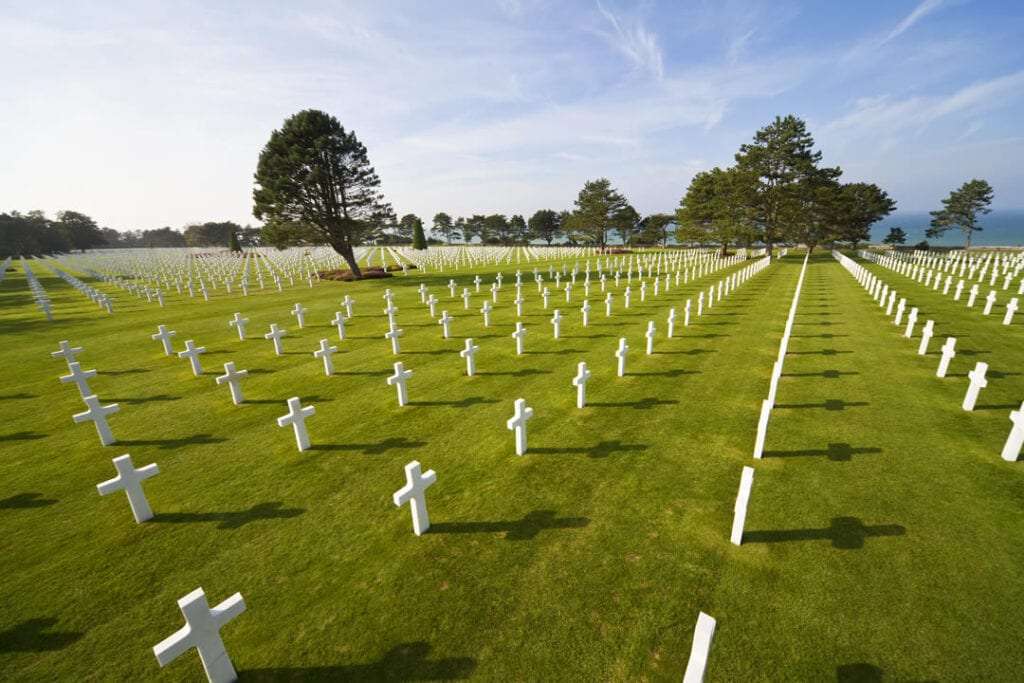
- Our Caen Memorial & Normandy Tour meets you inside Caen station off the early train: a guided visit of the Mémorial, lunch in the museum, then Omaha Beach, Pointe du Hoc and the American Cemetery at Colleville, timed for the flag-lowering when the day allows, and back to the station for the evening train, $260 per person or $382 with second-class rail, seven guests at most, daily except Sunday.
- The Mémorial de Caen, built in 1988 over a German command bunker, is €20.80 with the 360-degree film included, open 9:30 to 18:00 in winter and 9:00 to 19:00 from April to September; the museum’s own estimate for a visit is three hours. It closes on Wednesdays from November 1 to December 20, 2026, on December 25, and for its annual break from January 4 to 25, 2027. Parking is free, and bus 2 runs from the center.
- William the Conqueror founded the Abbaye aux Hommes in the 11th century, in penance, the tradition says, for marrying his cousin Matilda, and lies in the choir of its church, free to enter outside services; the cloister and the monastery rooms are €6, or €9 with the one-hour guided visit. Matilda’s Abbaye aux Dames across town holds her tomb, €5 with the guided visit at 14:30 or 16:00. The château William began around 1060 is free to walk from 7:30 to 22:30, with the Musée de Normandie and the Beaux-Arts inside its walls, €5 to €9, closed Monday outside summer.
- From Caen the one landing beach with a daily bus is Juno: Nomad line 101 reaches Courseulles in under 30 minutes on the express runs, every day of the year but May 1, and the Juno Beach Centre is a 650-meter walk from the Chant des Oiseaux stop, €9. Sword and Ouistreham are on Twisto line 12. Omaha, Pointe du Hoc and the American Cemetery have no bus from Caen in any season; the summer bus to them leaves from Bayeux, 15 minutes away by train, in July and August only.
- Pegasus Bridge at Bénouville is free and open, but the Mémorial Pegasus museum beside it is closed for an extension until May 2027. The tramway extension has the streets around the Hôtel de Ville and place Gambetta dug up until 2029. The Sunday market on the quays of the bassin Saint-Pierre, some 400 stalls, is the biggest in the region.

What to see
The Mémorial is the museum to see before the beaches: the road to war from 1918, the occupation, D-Day and the hundred days of the Battle of Normandy, then the Cold War, with the film Europe, Our History on a 360-degree screen in the ticket. It has a restaurant, where our tour eats lunch, a tea room and a shop, and from May 2027 a new permanent exhibition on the landing beaches, which UNESCO listed in July 2026. Give it the three hours the museum asks for; our guided visit takes the morning.
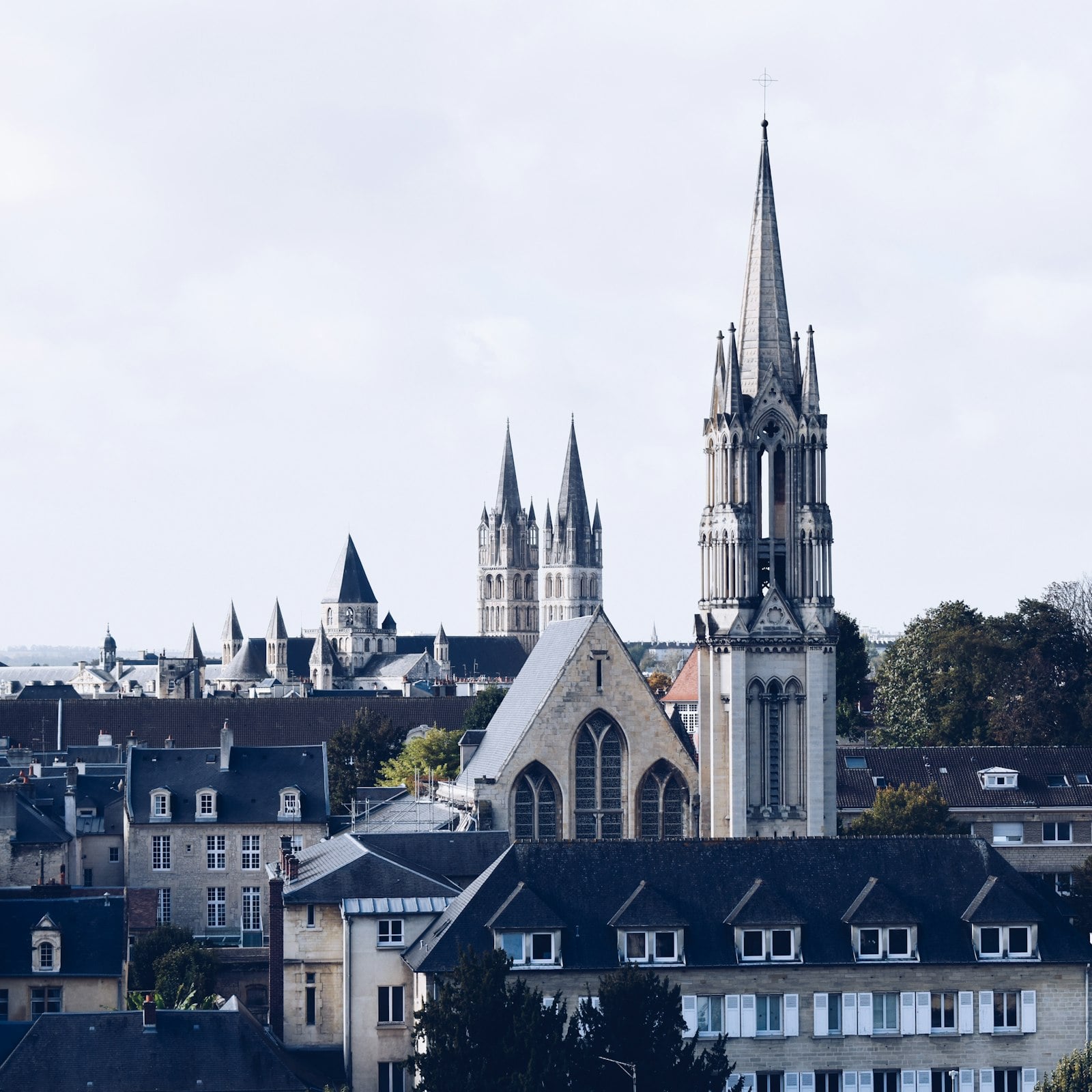
The two abbeys are the Conqueror’s. At the Abbaye aux Hommes the church of Saint-Étienne, built from 1066 to 1083, holds William’s tomb in the choir; the 18th-century monastery around the cloister is now the Hôtel de Ville, with an exhibition on the summer of 1944, when thousands of Caennais sheltered under its roof, and a panorama of the ruined city in 1948. Beside it, Saint-Étienne-le-Vieux is kept as the bombs left it. The Abbaye aux Dames on the far side of the center is Matilda’s, with her tomb in the Trinité church and the 11th-century crypt beneath, and the Parc Michel-d’Ornano in front of it is free with the view over the city.
The château is one of the largest fortified enclosures in Europe: the Exchequer hall, the rampart walk, the foundations of the keep, William and Matilda on horseback at the foot of the walls. Inside, the Musée de Normandie runs its immersive show for the city’s millennium to December 31, 2026, and the Musée des Beaux-Arts holds Perugino, Veronese and Rubens, with its lifts out of service until December 4; both are free on the first weekend of each month and for anyone under 26. Below the walls, the Vaugueux is the medieval quarter the war missed, cobbled and full of restaurants, where Édith Piaf’s grandparents kept a café; Saint-Pierre church stands by the tourist office, and rue Froide keeps the oldest shopfronts.
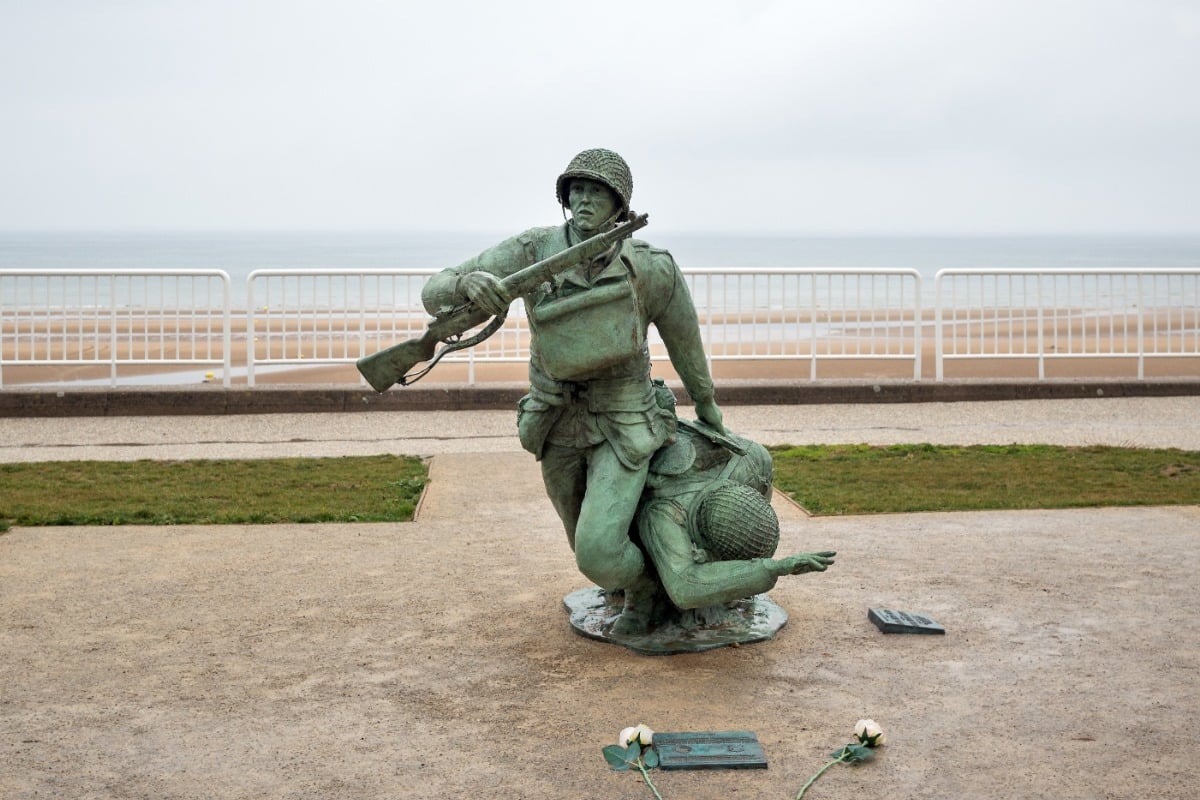
The beaches from Caen begin with the British and Canadian sector. Pegasus Bridge over the canal at Bénouville, taken by glider in the first minutes of June 6, is free to see, with the museum beside it shut until May 2027. The Juno Beach Centre at Courseulles, opened by Canadian veterans in 2003, is €9, or €13.50 with the guided walk through the bunkers, closed all of January; the Canadian cemetery at Bény-sur-Mer holds more than 2,000 graves, and the Abbaye d’Ardenne on the edge of Caen is where the SS executed Canadian prisoners. At Ouistreham, Sword Beach, the Grand Bunker in the German fire-control tower is €8.50 and the lighthouse is 171 steps. The American sector, Omaha, Pointe du Hoc and Colleville, is an hour west; that is our afternoon.
Eat tripes à la mode de Caen, the slow stew of tripe and calves’ feet in cider and Calvados that carries the city’s name, then the four Normandy cheeses, Camembert, Livarot, Pont-l’Évêque and Neufchâtel, with Isigny butter and a teurgoule rice pudding after. The Friday market on place Saint-Sauveur has the scallops in season; the Ouistreham fish hall opens every morning. Calvados comes between courses as the trou normand, and pommeau before.
Getting there and around
The direct trains leave Paris Saint-Lazare at 6:12, 8:29, 9:59 and then about hourly to 20:59, all TER; coming back, the evening trains leave Caen at 16:58, 17:59, 18:59 and 20:32, the last. Bayeux is 15 to 22 minutes on, 27 trains a day. By road the A13 takes 2 to 2 hours 30 with a free-flow toll paid online afterwards. Ouistreham has the Brittany Ferries crossing to Portsmouth.
From the station the trams T1 and T3 reach Château-Quatrans in ten minutes, €1.60 a ride or €4 for 24 hours, paid by card on board; the château, Saint-Pierre, the Vaugueux and the tourist office at 12 place Saint-Pierre are then a few minutes apart on foot, the Abbaye aux Hommes 15 minutes west. Bus 2 goes to the Mémorial. The tourist office opens Monday to Saturday 9:30 to 13:00 and 14:00 to 18:00 from October to March, from 11:00 on Tuesdays.
The beaches are where the buses give out. Line 101 to Juno runs daily, with fewer runs on Sundays; Twisto 12 reaches Ouistreham; the Caen to Bayeux bus runs on weekdays only, so take the train. Nothing from Caen goes to Omaha, Colleville or Pointe du Hoc, and the Bayeux summer bus that does runs from July 5 to August 31. A taxi from Caen to Courseulles is €40 to €65 one way by the Juno Beach Centre’s own figure. Pointe du Hoc is open while its visitor center is rebuilt, to mid-2027.
Our van does the American sector after the Mémorial. The Normandy D-Day Tour meets at Bayeux station instead, 15 minutes from Caen by train, for Sainte-Mère-Église, Utah, Omaha, Pointe du Hoc, Arromanches and the cemetery, $230 or $352 with rail, eight guests, daily. The Canadian D-Day Tour does Bernières, Juno, the Bény-sur-Mer cemetery and the Abbaye d’Ardenne from Bayeux on Tuesdays from April to October, $230, or as a private day from your Paris address for up to seven, $2,425. The six-day WWII tour sleeps in Bayeux and crosses Pegasus Bridge on its third morning.
When to go
Caen has the Channel’s weather: July and August highs of about 23 degrees, January days of 8 and nights near 3, 740 millimeters of rain a year with December the wettest month and the summer months the driest, and a cold sea at Ouistreham in any month. The beaches are best from April to October, and quietest in the shoulder months.
June 6 is the day the whole coast turns out, and the D-Day Festival around it ran from May 30 to June 14 in 2026; we run no tours on June 6 itself. Les Boréales, the Nordic festival, fills the town from November 12 to 22, 2026. The château museums are free on the first weekend of every month, and the marina holds a night market on Friday evenings in July and August.
Plan around the closed days: the Mémorial on Wednesdays from November 1 to December 20, 2026, and from January 4 to 25, 2027; the château museums on Monday outside July and August and on January 1, May 1, July 14, November 1 and December 25; the Abbaye aux Hommes on January weekends, with visits cut to the exhibition from November 9 to 17 and on November 24, 2026; the Juno Beach Centre all of January; the Pegasus museum until May 2027.
Our Caen day runs every day but Sunday and the big holidays; the Normandy D-Day Tour from Bayeux runs daily, with weekends as a private tour because the Saturday and Sunday trains arrive later.
Frequently Asked Questions
Caen or Bayeux as a base for the D-Day beaches?
Caen has more trains from Paris, a later last train home at 20:32, the Mémorial, the abbeys and a real city to eat in; Bayeux is 15 minutes closer to the American sector, has the only bus that reaches Omaha and the cemetery, in July and August, and is the quieter place to sleep. Our tours meet at both stations, so the choice is yours.
Can you reach the D-Day beaches from Caen without a car?
Juno and Sword, yes: line 101 to Courseulles runs daily and Twisto 12 to Ouistreham. Omaha, Pointe du Hoc and the American Cemetery, no: nothing goes there from Caen, and the Bayeux bus runs only in July and August. What you give up without a car is the American sector in one day with the cemetery at flag-lowering, which is what our afternoon in the van is.
How long does the Mémorial de Caen take?
The museum says three hours for an unguided visit, and it is right; the film alone adds half an hour. Our tour spends the morning there with a guide, eats lunch in the museum restaurant, and leaves for the beaches with the context already in place.
Is Caen a day trip from Paris?
Yes. The train takes 1 hour 54 at the fastest, the first leaves Saint-Lazare at 6:12, and the last one back leaves Caen at 20:32. A day on your own covers the Mémorial and the abbeys; our day covers the Mémorial and the beaches, with lunch, and puts you on the evening train.
Is there a tour from Paris?
Yes. Our Caen Memorial & Normandy Tour is $260 per person, $382 with second-class rail or $475 with first, seven guests, daily except Sunday, with the guided museum visit and lunch included. The Normandy D-Day Tour and the Canadian tour leave from Bayeux, 15 minutes away; the six-day WWII tour runs from Paris with a private van from $3,500 per person.
Our Most Popular Day Trips From Paris

Guided tour of the Caen Memorial museum plus the D-Day beaches. Lunch included.

Your own expert driver-guide for the entire day. Flexible routing for up to 6 people.

Normandy and the Battle of the Bulge across six days with a private van and guide.

Mont St. Michel, Omaha Beach and the American Cemetery packed into one long day.