
The short version
- See the Mémorial before the beaches, not after. The sand means more once you know the story.
- Avoid Mondays outside July and August, when the two museums inside the château are closed.
- Staying the weekend? The Sunday market along the bassin Saint-Pierre is the biggest in the region.
- See the museum and the beaches with our guide.

What to see
The château
Before he conquered England, William was a young duke with a lot of enemies. Around 1060 he walled off this hilltop, and it is still one of the largest castle enclosures in Europe. Walk the ramparts for the view, and look for William and Matilda on horseback at the foot of the walls. The Musée de Normandie and the Musée des Beaux-Arts are inside.
The Abbaye aux Hommes
William married his cousin Matilda, and the Pope objected. To make peace, the story goes, each of them built an abbey in Caen. This one is his, and he was buried in the church in 1087. The funeral went badly. The body had swollen, and it burst when the monks tried to squeeze it into the stone coffin.
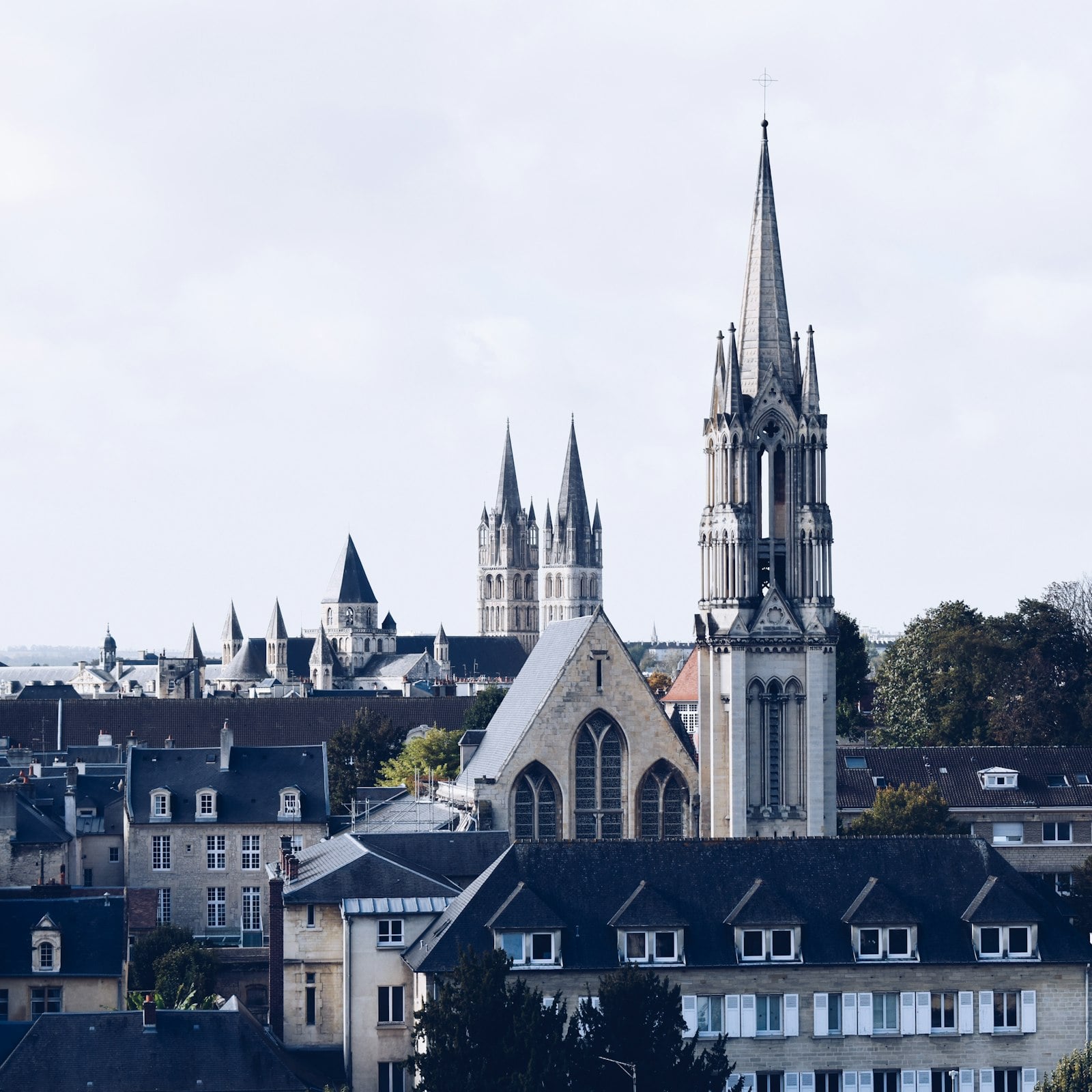
His tomb was later broken open twice, and a single thigh bone is said to be all that is left under the slab in the choir. In the summer of 1944 thousands of people from Caen took shelter under this roof while the city burned around them. The monastery next door is now City Hall.
The Abbaye aux Dames
Matilda’s abbey stands on the far side of the center, and she is buried in its church. The crypt underneath is from her century. The park in front has a fine view back over the city to her husband’s spires.
The Vaugueux
The British planned to take Caen on D-Day. It took them more than a month, and most of the old city was gone by the end. The Vaugueux, a few cobbled streets below the castle, is the medieval quarter the war missed. It is full of restaurants now, and Édith Piaf’s grandparents once kept a café here.
The Mémorial de Caen
The museum was built in 1988 on top of a German command bunker. It starts in 1918 and walks you through the road to war, the occupation, D-Day and the hundred days of fighting that followed. Then it carries on into the Cold War. A film on a 360-degree screen comes with the ticket.
Pegasus Bridge
Just after midnight on June 6, three British gliders landed in the dark a few yards from this canal bridge in Bénouville. The men took it in about ten minutes. The café beside it calls itself the first house in France to be liberated. Later that day the commandos coming up from Sword Beach crossed with their piper, Bill Millin, playing as he walked.
The table
The city’s own dish is tripes à la mode de Caen, tripe cooked for hours in cider and Calvados. The cheese course is easy, since Camembert, Livarot and Pont-l’Évêque all come from nearby. Finish with teurgoule, a slow-baked rice pudding with cinnamon. A small glass of Calvados between courses is called the trou normand, the Norman hole, and it is supposed to make room for more.
Getting around
From the station, trams T1 and T3 reach the Château-Quatrans stop in ten minutes. The castle, the Vaugueux and the tourist office are a few minutes apart on foot from there, and the Abbaye aux Hommes is 15 minutes west. Bus 2 goes to the Mémorial.
The bridge in Bénouville is free to see, and the Pegasus museum is beside it.
When to go
April to October is the season for the coast. June 6 brings the whole of Normandy out, and the hotels fill for weeks around it.
The Mémorial is closed on December 25 and for about three weeks in January.
Frequently Asked Questions
Is Caen a day trip from Paris?
Yes. The fastest trains from Saint-Lazare take 1 hour 54 minutes, and the last one back leaves Caen at 8:32 p.m.
How long does the Mémorial de Caen take?
The museum says four hours, and that is about right.
Where is William the Conqueror buried?
In the choir of the church of the Abbaye aux Hommes, which he founded. The church is free to enter outside services.
Should I stay in Caen or Bayeux?
Caen is a real city, with more trains from Paris, more restaurants and the Mémorial. Bayeux is small and quiet, and 15 minutes closer to the American beaches.
Is there a D-Day tour that starts in Caen?
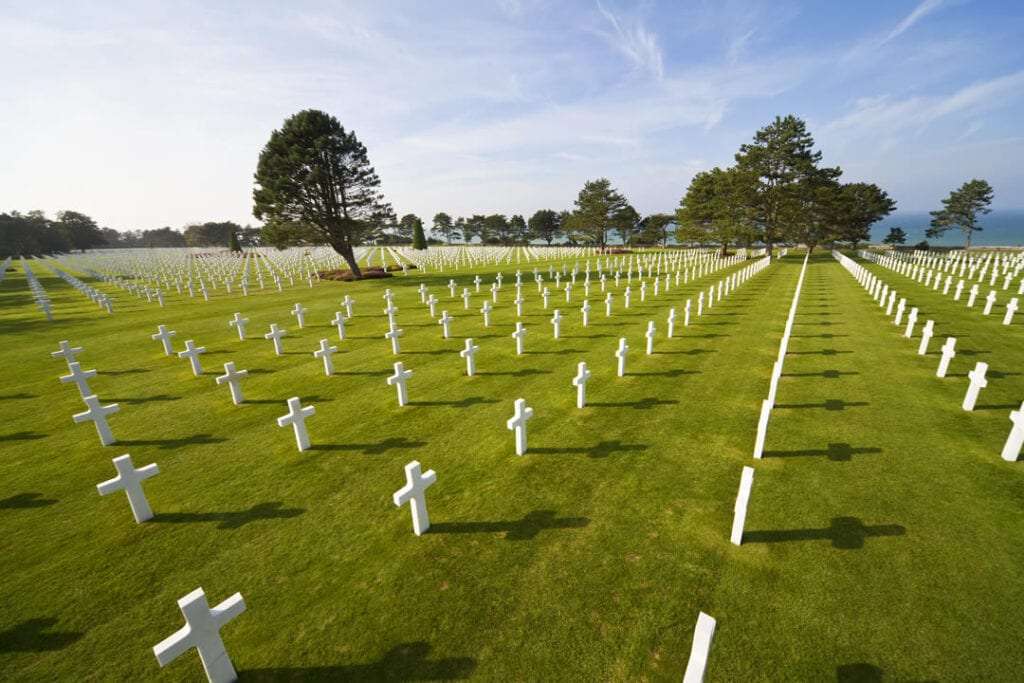
Yes. Our Caen Memorial & Normandy Tour meets you inside Caen station. You get a guided visit of the Mémorial and lunch there, then Omaha Beach, Pointe du Hoc and the American Cemetery. It costs $260 per person, or $382 with second-class rail, and runs daily except Sundays and major holidays.
Our Most Popular Day Trips From Paris

Guided tour of the Caen Memorial museum plus the D-Day beaches. Lunch included.

Your own expert driver-guide for the entire day. Flexible routing for up to 6 people.

Normandy and the Battle of the Bulge across six days with a private van and guide.

Mont St. Michel, Omaha Beach and the American Cemetery packed into one long day.