The short version
- Be on the Vieux-Port in the morning, while the fishermen are still selling.
- Ride bus 60 up to Notre-Dame de la Garde. The hill is steeper than it looks.
- Keep a backup plan for the Château d’If. It does not open in bad weather.

What to see
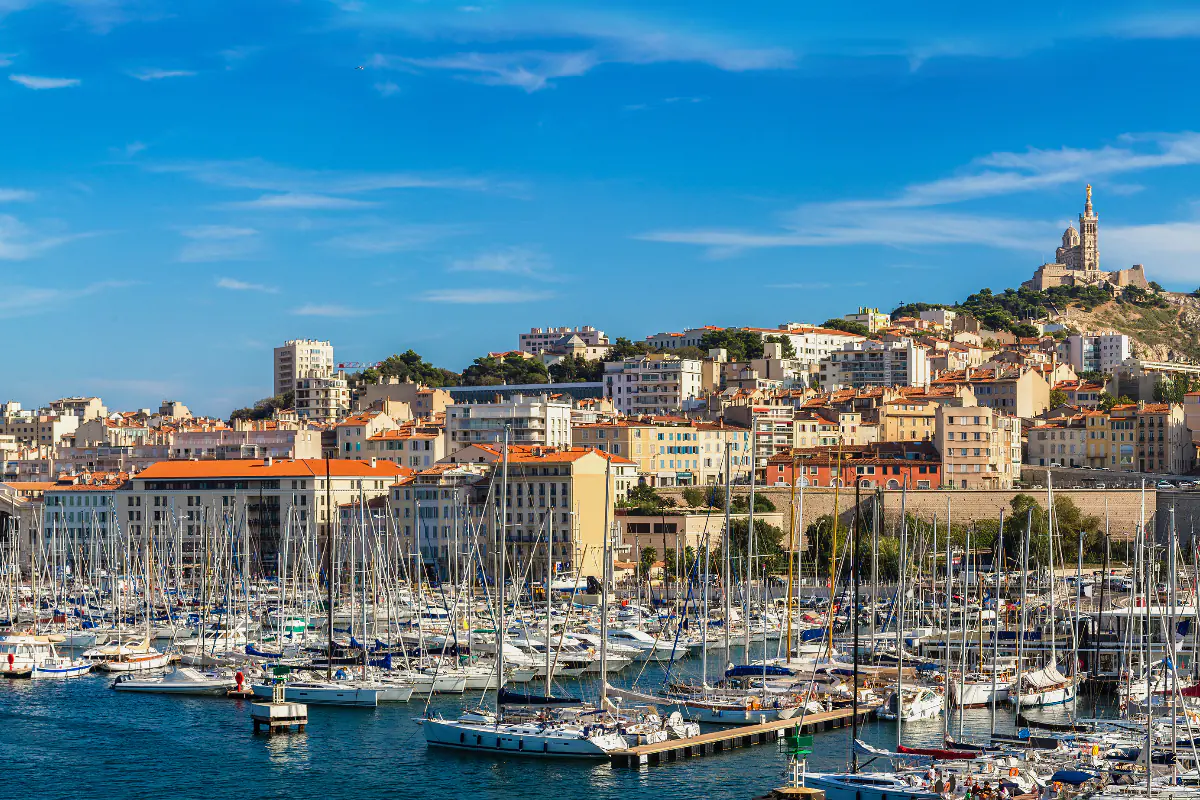
The Vieux-Port
Greek sailors from Phocaea, in what is now Turkey, landed in this harbor around 600 BC. Legend says they arrived on the day the local chief’s daughter was to choose a husband. She handed her cup to the Greek captain, and the couple founded the city.
The fishermen still sell their catch on the Quai des Belges every morning from 7:30 a.m. to 12:30 p.m. The big mirrored canopy over the quay is by Norman Foster. Look up and wave at yourself.
Le Panier
The Greeks settled on the hill just north of the port, and it has been lived in ever since. Today it is a tangle of steep lanes, laundry lines and small squares. At the top is the Vieille Charité, a 17th-century poorhouse with a domed chapel in its courtyard. It holds two museums now.
The MuCEM
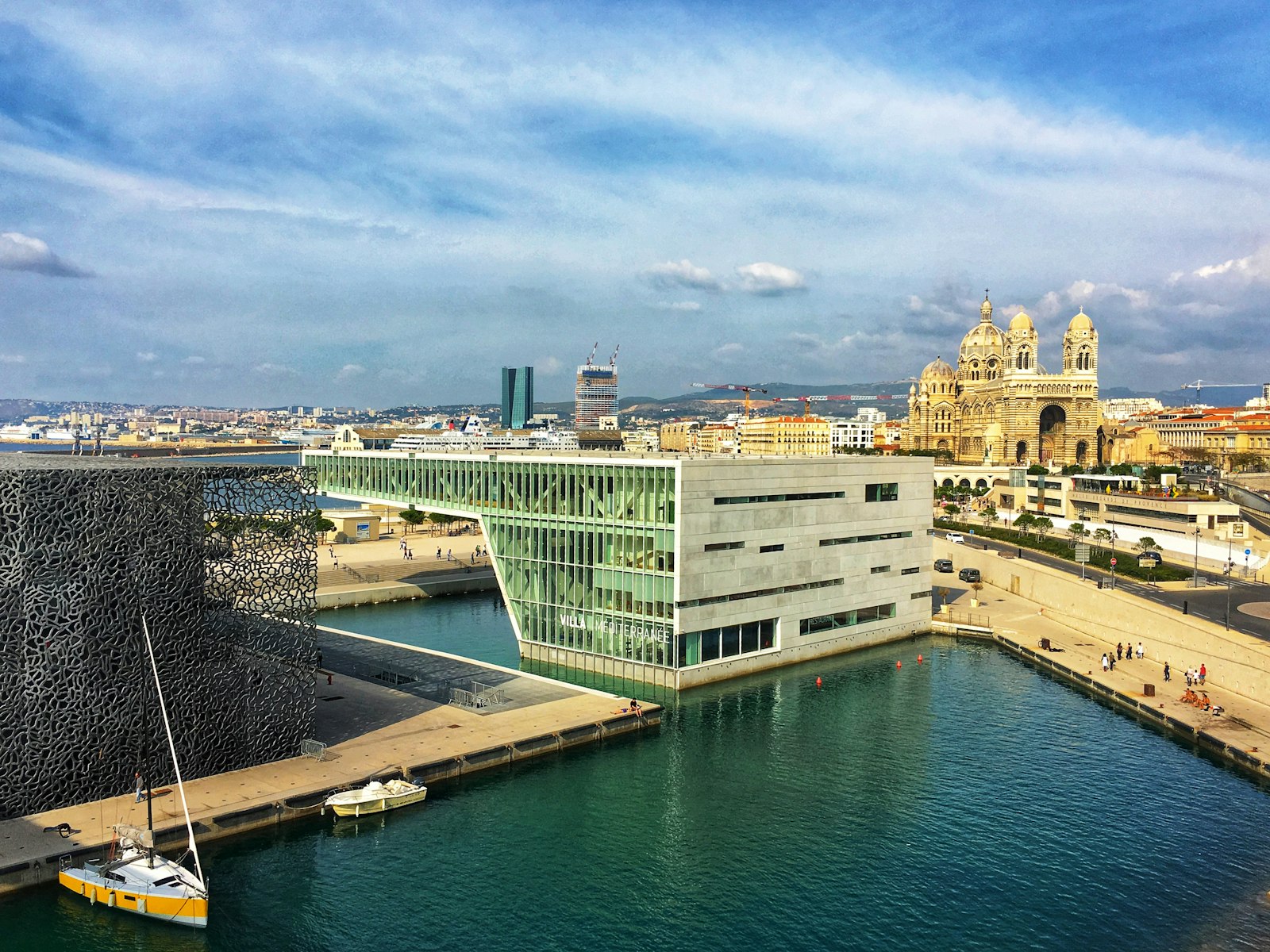
The museum of Mediterranean civilizations opened in 2013 in a glass box wrapped in a lace of dark concrete. A high footbridge joins it to the old Fort Saint-Jean, and the fort and the outdoor walkways are free.
Next door, Cosquer Méditerranée is a full-size copy of a painted Stone Age cave whose entrance lies under the sea near Cassis. It costs €18, takes about two hours and is booked online.
Notre-Dame de la Garde
The striped basilica on the highest hill is called the Bonne Mère, the Good Mother, and the gilded Virgin on top is more than 11 meters tall. Sailors have thanked her for safe returns for generations, and model ships hang from the ceiling inside. The outside wall still has bullet scars from the fight to free the city in August 1944.
The Château d’If
In 1516 a ship carrying a rhinoceros to the pope stopped on this little island, and King François I came out to stare at it. A few years later he had a fort built there. It soon became a prison nobody escaped from.
One prisoner did, in a novel. Alexandre Dumas locked up his hero here in The Count of Monte Cristo and had him escape sewn into a burial sack. The island will show you his cell, though he never existed.
The Cité Radieuse
Le Corbusier finished this concrete apartment block on stilts in 1952, with a shopping street halfway up and a pool on the roof. The locals named it the nutcase’s house. Visitors may walk the inner streets and the roof terrace.
Bouillabaisse and pastis
Bouillabaisse began as a fishermen’s stew of the bony rockfish they could not sell. It is now so serious that the city’s restaurants signed a charter in 1980 listing the fish allowed in it. The broth comes first, with garlicky toasts, and the fish follows.
Before dinner, do as the city does and order a pastis. Paul Ricard started selling the anise drink here in 1932. Add water and it turns cloudy.
Getting there and around
Direct TGVs leave Paris Gare de Lyon about 25 times a day and reach Marseille Saint-Charles. From the airport, the A1 bus runs to the same station.
The city has two metro lines, trams and buses. A ticket covers an hour of travel, and a tap of a contactless bank card on the reader works too. Boats for the Château d’If and the Frioul islands leave from the Vieux-Port.
When to go
Spring and fall are the best seasons. July is hot. The mistral, the hard north wind, blows seven to ten days a month and most often from February to April.
From mid-November to early January, the santons fair lines the Quai du Port with the little clay nativity figures of Provence. It is free.
The Château d’If is closed on Mondays from September 28 to March 31. The basilica is closed to visitors during Mass, and the MuCEM is free on the first Sunday of the month.
Frequently Asked Questions
How long is the train from Paris to Marseille?
The fastest TGV takes 3 hours 3 minutes from Paris Gare de Lyon to Marseille Saint-Charles. Fares start at €19 when booked early.
How do I get from Marseille airport to the city?
Take the A1 bus to Saint-Charles station. It costs €15 and takes 30 to 50 minutes, depending on traffic.
How many days do you need in Marseille?
Two. Spend one on the Vieux-Port, Le Panier, the MuCEM and the basilica. Spend the other on the boat to the Château d’If and the Frioul islands, or walking in the Calanques.
Can you visit the Calanques from Marseille?
Yes. City bus B1 goes to Luminy, and the Sugiton calanque is about a 45-minute walk from there. For the boats, go to Cassis. In summer, check the fire-risk level the evening before.
Does LinkParis run tours in Marseille?
No. Our Provence trips start in Avignon, on the same TGV line from Paris. In lavender season our Provence Lavender Tour leaves from there. It costs $200 per person, with rail and hotel not included.
Our Most Popular Day Trips From Paris


Louvre, Montmartre and Notre Dame in eight hours with a private driver-guide.