The short version
- Buy elephant tickets the morning you go. They are sold for the same day only, and wind or heat can cancel a ride.
- Follow the green line painted on the pavement. It runs for 14 miles past the main sights and more than 120 works of art.
- Skip Monday, when the château museum and the big food market are closed.

What to see
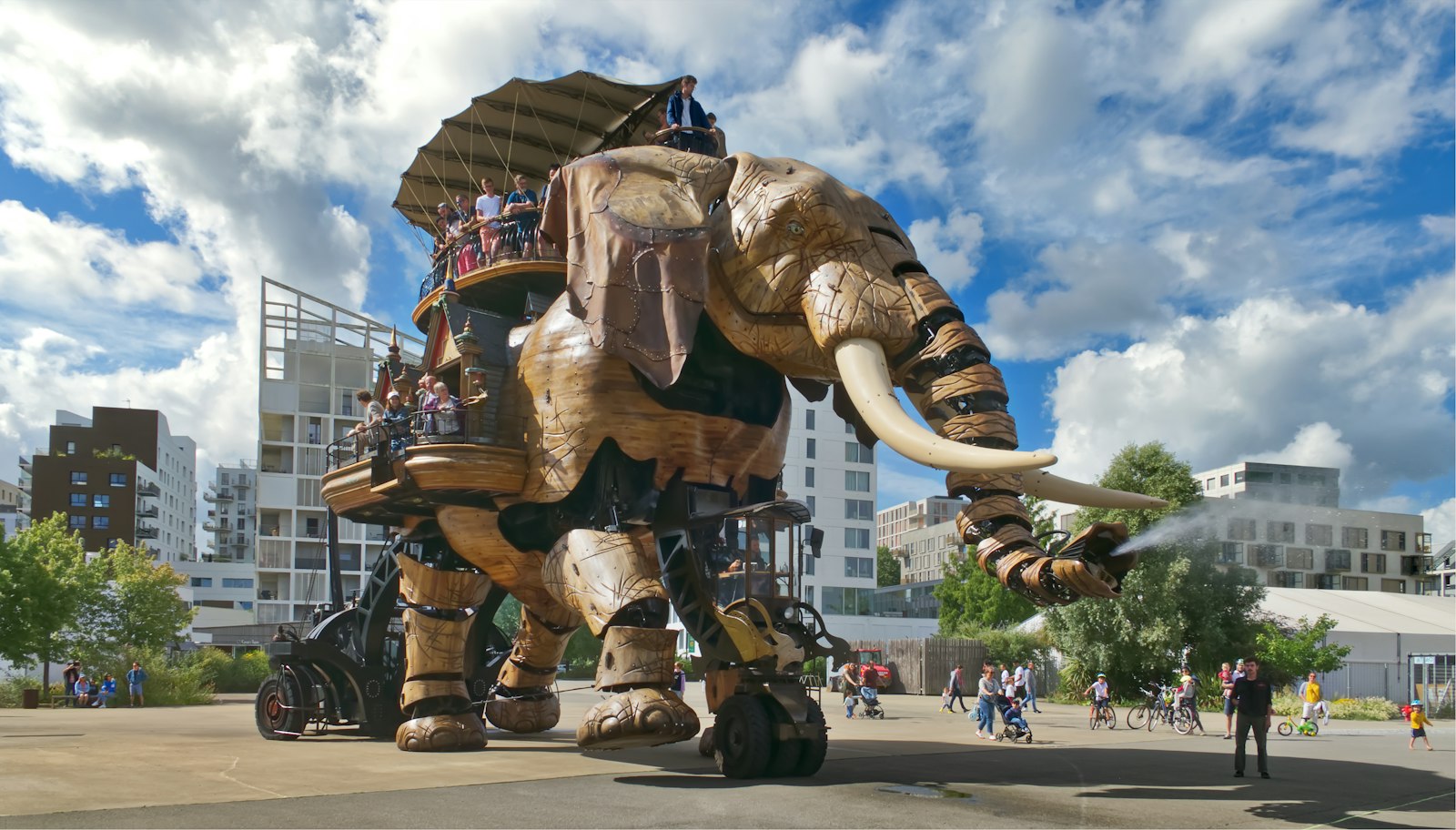
The Grand Éléphant
When the shipyards on the island in the Loire closed, two artists moved in and began building animals. Their elephant is 40 feet tall and made of wood and steel. It carries about 50 passengers, walks slowly across the old yard and sprays water at anyone standing too close. The same workshop built a three-story carousel of sea creatures and a gallery of mechanical animals. Jules Verne was born in Nantes in 1828, and the whole place feels like one of his books.
The Château of the Dukes of Brittany
Nantes was the seat of the dukes of Brittany, and this is their castle, a white palace inside a fortress. Anne of Brittany was born here in 1477. She became queen of France twice by marrying two kings in a row, and through her Brittany ended up French. In 1598 Henri IV came to Nantes and signed the edict that gave Protestants the right to worship, after decades of religious war.
The cathedral
The cathedral took more than four centuries to build. Inside is the marble tomb Anne ordered for her parents, the last duke and duchess. A fire set in July 2020 destroyed the great organ, and the building partly reopened in 2025. The tomb is under restoration and the crypts are closed.
The port and its memory
In the 1700s Nantes was the busiest slave-trading port in France, and the fine stone houses along the quays were built on that money. The city does not hide it. A memorial to the abolition of slavery runs under the riverside quay, with the names of the ships set into the ground above.
Passage Pommeraye
This shopping arcade from 1843 climbs three levels on a grand staircase lined with statues. The filmmaker Jacques Demy grew up in Nantes and shot scenes of Lola here.
Butter cookies and butter sauce
The Petit-Beurre cookie was born in Nantes in 1886, in the LU factory. They say its 52 teeth stand for the weeks of the year and its four corners for the seasons. Beurre blanc, the butter and shallot sauce served on Loire fish, comes from just outside town. Drink Muscadet with it, and finish with gâteau nantais, an almond cake soaked in rum.
Getting around
Most trains leave from Paris Montparnasse and a few from Austerlitz, so read your ticket. In Nantes, the Duchesse Anne stop on tram line 1 is a minute from the château. The Chantiers Navals stop is a four-minute walk from the elephant. Trams, buses and river boats all take the same ticket.
The Pass Nantes starts at €30 for 24 hours and covers the museums, the château, the machine gallery, the carousel and public transport. It does not cover the elephant ride.
When to go
Every summer an arts festival called Le Voyage à Nantes adds new works along the green line, and the château museum opens daily in July and August.
Winter belongs to music. La Folle Journée, a classical festival, runs for five days in late January.
Frequently Asked Questions
How long is the train from Paris to Nantes?
The fastest TGV takes 1 hour 57 minutes from Paris Montparnasse, and nearly all trains are direct.
How much is a ride on the Grand Éléphant?
A ride costs €12. The Pass Nantes covers the machine gallery and the carousel, but not the elephant ride.
Is the château in Nantes free?
The courtyard and the ramparts are free every day. The history museum inside costs €9. It is free on the first Sunday of the month, except in July and August.
Is Nantes in Brittany?
Put that question to a Breton and the answer is yes. Nantes was the capital of the dukes of Brittany for centuries. On the map today it sits in a different region, the Pays de la Loire, and people still argue about it.
Are the Loire châteaux near Nantes?
They are on the same river but well upstream, around Tours and Blois. Read about Chambord, Chenonceau and the rest before you plan that leg.
Our Most Popular Day Trips From Paris


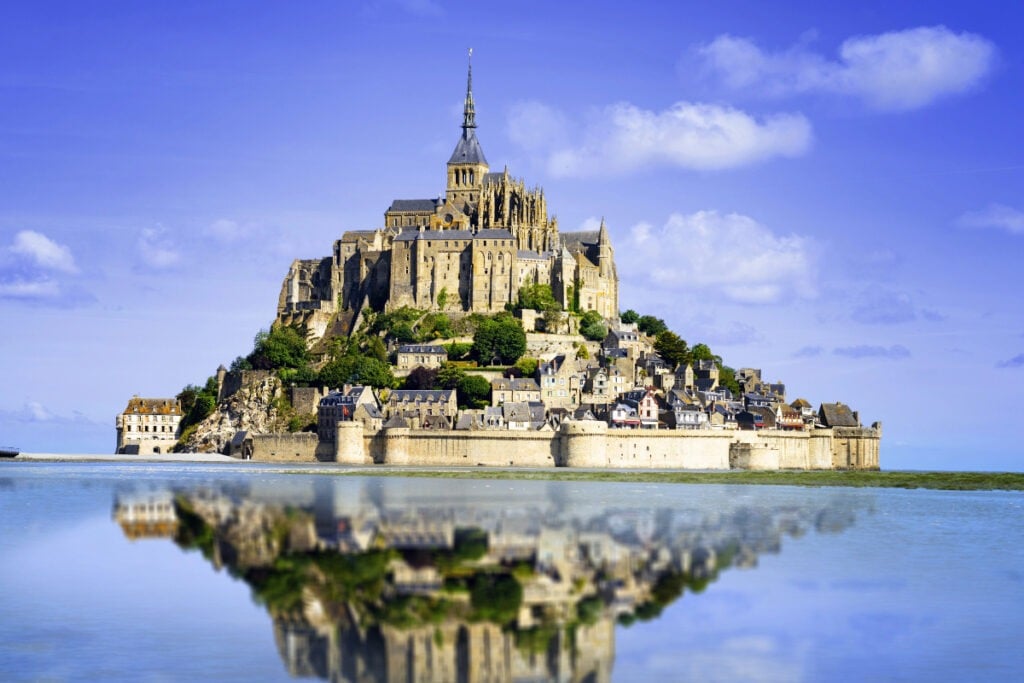
Visit the historic abbey and environs. Marvel at this UNESCO World Heritage site.

Louvre, Montmartre and Notre Dame in eight hours with a private driver-guide.