The short version
- Stay the night. The walls are at their best early in the morning and after the day visitors leave.
- Book the château and ramparts online. Places are limited.
- Take bus 4 from the station if you have bags. The walk takes 30 minutes and ends uphill on cobbles.

What to see
The walls
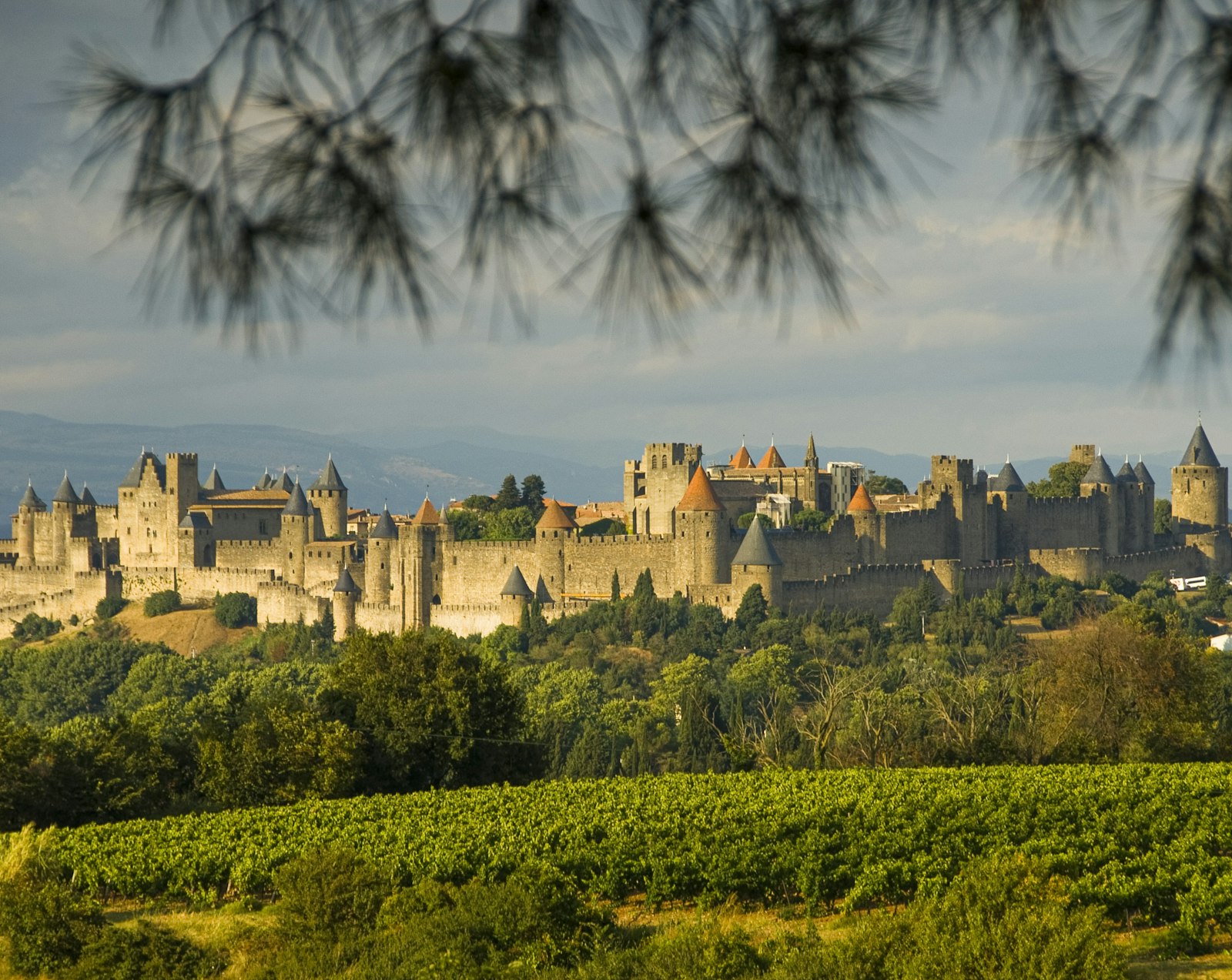
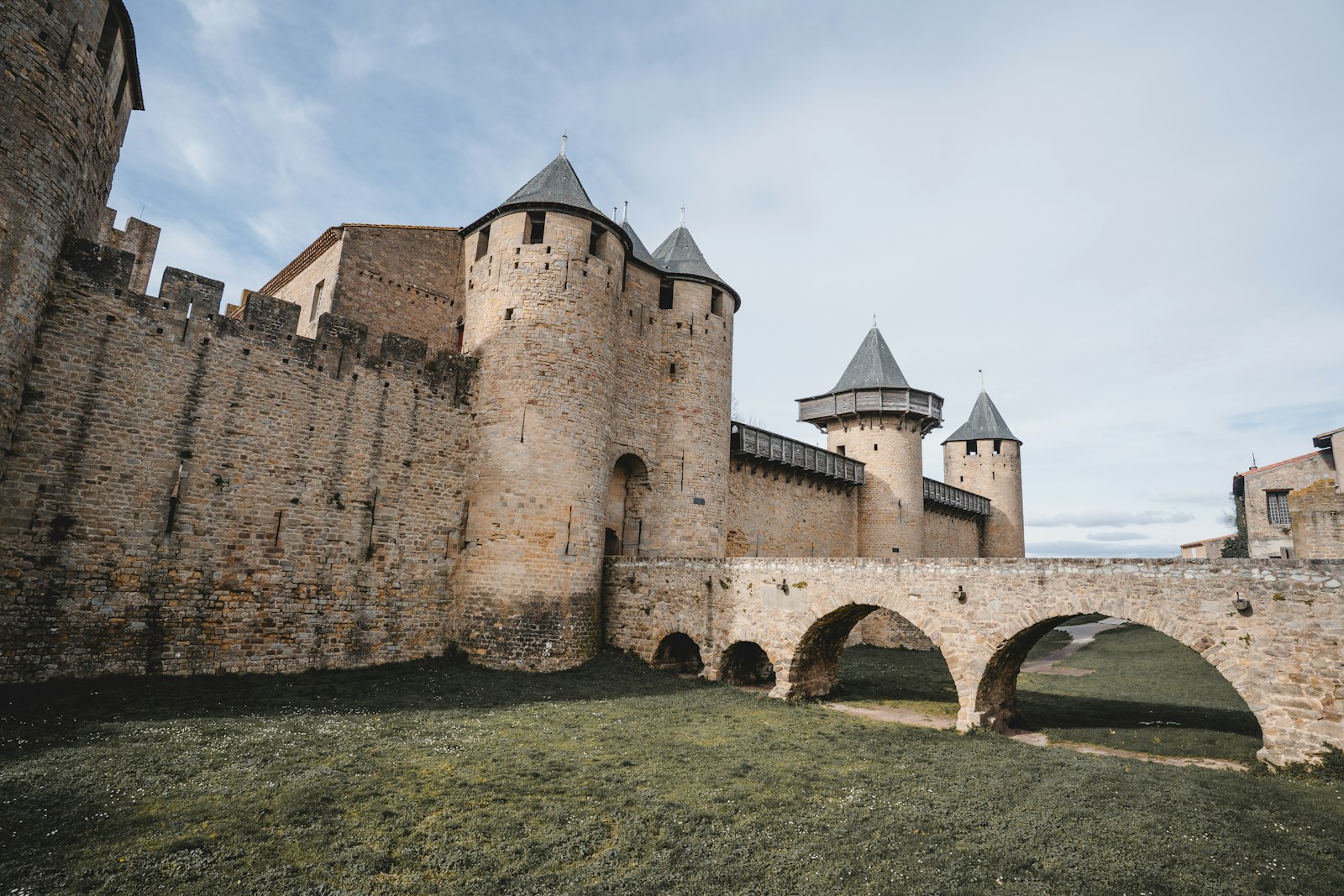
The Cité sits on a hill above the river Aude, wrapped in two rings of wall. The Romans built the first one. You can still spot their work in the inner wall, where small stones are striped with bands of red brick. French kings added the outer ring in the 1200s. Walk in through the Porte Narbonnaise and wander, because the streets inside are free.
Dame Carcas
A stone lady greets you at the gate. The legend says Charlemagne besieged the town for five years, until the people inside were down to one pig and one sack of wheat. Dame Carcas fed the wheat to the pig and threw it off the wall. Charlemagne decided that a town with food to waste would never starve, and he went home. She rang the bells, somebody shouted “Carcas sonne!” and the town had its name. None of it happened, and nobody minds.
The Château Comtal
This was the castle of the Trencavel family, who ruled Carcassonne and sheltered the Cathars, a Christian sect the Pope had declared heretics. In August 1209 a crusader army surrounded the town in the summer heat and cut it off from the river. Raymond-Roger Trencavel, 24 years old, walked out to negotiate and was taken prisoner. He died in his own dungeon three months later. The townspeople were sent away with the clothes they had on.
The château visit includes the walk along the ramparts and takes about two hours.
Viollet-le-Duc’s roofs
By the 1800s the fortress was a ruin, and in 1849 the government decided to pull it down. The town protested. The job of saving it went to Eugène Viollet-le-Duc, the architect who was also restoring Notre-Dame in Paris. Purists still grumble that he gave the towers pointed slate roofs, the kind you see in northern France. Hollywood had no complaints, and Kevin Costner’s Robin Hood used these walls for Nottingham.
The Basilique Saint-Nazaire
Step inside the church within the walls for its Gothic stained glass.
The lower town and the canal
Cross the Pont Vieux to the Bastide Saint-Louis, the lower town laid out in a grid in the 1200s. Place Carnot has a market on Tuesday, Thursday and Saturday mornings. By the station runs the Canal du Midi, dug under Louis XIV to join the Atlantic side of France to the Mediterranean. Boat rides leave from the port there, and they take cash.
What to eat and drink
This is cassoulet country. The dish is white beans baked slowly with sausage and duck or pork, and Carcassonne, Castelnaudary and Toulouse each swear theirs is the real one. Pour a red from the Minervois or Corbières hills with it. Down the road, Limoux makes a sparkling wine that it says is older than Champagne.
Getting there
There is no direct train from Paris. Trains from Montparnasse go by way of Toulouse, and trains from Gare de Lyon by way of Narbonne or Montpellier. If you fly, land in Toulouse and take the train from there, 40 minutes to an hour. The Cité is across the river from the station.
When to go
May, June and September are warm, and quieter inside the walls.
July and August are hot and busy. Fireworks light up the Cité on July 14, and knights’ tournaments run from mid-July to the end of August.
Winter is quiet. In December the lower town puts up an ice rink and a Christmas market on Place Carnot.
Frequently Asked Questions
How do I get from Paris to Carcassonne?
By train, with one or two changes. The fastest trip takes 5 hours 24 minutes. There are no flights from Paris to Carcassonne, so flyers land in Toulouse and take the train.
Is it free to enter the Cité of Carcassonne?
Yes. The walled town and its streets are free and open day and night. You pay for the Château Comtal and the rampart walk, €13 to €19 depending on the season, free under 18.
How long do you need in Carcassonne?
Half a day covers the Cité and the château. One night lets you walk the walls in the evening and early morning, and see the lower town and the canal.
Can you stay inside the walls?
Yes. There are hotels inside the Cité. The streets are cobbled and uphill from the station, so take the bus or a taxi with your bags.
Is Carcassonne real or rebuilt?
Both. The walls are Roman and medieval. The restoration in the 1800s repaired them and rebuilt the tops of the towers and their roofs.
Our Most Popular Day Trips From Paris


Visit France’s legendary wine capital! Taste world-class wines and tour historic châteaux.


Louvre, Montmartre and Notre Dame in eight hours with a private driver-guide.