The short version
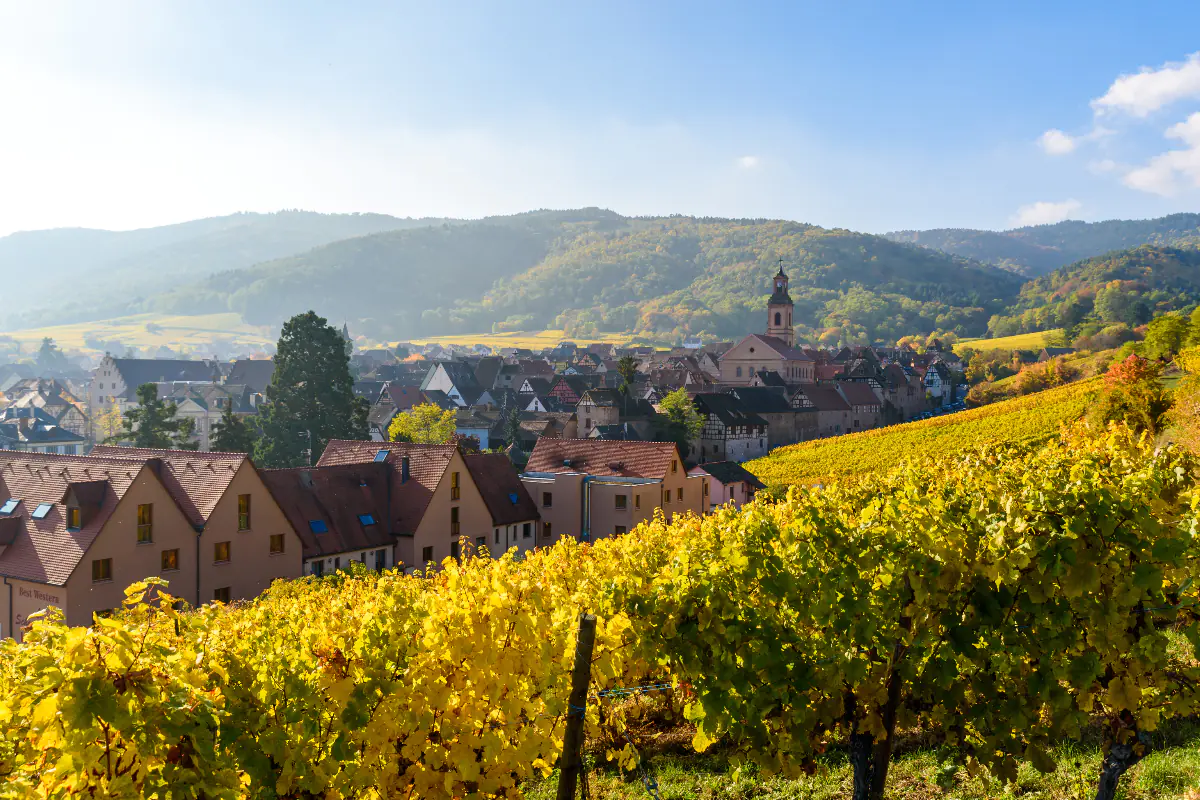
- Pick October if you can choose your month. The vines turn gold and the harvest is in.
- Plan the villages as a day by road. None of them has a train station.
- Look up. The storks nest on rooftops and chimneys all along the wine road.
- Ask us about a private day here.

What to see
Colmar
Colmar is the town on the postcards, with painted half-timbered houses along a canal the locals call Little Venice. The tanners, the fishmongers and the market gardeners each had their own stretch of the water. The gardeners brought their vegetables to market by boat.
Auguste Bartholdi, the man who made the Statue of Liberty, was born here in 1834. The town put up a copy of the statue by the road in from the north, about a quarter the size of the one in New York.
The winter of 1945
Colmar was one of the last towns in France to be freed, in February 1945. A few miles away, a 19-year-old lieutenant from Texas named Audie Murphy climbed onto a burning tank destroyer. He held off a German attack alone with its machine gun for an hour. He won the Medal of Honor and later went to Hollywood to play himself in the movie.
The Isenheim Altarpiece
Colmar’s museum, in an old convent, holds one painting people cross Europe to see. Matthias Grünewald painted it around 1515 for a monastery hospital whose patients had a terrible skin disease. He gave Christ on the cross the same sores, so the sick would know they were not alone. It still stops people in their tracks.
Eguisheim
Eguisheim is built in circles. The streets ring the old castle like a target, and you can walk the whole village in half an hour. A pope was born here in 1002. He is on the fountain in the main square.
Riquewihr
Riquewihr still sits inside its 16th-century walls, with one main street climbing to a gate tower from 1291. The wars that flattened other towns passed it by. It is often named as the model for Belle’s village in Disney’s Beauty and the Beast. Half the doorways on the main street lead to a wine cellar.
The storks
The white stork is the mascot of Alsace, and legend says it brings the babies. In the 1970s fewer than ten pairs were left in the whole region. Breeding centers brought them back, and now the big stick nests sit on church towers and chimneys in almost every village.
The wine
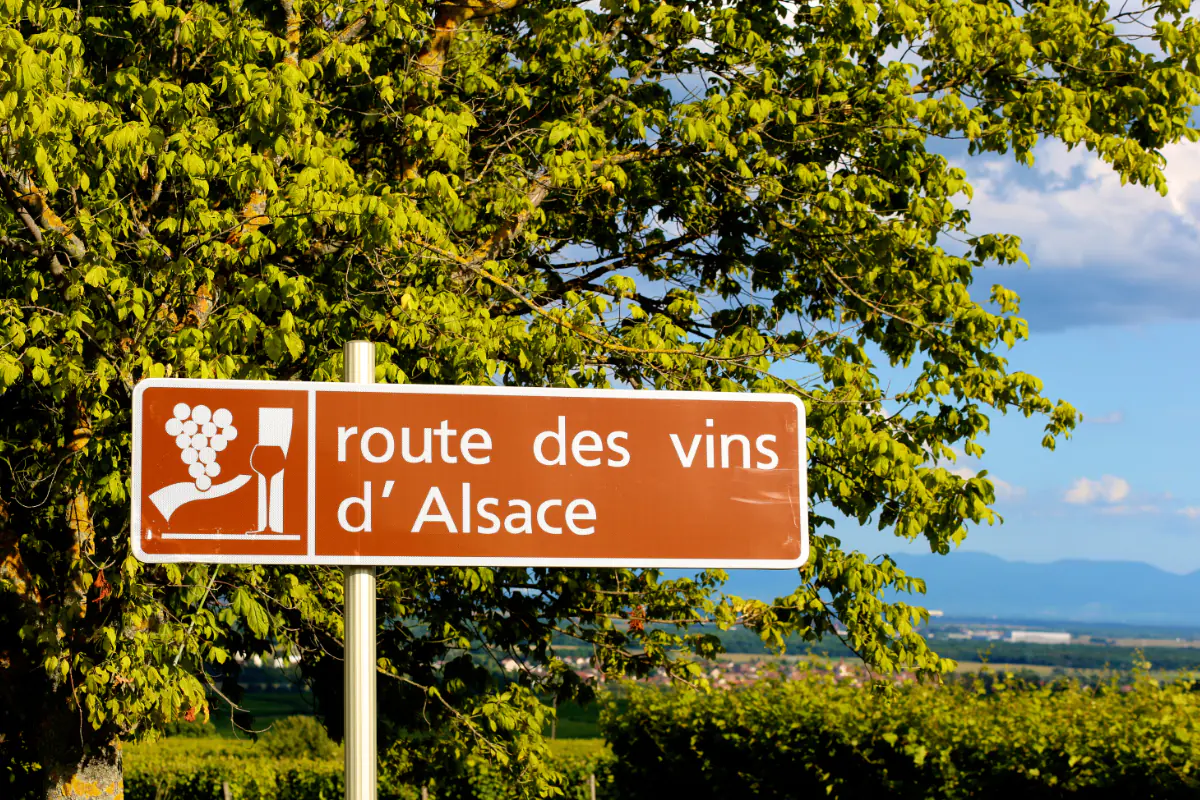
Alsace makes mostly white wine and names it for the grape instead of the place. It comes in tall, thin bottles you can spot from across the room. The vineyards run along the foot of the Vosges mountains, which block the rain and make this one of the driest corners of France.

Getting there
Strasbourg has a TGV from Paris Gare de l’Est most hours, and it is the usual way in. Colmar has a few direct trains of its own.
Coaches run from Colmar to some of the villages on weekdays, with long gaps between them.
When to go
Autumn is the season on the wine road. Spring is quieter, with the storks on their nests.
December belongs to the Christmas markets, when every village strings up its lights.
Frequently Asked Questions
Is Colmar a day trip from Paris?
A long one. Only three TGVs a day are direct. Strasbourg, 1 hour 46 minutes from Paris, has a train most hours.
Colmar or Strasbourg?
Strasbourg has the cathedral and the big-city food. Colmar is smaller and prettier street for street, and it is the gateway to the villages.
Can you visit the wine villages without a car?
Some of them, on a weekday, with gaps of hours between coaches.
What is crémant?
Crémant d’Alsace is the local sparkling wine, made the same way as champagne. It costs far less and goes with everything.
Is there an Alsace tour from Paris?
Yes. Our Alsace Day Trip drives from Strasbourg to Colmar, Eguisheim and Riquewihr, with a boat ride in Colmar, a wine tasting and a wine-and-cheese lunch. It is $220 per person, or $430 with second-class rail. It runs from March through November as a private tour for now, so write to us with your dates.
Our Most Popular Day Trips From Paris



Louvre, Montmartre and Notre Dame in eight hours with a private driver-guide.