The short version
- Be inside the cathedral before 12:30, when the clock puts on its show.
- Come in December for the Christmas market, and book everything early.
- Order the tarte flambée. It is thin, it is made for sharing, and one is never enough.
- Eat your way through town with a private guide.

What to see
The cathedral
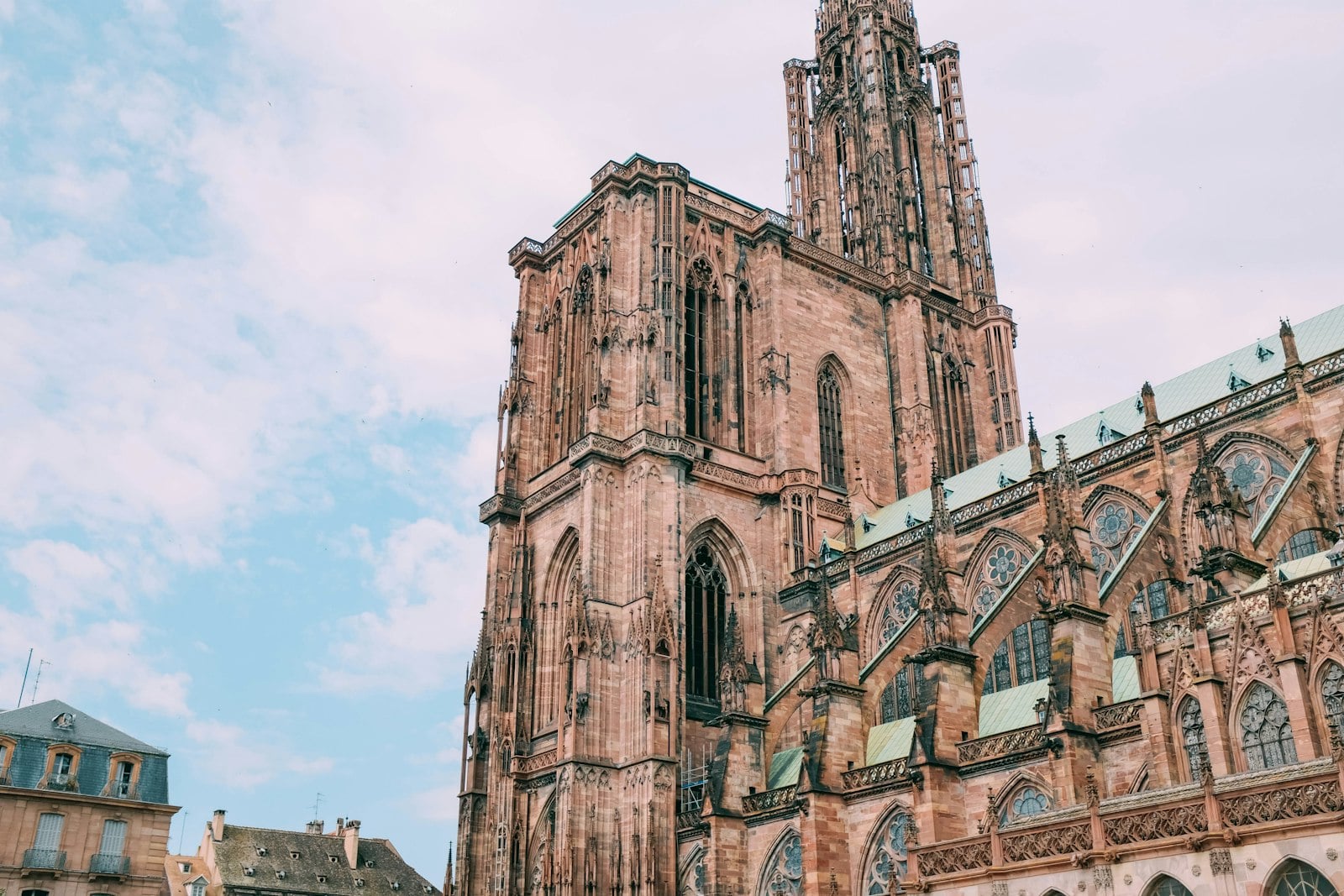
The cathedral took more than 250 years to build and got only one of its two towers. From 1647 to 1874 nothing people had built anywhere stood taller than that one spire. The stone is pink sandstone from the Vosges mountains, and it changes color with the light. A young law student named Goethe climbed the tower again and again to cure his fear of heights.
The astronomical clock
Inside the cathedral is a clock three stories high that tracks the planets, the eclipses and the date of Easter. Once a day the twelve apostles file past Christ and a rooster crows three times. The show comes half an hour after noon because the clock keeps Strasbourg’s own sun time and ignores the official one.
Petite France
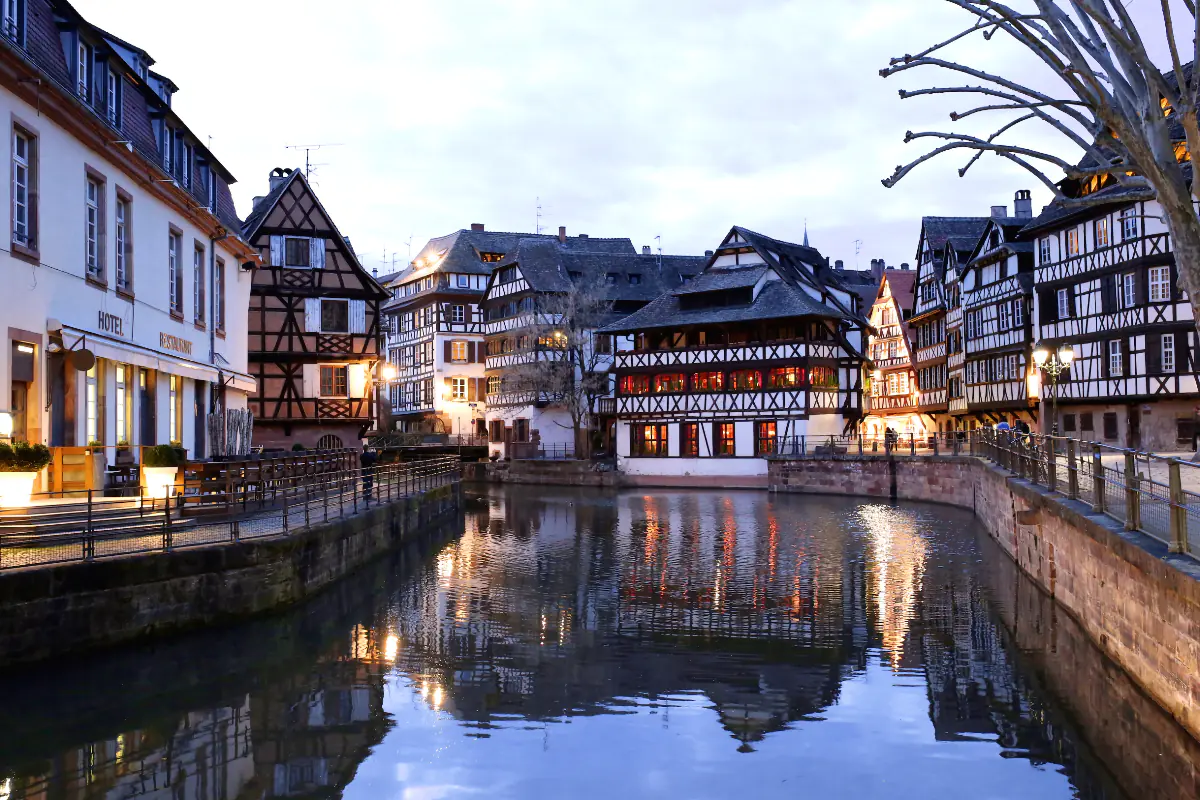
Petite France is the old tanners’ quarter, with half-timbered houses leaning over the canals. The top floors are open galleries where the hides were hung to dry. The pretty name has an ugly origin. A hospital here treated soldiers for syphilis, which the locals called the French disease.
A city that changed countries
Between 1870 and 1945 Strasbourg went from French to German to French to German and back to French. Someone born here in 1869 changed nationality four times without leaving home. That is why the street signs come in two languages and the sauerkraut comes with French wine. After the last war, Europe put its new parliament here for exactly that reason.
The Marseillaise
The French national anthem has nothing to do with Marseille. An army captain named Rouget de Lisle wrote it here in one night in 1792, after the mayor of Strasbourg asked him for a marching song. Volunteers from Marseille sang it on their way into Paris a few months later, and the name stuck.
Gutenberg
Johannes Gutenberg lived in Strasbourg for about ten years before he went home to Mainz and printed his Bible. He was already experimenting with a press here, in secret, with money from local partners. His statue stands on the square named for him, holding a freshly printed page.
The table
Foie gras pâté was invented in Strasbourg around 1780, by a cook working for the military governor. The everyday dishes are choucroute, which is sauerkraut piled with sausages and pork, and kougelhopf, a tall ring-shaped cake with raisins and almonds. The wine is white and dry, and it comes in a small glass with a green stem.
Getting there
The TGV leaves from Paris Gare de l’Est, with trains from early morning. The cathedral square is a short walk from the station.
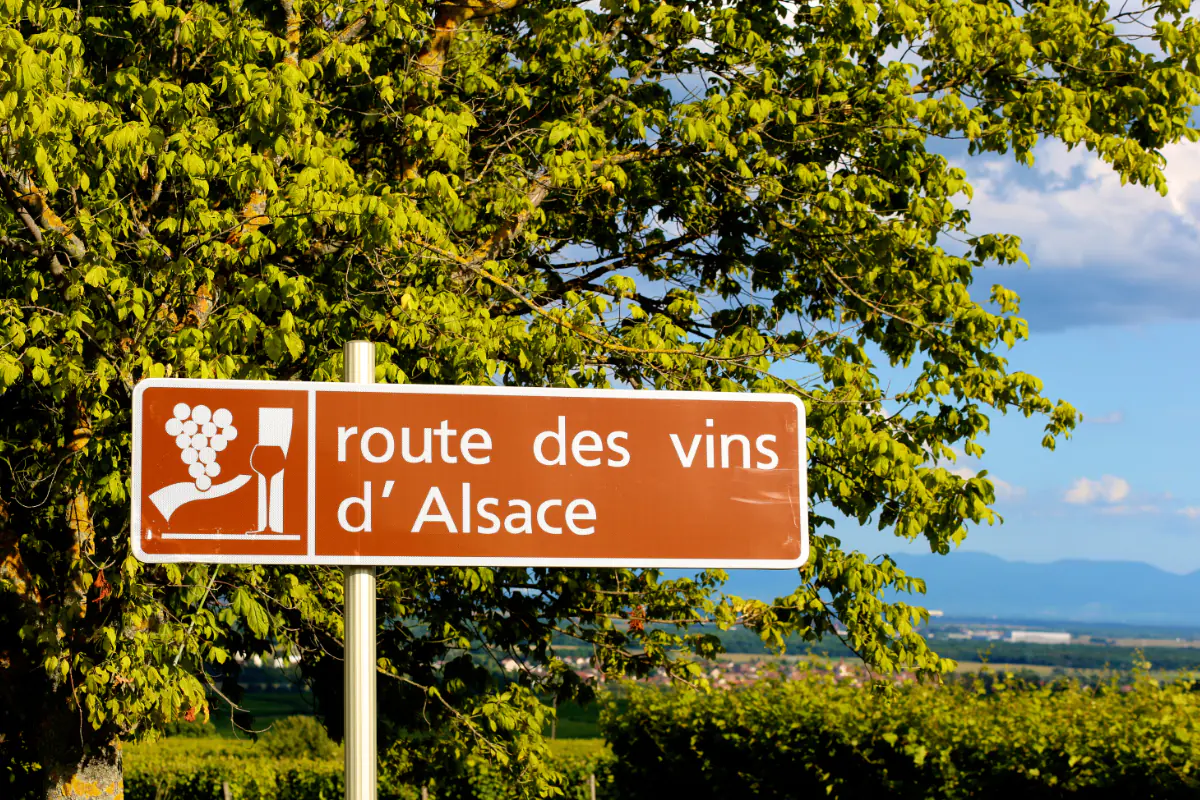
The wine villages are a separate day. See Colmar and the Alsace Wine Villages.
When to go
December is Strasbourg’s month. The Christmas market has been held here since 1570, and it takes over the squares of the old town.
Spring and autumn are the easy seasons for walking.
Frequently Asked Questions
Is Strasbourg a day trip from Paris?
Yes. The TGV takes 1 hour 46 minutes, with trains from early morning and the last one back in the evening.
How do you see the astronomical clock?
Be at the clock before 12:30 p.m., when the figures move. There is a small charge for the show.
What should I eat in Strasbourg?
Start with tarte flambée, the thin tart with cream, onions and bacon. Then choucroute with sausages and pork, and a slice of kougelhopf with coffee.
Can you visit the wine villages from Strasbourg?
Yes, as a day of their own by road. Riquewihr has no station, and the buses from Colmar have long gaps.
Is there a Strasbourg tour from Paris?
Yes. Our Strasbourg Day Trip is a private walk through the old town with your own guide, four tastings at the city’s food shops and an Alsatian lunch. It is $525 per person, or $735 with second-class rail, for four people or more. We can quote a price for two. It runs February to December.
Our Most Popular Day Trips From Paris



Louvre, Montmartre and Notre Dame in eight hours with a private driver-guide.