The short version
- Rent a car in Quimper or Brest. The headlands, villages and harbors lie in different directions, and the coaches are few.
- Start in Quimper, which is easy on foot, then work your way out to the coast.
- Pack for wind and rain in any month, and go out to the headlands anyway. Bad weather suits them.

What to see
Quimper
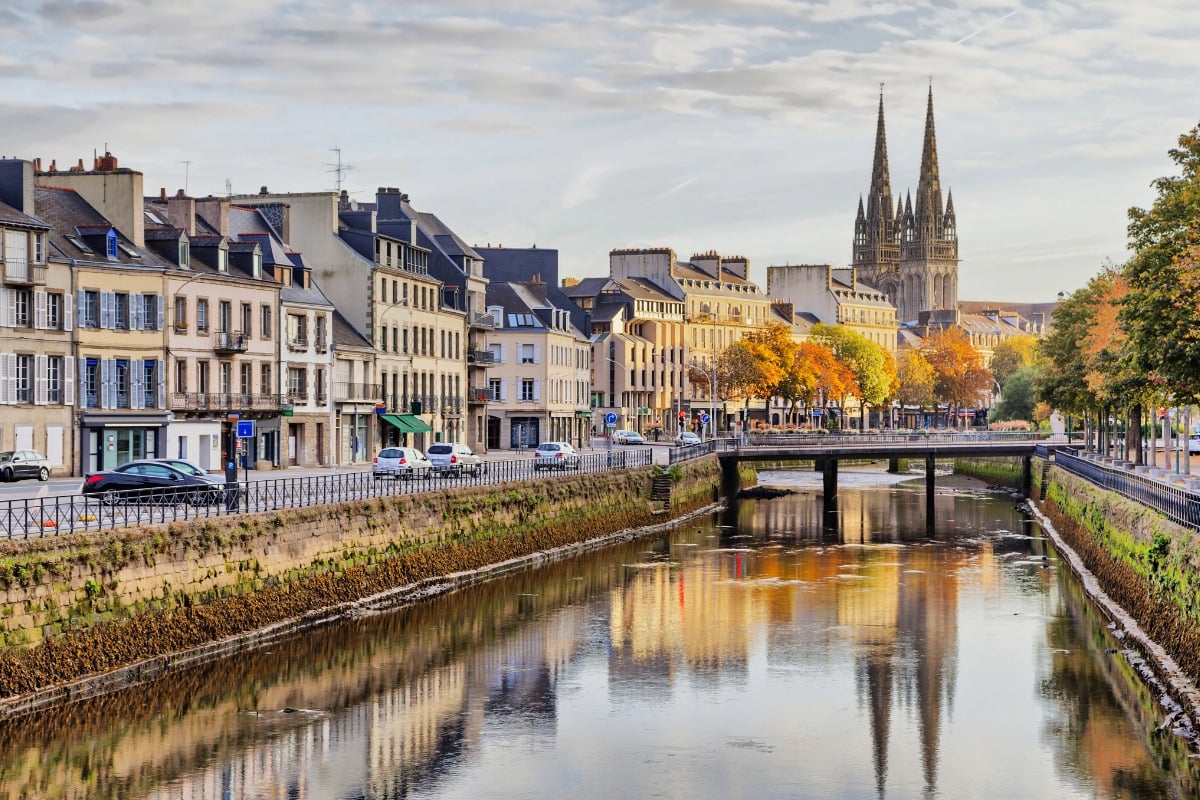
The old capital of Cornouaille sits where two rivers meet, and its cathedral has a bend in it. The nave and the choir don’t line up. The two spires went up only in the 1850s, paid for by the people of the town. Between them rides King Gradlon on a stone horse.
Gradlon is the king in the best legend in Brittany. His city of Ys stood below sea level behind a great dike. One night his daughter Dahut stole the key and opened the gates, and the ocean took the city. Gradlon escaped on horseback and made Quimper his new capital. Fishermen say the bells of Ys still ring under the water on a calm day.
Locronan
This granite village got rich weaving sailcloth for the navy in the 1600s and 1700s. Then the trade died and nobody had the money to change anything. Film crews love it for that. About thirty movies have been shot here, including Roman Polanski’s Tess, which is set in England.
The Pointe du Raz
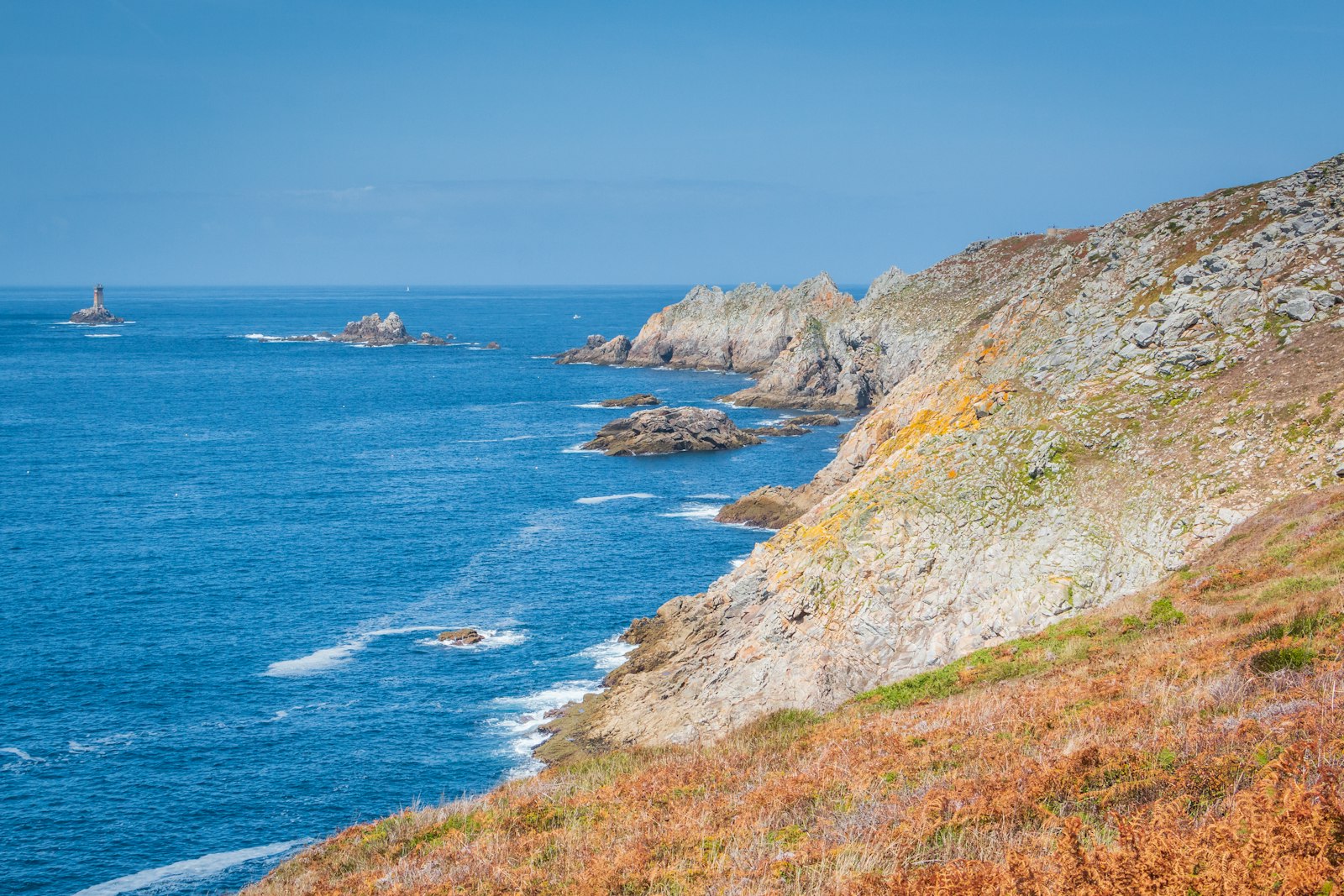
The cliffs end in a line of rocks, a lighthouse and one of the roughest stretches of water in Europe. Breton sailors had a prayer for it. Lord, help me, for my boat is so small and your sea is so big. The low island on the horizon is Sein. In June 1940 General de Gaulle called from London for men to keep fighting, and nearly every man of fighting age on Sein sailed to join him.
Concarneau
The old town is a walled island in the middle of a working fishing harbor, reached by a drawbridge. Vauban strengthened the walls for Louis XIV. Walk the ramparts, then watch the boats from the quay.
The Crozon peninsula
Crozon is shaped like a cross and edged with cliffs. Off the Pointe de Pen-Hir, a row of sea stacks called the Tas de Pois, the Pile of Peas, marches out into the ocean. A granite Cross of Lorraine on the headland honors the Bretons who joined the Free French. The GR34 coastal path runs around the peninsula.
Brest
Brest has been France’s Atlantic navy base since the 1600s. In 1917 and 1918 about 800,000 American soldiers came ashore here on their way to the Western Front. A pink granite tower above the harbor, built by the United States, honors the navies that got them there. The Germans blew it up in 1941, and the Americans built it again.
What to eat
Breton butter is salted, and it goes into everything. Kouign-amann was invented in the fishing port of Douarnenez around 1860. The name is Breton for butter cake, and it is exactly that. Order buckwheat galettes with a bowl of Cornouaille cider, and langoustines on the coast.
Getting around
Trains from Paris Montparnasse run to both Quimper and Brest, and some change in Rennes. Air France also flies from Charles de Gaulle to Brest.
From there you drive. Quimper to Crozon takes an hour, and so does Brest to Crozon. On the Pointe du Raz, a €1 shuttle covers the last half mile from the parking lot.
When to go
Summer is the busy season. The Festival de Cornouaille fills Quimper with Breton music and dancing in late July.
Fall through spring is wet and windy, and the Pointe du Raz shuttle stops at the end of October.
Frequently Asked Questions
How do you get to Finistère from Paris?
Take the TGV from Paris Montparnasse to Quimper, 3 hours 32 minutes at the fastest, or to Brest in about the same time. Then rent a car.
Do you need a car in Finistère?
Yes, for almost everything outside Quimper. Coaches link Quimper with the Pointe du Raz, Concarneau and Crozon for €2.50, but look at the timetable before you count on one.
Is the Pointe du Raz free?
Walking there is free. From April to October, parking costs €8 a day.
What does Finistère mean?
It comes from the Latin for the end of the earth. The Breton name, Penn-ar-Bed, looks at it the other way and means the head of the world.
How many days do you need in Finistère?
Four or more. Give Quimper and Locronan one day, the Pointe du Raz another, Concarneau a third and Crozon a fourth. Carnac and the Gulf of Morbihan are on the way back toward Paris.
Our Most Popular Day Trips From Paris
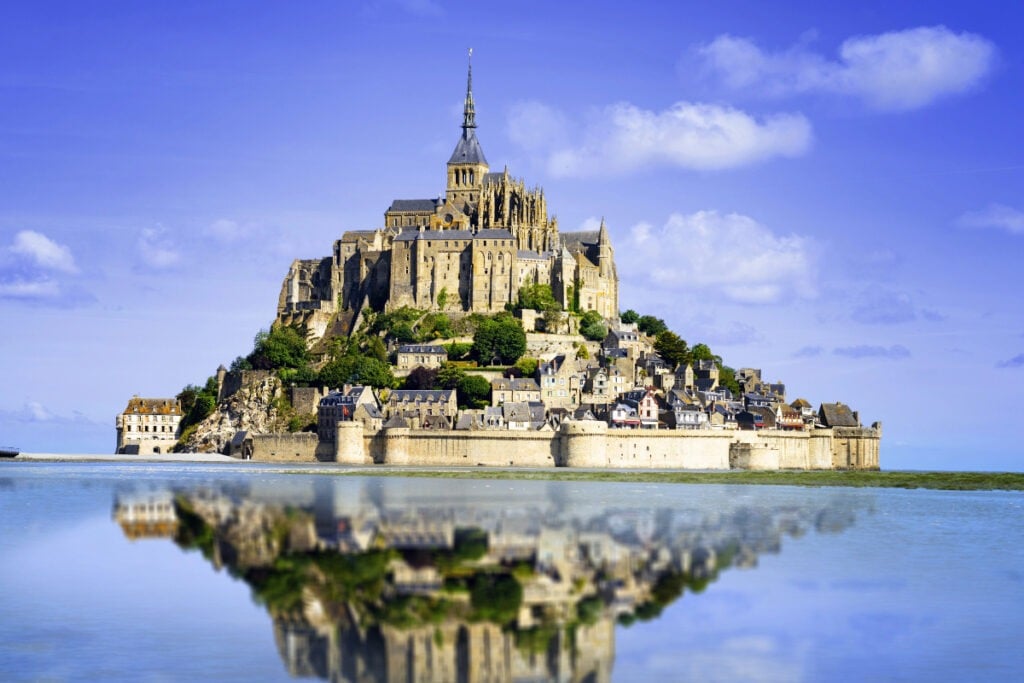
Visit the historic abbey and environs. Marvel at this UNESCO World Heritage site.

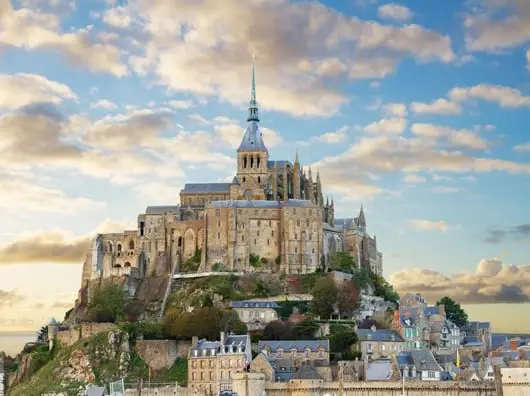

Mont St. Michel, Omaha Beach and the American Cemetery packed into one long day.
Louvre, Montmartre and Notre Dame in eight hours with a private driver-guide.