The short version
- Read the station on your ticket, not just the city. The six are up to 30 minutes apart by metro.
- Be in the station 30 minutes early. TGV gates close two minutes before departure.
- Book on sncf-connect.com or the SNCF Connect app, and keep the ticket on your phone.
- Our guide meets your train in Normandy.

The six stations
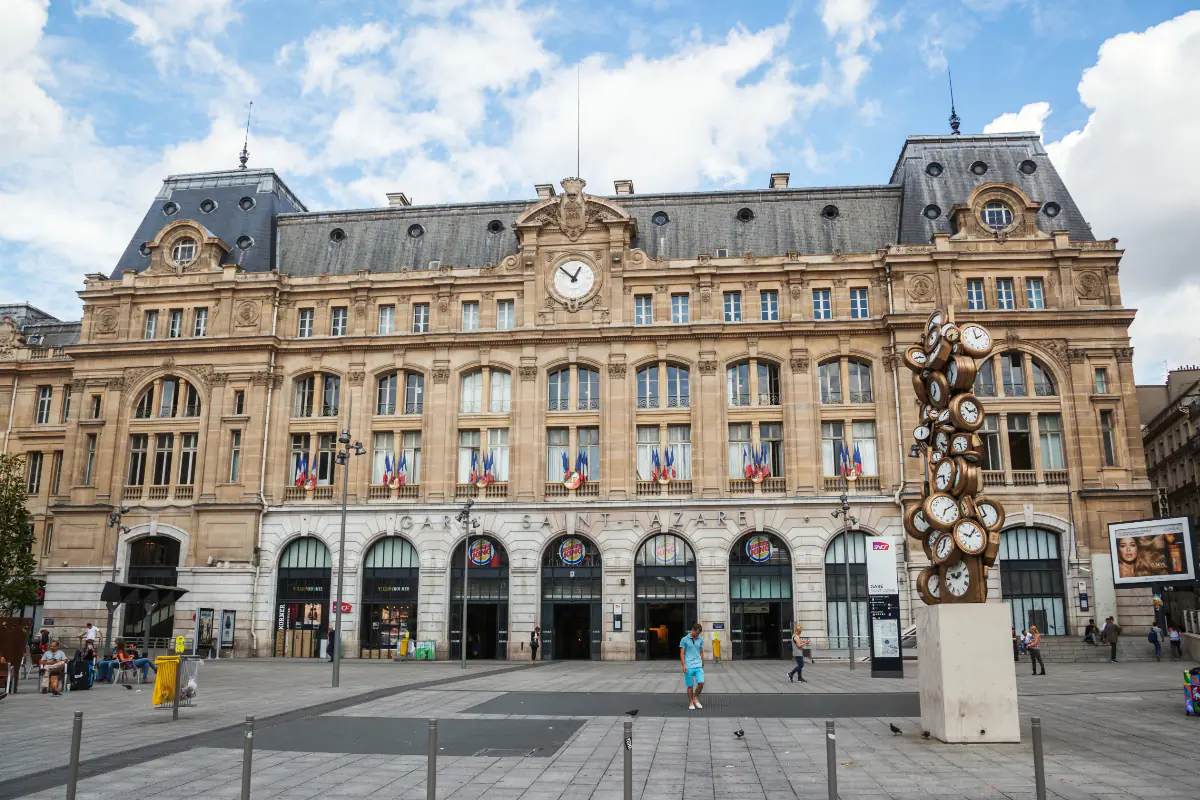
Saint-Lazare
The oldest station in Paris opened in 1837. Claude Monet painted it a dozen times in 1877, all steam and glass. The story goes that he talked the stationmaster into holding the trains so the smoke would hang just right.
This is the station for Normandy, which means Rouen, Caen, Bayeux, and Vernon for Giverny. Metro lines 3, 12, 13 and 14 and the RER E stop here. It is a big commuter station, and the main-line departure board is on the upper level.
Montparnasse
In 1895 an express from Normandy failed to stop. It crossed the whole station, burst through the front wall and dropped nose-first into the street. The photograph of the engine standing on its nose is one of the most famous in railway history. In August 1944 General Leclerc set up his headquarters here, and the German commander of Paris was brought in to surrender.
The station has been rebuilt since. Its TGVs run west and southwest, to Tours for the Loire, to Bordeaux, and to Rennes for Mont-Saint-Michel. The TGV platforms are up the escalators in the back, a long walk from metro lines 4, 6, 12 and 13.
Gare du Nord
The busiest station in Europe sends trains to London, Brussels and Lille, and the RER B to the airport. The stone figures along the top of the façade each stand for a city the railway served. Eurostar has its own check-in upstairs with passport control. Metro lines 4 and 5 and the RER D stop here too.
Gare de l’Est
The first Orient Express pulled out of here in 1883 on its way to Constantinople. In the main hall hangs a huge painting of French soldiers boarding a train in August 1914. An American, Albert Herter, painted it in memory of his son, who was killed in 1918.
Trains leave here for Reims, Champagne and Strasbourg. Gare du Nord is a five-minute walk away, and metro lines 4, 5 and 7 stop underneath.
Gare de Lyon
It was built for the World’s Fair of 1900, with a clock tower that looks borrowed from London. Upstairs is Le Train Bleu, a restaurant from 1901 with gilded ceilings and paintings of the places the trains go.
This is the station for Burgundy, Lyon and Provence. The TGVs leave from two separate halls, Hall 1 and Hall 2, and your ticket says which. Metro lines 1 and 14 and RER lines A and D stop here.
Austerlitz
Named for Napoleon’s great victory of 1805, this is the quietest of the six, with trains to Orléans and the night trains. Look up when you get there. Metro line 5 runs on a bridge straight through the roof of the station. Line 10 and the RER C stop here as well.
And a seventh
The Gare d’Orsay opened in 1900 and soon proved too short for longer trains. It is now the Musée d’Orsay, and the big station clocks still keep time over the paintings.
Catching your train
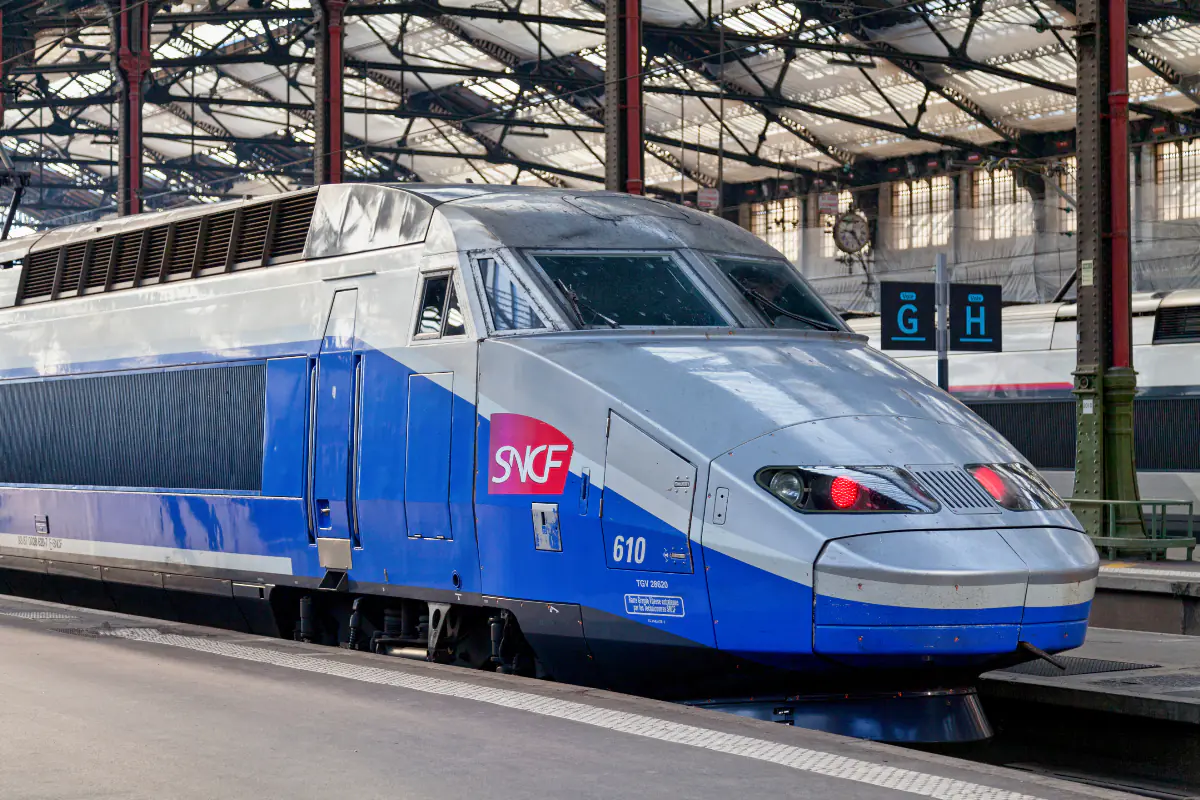
The classic mistake is the wrong station. A train to Bordeaux leaves from Montparnasse, not Gare de Lyon, and the metro between them takes 25 minutes. Look at your ticket the night before.
The platform is often posted only 20 minutes ahead, and SNCF doesn’t hold the train. With luggage on the metro at rush hour, leave 45 minutes to reach the station. TGVs always have reserved seats, and regional trains never do.
Before a strike, SNCF publishes the next day’s schedule the evening before. Check the app that evening, because the train you booked may not run.
Frequently Asked Questions
Which Paris station is for Normandy?
Saint-Lazare, for Rouen, Caen, Bayeux and Vernon for Giverny. Mont-Saint-Michel is the exception. It is reached through Rennes, from Montparnasse.
How early should I get to a Paris station?
Thirty minutes before a TGV or regional train, and 60 to 90 minutes before a Eurostar to London.
Do I need to print my train ticket?
No. Keep the e-ticket on your phone in the SNCF Connect app or as a PDF with its QR code. Scan it at the gate or show it to the conductor.
Which station is for Champagne?
Gare de l’Est, for Reims and Épernay. The TGV to Reims takes about 45 minutes.
Does your guide meet us at the station?
Yes, at the far end of the line. On our Normandy D-Day Tour you leave Saint-Lazare before 7:00 a.m. and the guide meets your train in Bayeux. It costs $230 per person, or $352 with second-class rail. How our day trips work explains the rest.
Our Most Popular Day Trips From Paris

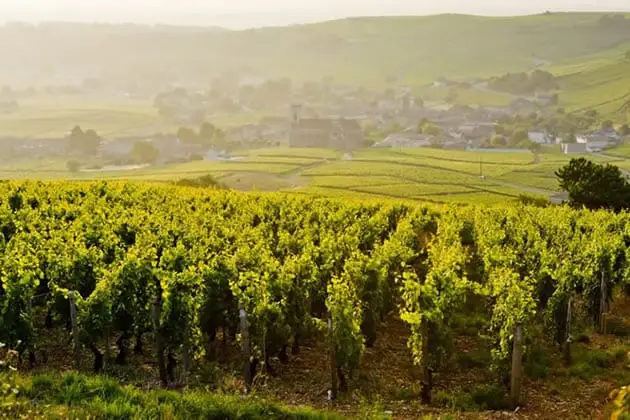
Visit France’s other premier wine region! Sample world-class wines and explore charming villages.
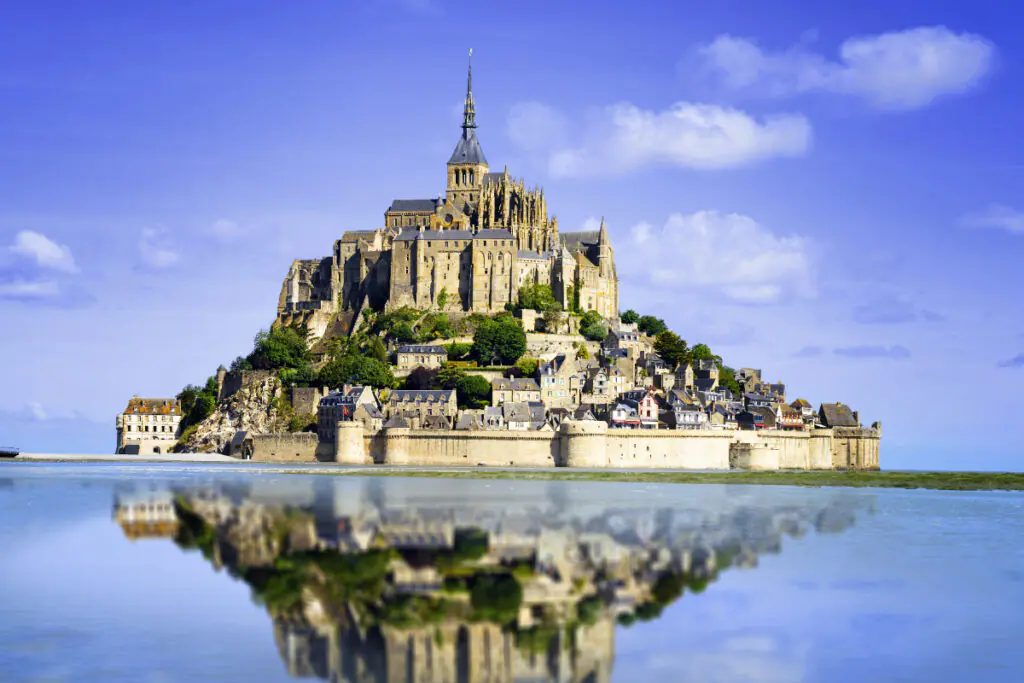
Visit the historic abbey and environs. Marvel at this UNESCO World Heritage site.
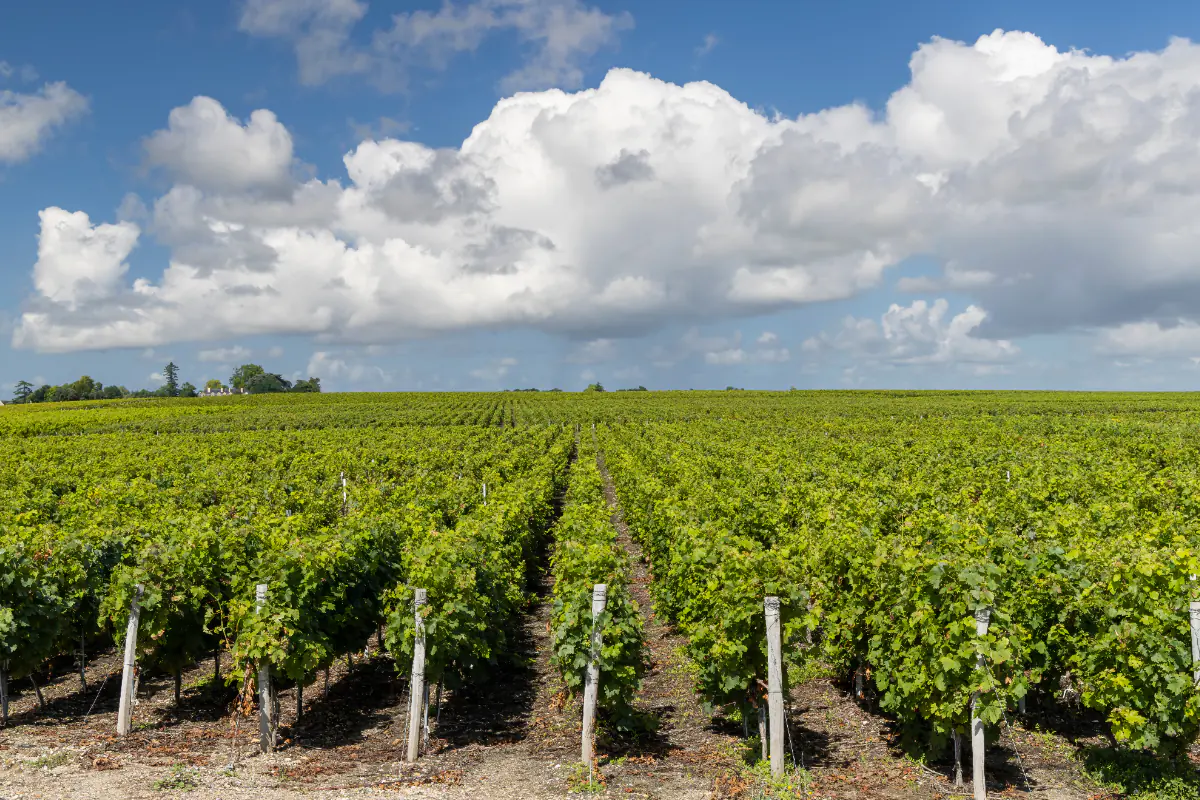
Visit France’s legendary wine capital! Taste world-class wines and tour historic châteaux.